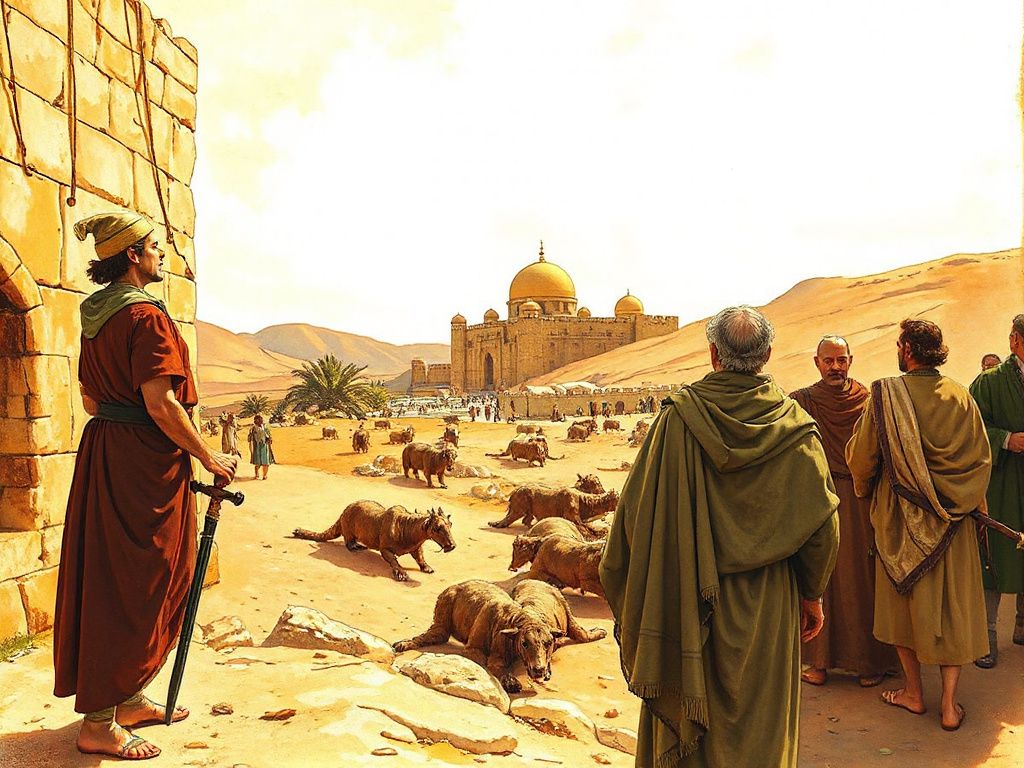
BIBLE VERSE STUDY
2 Chronicles 29:3-11 — Hezekiah Reopens the Temple
Hezekiah reopens the temple, gathers the Levites, and calls them to sanctify the house of God because the nation's idolatry had brought divine wrath.
Scripture
3He in the first year of his reign, in the first month, opened the doors of the house of Jehovah, and repaired them.
4And he brought in the priests and the Levites, and gathered them together into the broad place on the east,
5and said unto them, Hear me, ye Levites; now sanctify yourselves, and sanctify the house of Jehovah, the God of your fathers, and carry forth the filthiness out of the holy place.
6For our fathers have trespassed, and done that which was evil in the sight of Jehovah our God, and have forsaken him, and have turned away their faces from the habitation of Jehovah, and turned their backs.
7Also they have shut up the doors of the porch, and put out the lamps, and have not burned incense nor offered burnt-offerings in the holy place unto the God of Israel.
8Wherefore the wrath of Jehovah was upon Judah and Jerusalem, and he hath delivered them to be tossed to and fro, to be an astonishment, and a hissing, as ye see with your eyes.
9For, lo, our fathers have fallen by the sword, and our sons and our daughters and our wives are in captivity for this.
10Now it is in my heart to make a covenant with Jehovah, the God of Israel, that his fierce anger may turn away from us.
11My sons, be not now negligent; for Jehovah hath chosen you to stand before him, to minister unto him, and that ye should be his ministers, and burn incense.
What this passage means
In the first month of his first year, Hezekiah physically restored temple access by opening and repairing the doors (v. 3). This concrete action signaled his intention to undo the neglect of his predecessor Ahaz, and the chronicler places the timing first to emphasize that reform began at the central place of worship before anything else.
Verses 4-7 record his address to the Levites. He first commands them to sanctify themselves and the temple, then explains why: the fathers had trespassed, forsaken Jehovah, shut the doors, extinguished the lamps, and ceased proper offerings. The speech frames the temple's neglect as the visible symptom of a deeper covenant violation, not merely a building problem.
Verses 8-11 give the motivation and the call. The tangible consequences of abandonment, military defeat and captivity, are the proof of divine wrath (vv. 8-9). Hezekiah therefore proposes a covenant to turn away fierce anger (v. 10) and urges the Levites not to be negligent, since Jehovah has chosen them to minister before him (v. 11). The passage links renewed worship, renewed people, and renewed relationship with God.
Context
The chapter opens by identifying Hezekiah as twenty-five years old at his accession and as one who did what was right in the eyes of Jehovah, following David (vv. 1-2). Verse 3 then begins the reform program immediately, so the verses 3-11 function as Hezekiah's stated rationale for the temple cleansing that follows in verses 12-19, the sacrificial restoration in verses 20-30, and the celebration in verses 31-36.
Hezekiah's characterization of the nation's collapse is consistent with the chronicler's framing of covenant unfaithfulness as the cause of divine wrath. The response set in motion in this speech, covenant renewal, self-sanctification, and resumed sacrificial worship, is the program the rest of the chapter executes.
Common questions
Why does Hezekiah reopen the temple in the first month of his reign?
The first month marked the beginning of the religious calendar and was associated with Passover (cf. 2 Chronicles 30). By restoring the temple doors immediately, Hezekiah prepared the way for proper worship and indicated that reform would begin with the house of God before any other agenda.
What does Hezekiah accuse the previous generation of doing?
He accuses them of trespassing, doing evil in God's sight, forsaking Jehovah, turning their faces from the temple, shutting the doors, extinguishing the lamps, and ceasing incense and burnt offerings (vv. 6-7). The charges frame the abandonment as a comprehensive withdrawal from covenant worship rather than a single broken rule.
How does Hezekiah link the nation's suffering to the temple's closure?
He states that Jehovah's wrath fell on Judah and Jerusalem, producing terror, derision, and captivity, and that fathers fell by the sword while families were taken captive (vv. 8-9). The implied causal chain is that neglected worship led to divine judgment, and he therefore proposes a covenant to turn away the fierce anger (v. 10).