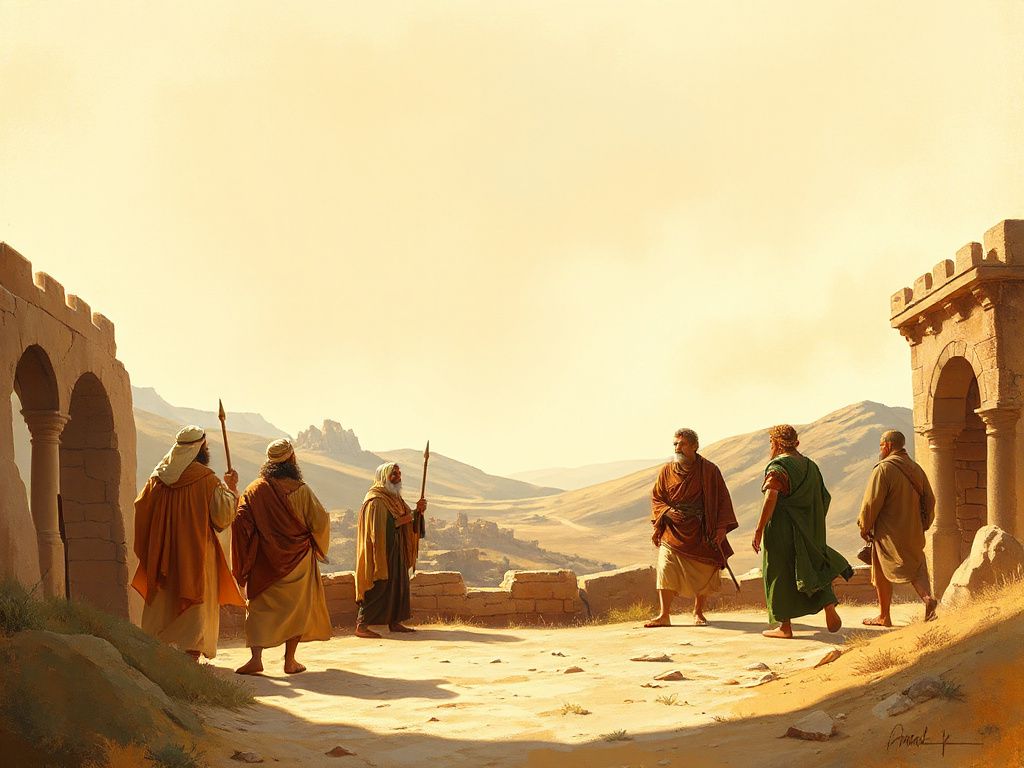
2 Kings 20:14 — Isaiah Confronts Hezekiah's Visitors
Isaiah asks Hezekiah who the visitors were and where they came from, and Hezekiah admits they came from Babylon—a disclosure that sets up Isaiah's rebuke that everything in the house will one day be carried off to Babylon.
Scripture
14Then came Isaiah the prophet unto king Hezekiah, and said unto him, What said these men? and from whence came they unto thee? And Hezekiah said, They are come from a far country, even from Babylon.
What this passage means
The verse is a pivotal question: Isaiah asks two things—what was said and where the men came from. By asking first about their words before their identity, the prophet presses Hezekiah to consider the substance of the conversation, not merely the diplomatic pleasantries that accompanied the gifts. Hezekiah's answer, however, addresses only the second question: he identifies Babylon as the source, signaling that his attention has been on the prestige of the visitors rather than on the meaning of what was discussed.
Hezekiah's reply, "They are come from a far country, even from Babylon," reduces the embassy to a matter of geography and status. Calling Babylon "a far country" highlights distance in two directions—political distance from Judah and moral distance from the covenant people—but Hezekiah treats the encounter as a curiosity rather than a diplomatic event. The chapter's Hebrew text identifies the envoy as Berodach-baladan, son of Baladan, and his sending of letters and a present in v. 12 frames the visit as a tribute-seeking alliance, something Isaiah's question now exposes.
In the structure of the chapter, v. 14 is the hinge between Hezekiah's display in v. 13 and Isaiah's prophetic sentence in vv. 16–17. By drawing out the admission that the visitors were Babylonian, Isaiah lays the factual ground for the declaration that "all that is in thy house... shall be carried to Babylon." The verse therefore functions as both inquiry and indictment: Hezekiah's careless openness to a foreign king becomes the very evidence that seals the future captivity.
Context
Verses 12–13 form the immediate background: Berodach-baladan of Babylon sends envoys with letters and a present after hearing of Hezekiah's illness, and Hezekiah responds by showing them every treasured object in his house and dominion. Verse 14 then opens with Isaiah arriving to question the king, and his inquiry leads directly into the prophecy of vv. 16–17, where everything in Hezekiah's house and stored by his fathers is pronounced destined for Babylon. The chapter as a whole moves from Hezekiah's healing and the sign of the shadow (vv. 1–11) to this episode of misplaced diplomacy and then to its consequences.
The placement of v. 14 within chapter 20 also casts the question retrospectively over the entire narrative of Hezekiah's reign. After the reopening of the temple worship, the Passover, and the deliverances from Assyria recorded in earlier chapters, this scene shows that national faithfulness did not protect the king from a lapse of judgment. The "far country" acknowledgment opens the way for Isaiah's word that Babylon—not Assyria, and not a distant abstraction—will be the specific agent of loss, and that loss will include Hezekiah's own descendants (vv. 17–18).
Common questions
Who were the men that visited Hezekiah in 2 Kings 20:14?
According to verse 12 of the chapter, they were envoys sent by Berodach-baladan, son of Baladan, king of Babylon, who came with letters and a present after hearing that Hezekiah had been sick. Hezekiah identifies their origin in v. 14 as "a far country, even from Babylon."
Why does Isaiah ask what the men said before asking where they came from?
The order of Isaiah's questions in the text—"What said these men? and from whence came they unto thee?"—presses Hezekiah to account for the content of the conversation before the identity of the speakers. This directs attention to the diplomatic substance and purpose of the visit rather than to the honor of receiving distinguished visitors, which is what Hezekiah had apparently emphasized by showing them all his treasures (v. 13).
How does 2 Kings 20:14 connect to the prophecy that follows in verses 16–18?
Verse 14 functions as the hinge: Isaiah draws out Hezekiah's admission that the visitors were Babylonian, and verses 15–16 confirm that everything in the palace was shown to them. On that basis Isaiah pronounces, "all that is in thy house... shall be carried to Babylon; nothing shall be left" (vv. 16–17), and adds that Hezekiah's own descendants will be taken as eunuchs in the palace of the king of Babylon (v. 18). The king and visitor being Babylonian is therefore not incidental detail but the specific premise of the coming judgment.