BIBLE VERSE STUDY
3 John 1:3-4 — Joy in Children Walking in Truth
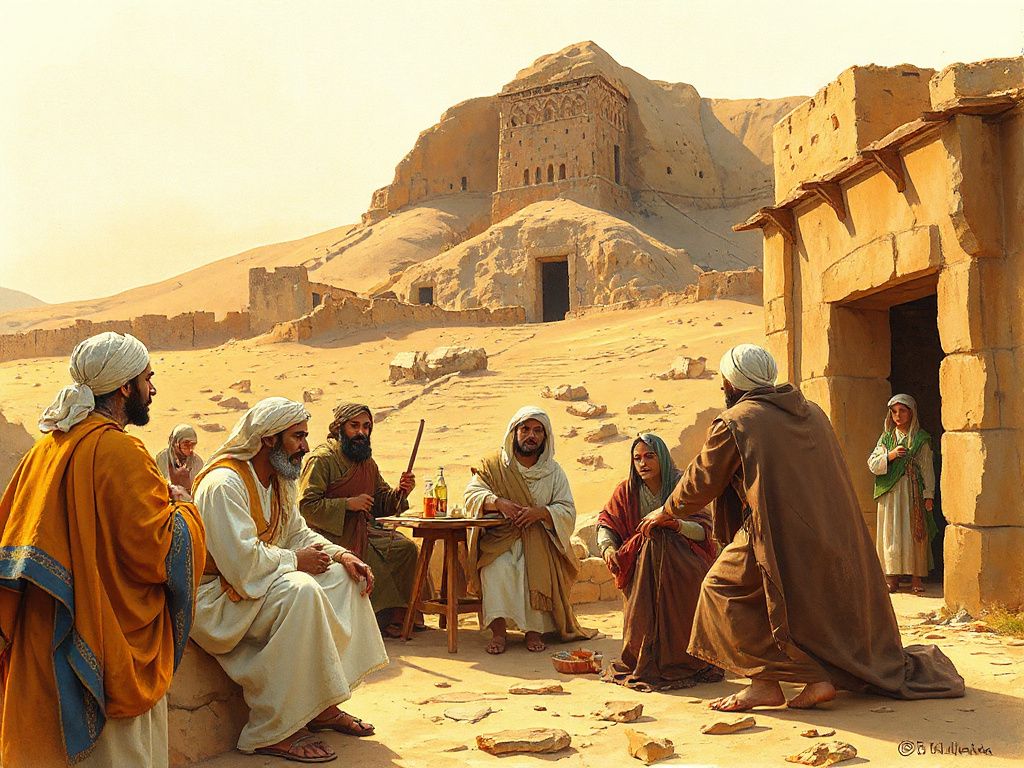
The elder tells Gaius that nothing gives him greater joy than hearing his children walk in truth.
Scripture
3For I rejoiced greatly, when brethren came and bare witness unto thy truth, even as thou walkest in truth.
4Greater joy have I none than this, to hear of my children walking in the truth.
What this passage means
In verse 3, the elder reports a specific occasion of joy: traveling brethren arrived and testified to Gaius's "truth" — the reality of what he believes and lives by — and confirmed that he "walkest in truth," that is, his daily conduct matches what he professes. The two phrases are paired deliberately: the doctrinal content (truth) and the corresponding conduct (walking in it) are inseparable in the elder's assessment.
Verse 4 intensifies the previous statement. The elder declares this to be his greatest joy — surpassing other sources of gladness — and frames Gaius and others like him as "my children," indicating a spiritual relationship in which he has nurtured them in the faith. "Walking in truth" is presented here as a continuing posture, not a single past event.
Together the two verses establish the central benchmark of the letter: truth is not merely a matter of correct belief but is verified by ongoing behavior. Joy in the elder is bound up with the visible, sustained integrity of believers he has taught, and this sets the standard against which other characters in the letter (such as Diotrephes in the surrounding verses) are implicitly measured.
Context
Verses 1-2 frame the letter as written from "the elder" to "Gaius the beloved," with a prayer for his outward prosperity and health to match his soul's wellbeing. The opening already introduces the key idea of love "in truth," which the joy of verses 3-4 then expands into a concrete picture of conduct.
In the verses that follow (5-8), the elder praises Gaius for hospitality toward traveling brethren and ties such support to being "fellow-workers for the truth." Later verses introduce Diotrephes as a contrast. The joy expressed in 3-4 is therefore not an abstract sentiment but a pastoral evaluation: those who walk in truth and support its messengers are commended, while those who oppose them stand under the elder's displeasure.
Common questions
Why does the elder call Gaius and others "my children"?
Within the letter, the phrase expresses a spiritual relationship: the elder has nurtured Gaius and others in the faith, so their progress in truth is a direct concern of his. This frames verses 3-4 as a pastor's joy over those under his care, not merely a personal compliment.
What does "walking in truth" mean here?
In verse 3, "walking in truth" pairs with the brethren's testimony to Gaius's "truth." Truth refers to the content of apostolic belief, and walking in it means that daily conduct consistently matches that belief. The two ideas are presented together, so doctrine and conduct are treated as a single reality.
Is the joy in verse 4 about evangelism or about Christian maturity?
The verse describes the elder's joy at hearing that those he has taught are continuing to walk in truth. The emphasis falls on the sustained Christian maturity of existing believers, not on the conversion of new ones. The surrounding context reinforces this by commending Gaius for ongoing faithfulness and support of fellow believers.