BIBLE BOOK GUIDE
Baruch
6 chapters
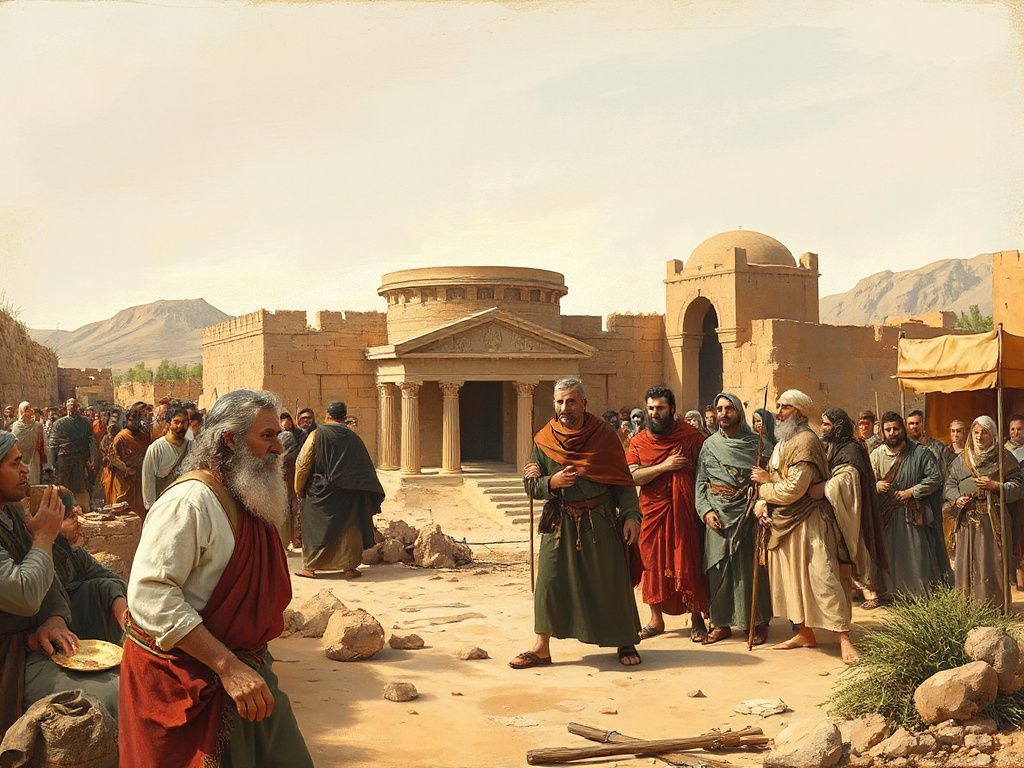
In Babylonian exile, Israel confesses sin, laments before the Lord, clings to wisdom and the promise of deliverance, and is called back to God's law and consolation.
Why this book was written
Written in or reflecting the Babylonian exile, the book is addressed to the captive Jewish community. Through Baruch as prophetic scribe, it aims to reaffirm God's commandments, call for repentance, comfort the suffering, and strengthen exiled Jews with eschatological hope so they may remain faithful in a foreign land.
Structure
- 1:1–14Introduction and the Babylonian Exile Setting
- 1:15–3:8Confessional Prayer and Plea for Mercy
- 3:9–4:4Hymn to Wisdom and the Law of God
- 4:5–5:9Consolation and the Promise of Return
- 5:10–6:end (6:1–7, 天主教版本)Jerusalem's Joy and the Fall of Babylon
Major themes
Confession of Sin
Baruch 1:15–3:8 gathers Israel’s corporate confession: generations of unfaithfulness, forgotten covenant, and idolatry, pleading for mercy. Sin is presented as a long, national burden.
Hope and Comfort
After confession, 3:9–4:4 shifts to consolation: those who fear the Lord shall live, those who leave idols find true joy, and God will remember His promise.
Where Wisdom Dwells
3:9–31 is the famous wisdom poem: wisdom was not found in heaven, the abyss, or the sea—only the God who gave the Law and dwells with Israel is the source of wisdom.
Exile and Return
The whole book addresses exiles in Babylon (1:1–9): God’s salvation will come, enemies will be judged, and the scattered people will be regathered and return.
Renewal of Zion
4:30–5:9 portrays Jerusalem mourning, yet God will clothe her with splendor, her children will return from afar, and even her enemies will behold God’s glory.
Fearing the Law
4:1–4 grounds wisdom and life in fearing the Lord and clinging to the Law; leaving Babylon’s idols is the path back to God’s commandments.
How it points to Christ
In Catholic tradition Baruch is regarded as inspired and read alongside the Letter of Jeremiah. Its wisdom poem (3:9–4:31) is read as pointing to Christ—the incarnate Wisdom, the Word of God dwelling with humanity as Wisdom dwells with Israel. Baruch 4:5–5:9 speaks of the Savior acting for God’s name and gathering peoples, a figure the Fathers see as prefiguring Christ. New Testament writers echo Baruch 3:38 ("afterward He appeared on earth and lived among men"), traditionally read as a prophecy of the Incarnation.
Key verses
- 1:15–18The exiles confess rebellion against God and worship of foreign deities, opening the book's prayer of penitence.
- 2:14–15The prophet declares that the Lord is righteous and the sufferers are also righteous, framing exile as divine chastening.
- 3:9–10Israel is called to hear the way of life and prepare the heart, introducing the great hymn to Wisdom.
- 3:12–14Walking the path of Wisdom yields peace and life, equating Wisdom with God's commandments.
- 4:21–22Zion is consoled: enemies are gone, sins removed, God will redeem Israel—anchoring eschatological hope.
- 4:36–37God turns to His children; the scattered return from afar, anticipating restoration.
- 5:1–3Jerusalem is called to put on the robe of righteousness and salvation, signaling a new era.
- 6:1–7 (Catholic)Epistolary appendix: the author, writing in Babylon by God's will, exhorts exiles to keep the covenant and patiently await salvation.
Read chapter by chapter
Questions for reflection
- ·When Baruch confesses on behalf of the people, can you likewise acknowledge the accumulated sins of your family and community, not only your own small faults?
- ·How does the question "where does wisdom dwell?" (3:9–31) challenge you to seek wisdom not in knowledge, wealth, or human ties, but in the fear of the Lord alone?
- ·Jerusalem weeps in 4:30–5:9 yet hears God say to put off mourning and put on everlasting glory. What is God asking you to take off and put on in your own life?
- ·The exiles are told to leave Babylon (4:1–4). What might "Babylon" represent today that keeps you from returning fully to God?
- ·Baruch 5:5–9 says God will make the returning ones "like a rose in the desert." How do you understand God’s new life given after seasons of suffering?
Want to read Baruch start to finish? Open the reader for parallel Chinese/English text and ask anything as you go.
Start reading Baruch