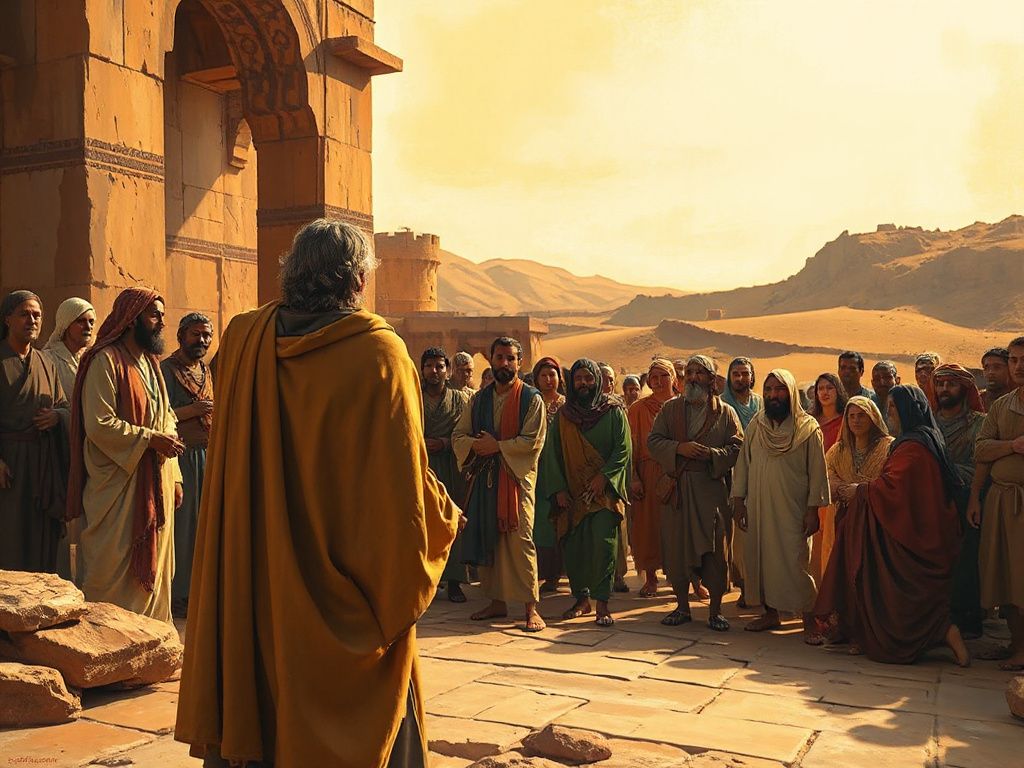
Deuteronomy 6:23 — Brought Out to Be Brought In
Deuteronomy 6:23 completes the credal answer Israel is to give to their children: the exodus from Egypt was not an end in itself, but the means by which God would give them the promised land.
Scripture
23and he brought us out from thence, that he might bring us in, to give us the land which he sware unto our fathers.
What this passage means
The verse functions as the climactic sentence of the creed-like answer that parents are to give when a son asks about the meaning of the testimonies, statutes, and ordinances (vv. 20–22). The exodus is recounted in a single purpose clause: God brought them out "that he might bring us in." The two verbs frame the whole movement of redemption as one divine action with two stages — deliverance from bondage and entrance into the land.
The stated goal of that double movement is "to give us the land which he sware unto our fathers." This grounds the command to keep the statutes (v. 24) in the prior oath made to the patriarchs. Obedience, in other words, is not the basis for receiving the land; the land is the fulfillment of a prior divine promise, and Israel's statutes are the response appropriate to a people already brought out and being brought in.
The verse's place at the center of the Shema unit (chs. 6–7) gives it pastoral weight. It explains why the Shema's call to love God (6:4–5), to bind his words on the heart (6:6–9), and to beware of forgetting the Lord who brought them out of Egypt (6:12) all hang together: the God who rescued them is the same God now giving them the land, and the memory of that rescue is meant to shape how they live inside the gift.
Context
Deuteronomy 6 is the heart of the book's covenant instruction. It opens with the commandment, statutes, and ordinances to be done in the land Israel is crossing over to possess (v. 1), centers on the Shema (vv. 4–5) and the binding of God's words on heart, hand, and home (vv. 6–9), and warns against forgetting the Lord who brought them out of Egypt once they live in cities, houses, cisterns, vineyards, and olive trees they did not build (vv. 10–12).
Within that frame, verses 20–25 form a catechetical unit: a future son asks the meaning of the commandments, and the parents answer with a fourfold creed — we were slaves in Egypt (v. 21), the Lord brought us out with a mighty hand and great signs (vv. 21–22), he brought us out in order to bring us in to give the sworn land (v. 23), and therefore he commanded us to keep these statutes for our good and life (vv. 24–25). Verse 23 is the theological hinge that links exodus to inheritance.
Common questions
Why does Deuteronomy 6:23 say "brought out" and "brought in" as one purpose?
The verse compresses Israel's whole history into a single divine purpose: the exodus from Egypt is not an end in itself but the means to bring them into the land sworn to the fathers. The two verbs describe two stages of one saving act.
How does this verse connect to the Shema in 6:4–5?
Verse 23 supplies the historical ground for the Shema's demand to love God with heart, soul, and might. Because the Lord brought them out in order to bring them in to the sworn land, the love and obedience called for in the surrounding verses are responses to a redemption already accomplished.
What is the relationship between verse 23 and the warnings about forgetting the Lord in 6:10–12?
Verse 23 states positively what 6:10–12 warns against negatively. Once Israel is settled in houses and vineyards they did not build, they are tempted to forget the Lord who brought them out of Egypt; verse 23 reasserts that exodus memory as the very thing that should keep the fear and love of God alive in the land.