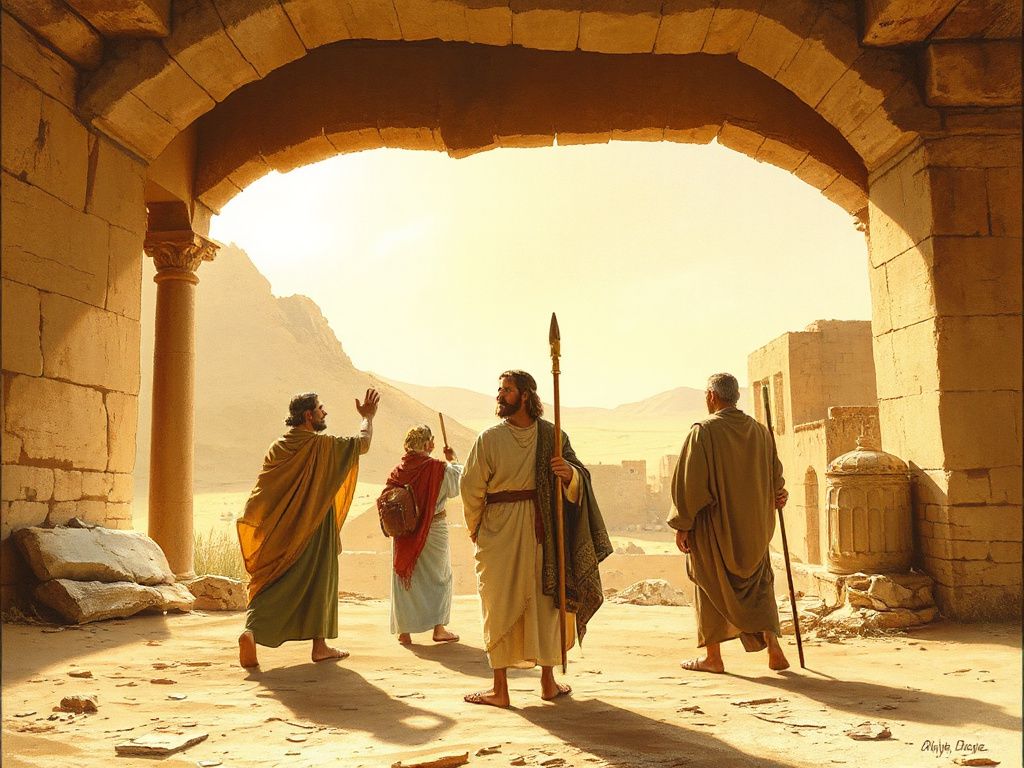
BIBLE VERSE STUDY
Exodus 3:14 — The Divine Name 'I AM'
At the burning bush, God reveals His personal name to Moses as 'I AM THAT I AM,' defining Himself by self-existent being.
Scripture
14And God said unto Moses, I AM THAT I AM: and he said, Thus shalt thou say unto the children of Israel, I AM hath sent me unto you.
What this passage means
In Exodus 3:14, God responds to Moses' question about His name (v. 13) by declaring, 'I AM THAT I AM,' and then instructs Moses to tell Israel that 'I AM hath sent me unto you.' The phrase is a statement of self-existent being: God identifies Himself not by describing what He does, where He comes from, or what others call Him, but by His own essence. The construction places emphasis on the subject 'I,' locating identity and authority within God's own person rather than in any external attribute or relationship.
The second clause of the verse shifts from definition to commission. God does not give Moses a philosophical explanation but a sending formula. Moses is to answer the Israelites' question 'What is his name?' (v. 13) with 'I AM hath sent me unto you.' The name functions as credential: the same God who exists of Himself is the one who acts to deliver. The verse thus binds God's character (self-existent being) to His action (sending Moses), making the name both a declaration of who He is and a guarantee of what He will do.
Verse 14 is also the immediate link to verse 15, where God further identifies Himself as 'Jehovah, the God of your fathers, the God of Abraham, the God of Isaac, and the God of Jacob,' calling this 'my name for ever' and 'my memorial unto all generations.' The covenant name is not replaced by 'I AM' but is placed alongside it, so that the self-existent God of the patriarchs is the One now speaking from the bush and sending Moses to bring Israel out of Egypt (v. 10).
Context
Exodus 3 opens with Moses keeping Jethro's flock near Horeb, the mountain of God, where the angel of Jehovah appears in a flaming bush that is not consumed (vv. 1–3). God calls Moses from the bush, instructs him to remove his sandals on holy ground, and identifies Himself as 'the God of thy father, the God of Abraham, the God of Isaac, and the God of Jacob' (vv. 4–6). He then declares that He has seen Israel's affliction, heard their cry, and is sending Moses to bring them 'out of that land unto a good land and a large, unto a land flowing with milk and honey' (vv. 7–8, 10).
Against this backdrop, Moses raises two objections. First, he asks, 'Who am I, that I should go unto Pharaoh?' and receives the promise, 'Certainly I will be with thee' (vv. 11–12). Then he asks what name he should give when the Israelites ask who sent him (v. 13). It is to this second question that Exodus 3:14 directly answers, and the surrounding verses (15–17) expand the answer into the covenant name Jehovah and the promise of deliverance from Egypt to Canaan.
Common questions
What does 'I AM THAT I AM' mean in Exodus 3:14?
Within the verse itself, God identifies Himself by His own self-existent being rather than by any external attribute. He answers Moses' question about His name (v. 13) by declaring that He is what He is of Himself, and then tells Moses to say 'I AM hath sent me unto you.'
Why does God give His name in response to Moses' question?
Moses asks what name he should give the Israelites when they ask who sent him (v. 13). God's reply in verse 14 supplies the answer: He defines Himself by His own being and then uses that self-identification as the basis for Moses' commission, so that the One who exists of Himself is the One sending Moses.
How does Exodus 3:14 connect to verse 15?
Verse 14 gives the self-revealing name 'I AM,' and verse 15 immediately expands it: God says to call Him 'Jehovah, the God of your fathers, the God of Abraham, the God of Isaac, and the God of Jacob,' declaring this 'my name for ever' and 'my memorial unto all generations.' The covenant name is thus set alongside the 'I AM' declaration, tying the self-existent God to the God of the patriarchs who is now sending Moses.