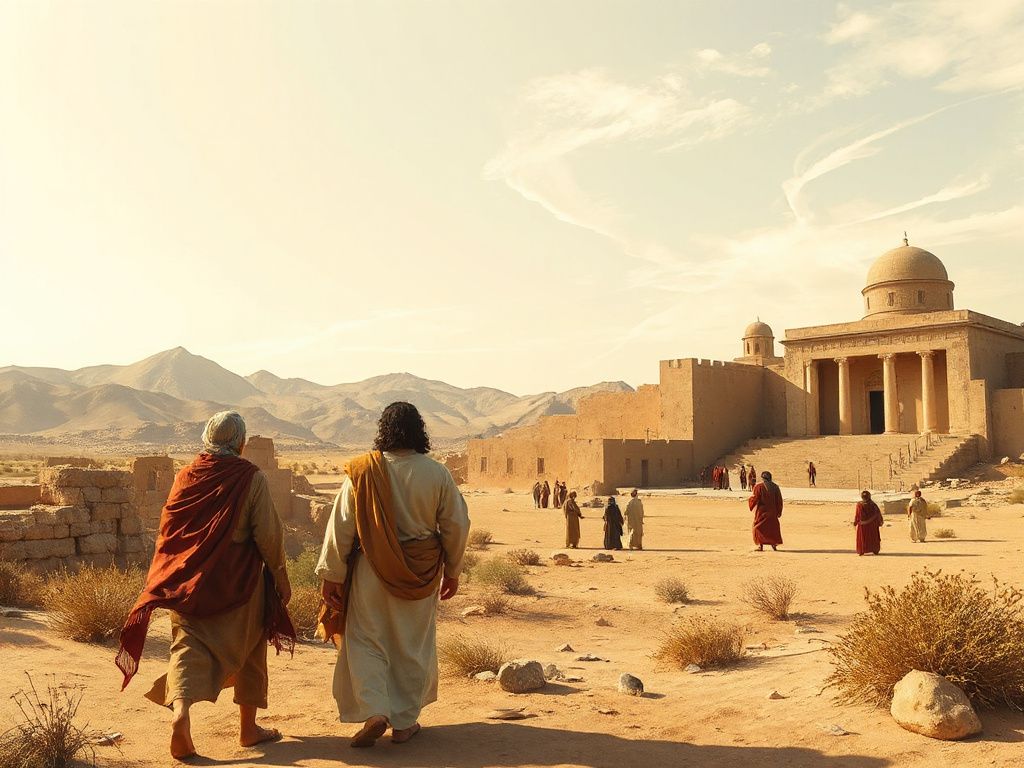
BIBLE VERSE STUDY
Habakkuk 2:20 — The Lord in His Holy Temple
Habakkuk 2:20 closes the book's series of woes by declaring that Jehovah is in His holy temple and calls all the earth to silence before Him.
Scripture
20But Jehovah is in his holy temple: let all the earth keep silence before him.
What this passage means
The verse is the climactic conclusion of Habakkuk's five woes against the Babylonian oppressor. After condemning plunder (v.6-8), covetous building (v.9-11), bloodshed (v.12-14), drunken violence (v.15-17), and idolatry (v.18-19), the prophet points past all human arrogance to the One who sits enthroned. The statement 'But Jehovah is in his holy temple' uses the emphatic contrast word often rendered 'however' to set the living God over against the dumb idols just described.
The call 'let all the earth keep silence before him' is not idle quiet but reverent awe. In the ancient prophetic courtroom, the judge has spoken; the only appropriate response is to stop protesting and listen. The verse thus functions as both a verdict against the nations and an invitation to worship, recognizing that God's self-revelation is final and His verdict cannot be appealed.
Because the temple is 'holy,' the silence required is not fear of tyranny but recognition of God's set-aparedness. The contrast is sharp: idols made of gold and silver have 'no breath at all in the midst of them,' but Jehovah in His temple is the living Lord of all the earth. The verse therefore reframes the whole preceding chapter: every human project, whether violent or religious, must yield to the presence of the true God.
Context
Within chapter 2, Habakkuk receives the vision he is told to write plainly (v.2-3) and delivers a taunt-song of woes against the proud and violent. The chapter ends with verse 20 as the only alternative to idolatry: silence before the living God.
The immediate setting (vv.18-19) ridicules idols that cannot speak, see, or breathe, then verse 20 pivots with the contrast word to the One who is genuinely present in His holy temple.
Common questions
Why does the chapter end with this verse instead of continuing the woes?
The repeated pattern of woe-oracles would have no resolution without turning the reader's attention to the only one with authority to judge. Ending on 'Jehovah is in his holy temple' transforms the taunt-song into an act of worship, giving the chapter its climax rather than another grievance.
What does 'keep silence before him' mean?
It calls for reverent stillness before a holy judge. In the prophetic courtroom image, once the Lord has spoken, the appropriate response is to cease arguing and listen, acknowledging that His word is final and His verdict stands.
How does this verse relate to the idols mentioned just before it?
Verses 18-19 mock idols that have 'no breath at all in the midst of them.' Verse 20 answers by pointing to the living God who actually dwells in His holy temple, contrasting the silent worship directed at idols with the silent awe owed to the true God.