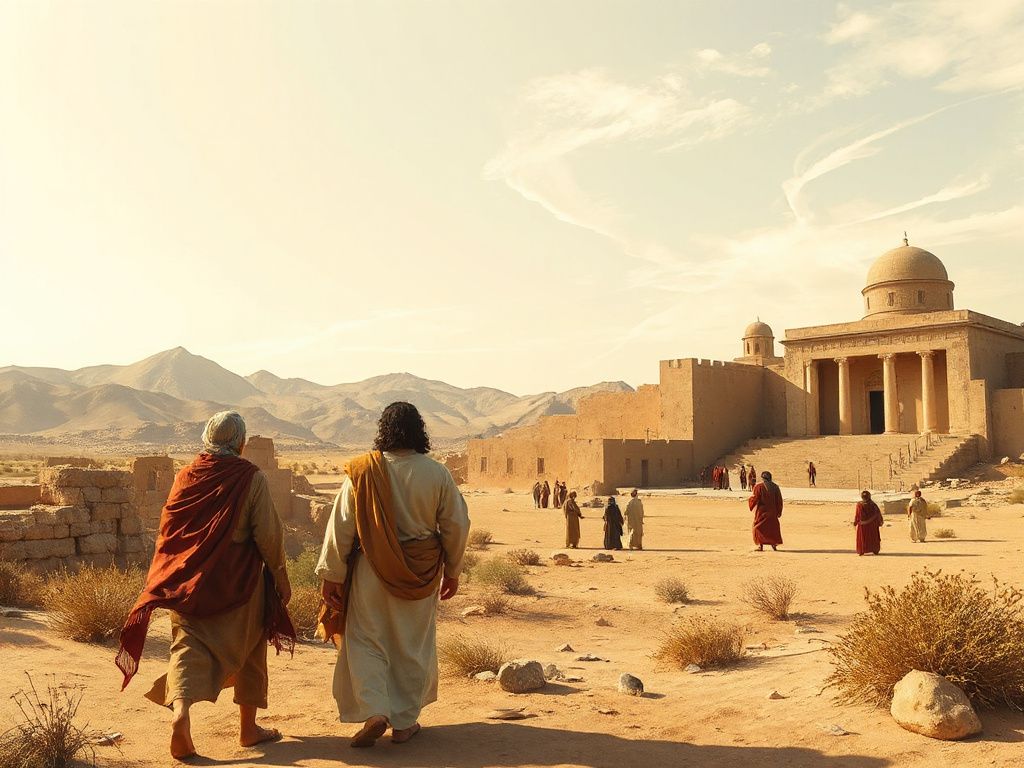
BIBLE VERSE STUDY
Habakkuk 3:2 — A Plea for Mercy in Wrath
Habakkuk pleads that God revive his work and remember mercy even when wrath must come.
Scripture
2O Jehovah, I have heard the report of thee, and am afraid: O Jehovah, revive thy work in the midst of the years; In the midst of the years make it known; In wrath remember mercy.
What this passage means
The verse opens with Habakkuk confessing that he has heard the 'report' or 'renown' of Jehovah — the accounts of his mighty acts — and the hearing itself produces fear. The fame of God is not merely informative; it awakens reverent awe at who he is and what he has done.
From that fear arises a double petition. Habakkuk asks Jehovah to 'revive' his work 'in the midst of the years' and to 'make it known' in the same timeframe. The wording presses for action within an existing stretch of time rather than at some distant end, indicating an urgency that the present generation see God's saving deeds.
The petition closes with a tension left unresolved: God's work will necessarily involve wrath against evil, yet Habakkuk asks that mercy be remembered even in wrath. The plea does not ask wrath to be removed; it asks that mercy accompany and constrain it.
Context
Verse 1 identifies the whole chapter as 'a prayer of Habakkuk the prophet, set to Shigionoth,' so 3:2 is the opening petition of that prayer. The chapter then moves into a theophany (vv. 3-15) recalling God's coming from Teman and Paran in power, before the prophet again voices trembling at God's word (v. 16) and resolves to rejoice in Jehovah as the God of his salvation (v. 18).
Within the chapter, the closing resolve of rejoicing in the God of salvation (v. 18) frames the plea of 3:2: Habakkuk asks that God's saving work be revived now, precisely because he knows that God's intervention brings both judgment on the wicked and mercy for those who fear him.
Common questions
What does the 'report of thee' that Habakkuk heard refer to?
Within the chapter itself, the following verses depict God's mighty acts — his coming in glory, his judging the nations, his saving his people. The 'report' is the renown of those works, and hearing it produces reverent fear of the God who does them.
What does it mean to ask God to 'revive his work in the midst of the years'?
The petition asks that God's saving work be made visible within the existing span of time the prophet and his generation inhabit, not deferred to a remote future. Habakkuk presses for present, visible divine action.
Why does Habakkuk ask God to 'remember mercy' amid wrath rather than ask for the wrath to be removed?
The verse does not deny that wrath against evil is coming; instead it asks that mercy accompany that wrath. The plea leaves the tension between judgment and mercy unresolved, entrusting it to God's character.