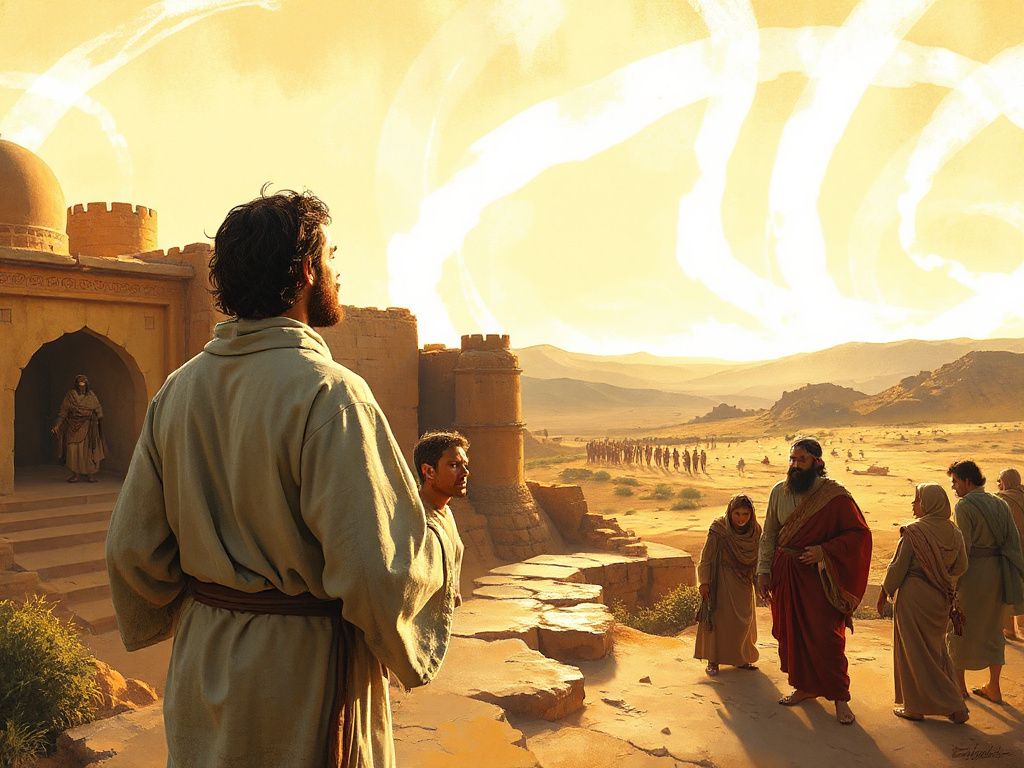
BIBLE VERSE STUDY
Isaiah 65:17 — The Creation of New Heavens and a New Earth
God promises to create new heavens and a new earth in which former sorrows are no longer remembered or recalled to mind.
Scripture
17For, behold, I create new heavens and a new earth; and the former things shall not be remembered, nor come into mind.
What this passage means
Isaiah 65:17 is a single, tightly constructed declaration built around the verb "create." The speaker is Yahweh, and the object of the creative act is twofold: "new heavens and a new earth." The verse opens with the attention-grabbing "For, behold," signaling that what follows is the theological reason for the forgetting of former troubles described in verse 16. Because the old order has been set aside from God's sight, He now undertakes a wholly new creative work.
The second half of the verse explains the effect of this new creation on human consciousness: "the former things shall not be remembered, nor come into mind." This is not merely suppression but a positive condition produced by the new creation itself. The memory of prior sorrows is no longer active in the life of the redeemed community, because those sorrows belong to a realm that has been replaced.
The passage thus frames eschatological hope as divine creative action rather than human achievement. The focus falls on what God does — "I create" — rather than on what the people build or restore. The "new heavens and a new earth" language establishes a comprehensive renewal that encompasses both the heavenly and the earthly realms, not merely a political or local restoration.
Context
Isaiah 65 sits within the final section of the book (chapters 40–66), where the prophet addresses a post-exilic community with a message that weaves together judgment and consolation. The chapter opens with Yahweh's complaint against a rebellious people who provoked Him with idolatrous practices (verses 1–7) and then pivots to a remnant — "my servants" — who will inherit the land (verses 8–10). A sharp contrast between the fate of the wicked and the blessedness of God's servants runs through verses 11–16, culminating in the declaration that "the former troubles are forgotten" (v. 16).
Verse 17 supplies the grounds for that forgetting: God is doing something ontologically new. The following verses (18–25) unfold the consequences of this new creation — Jerusalem becomes "a rejoicing," weeping ceases, lifespans lengthen, labor is fruitful, and even predator and prey dwell together. Isaiah 65:17 is therefore the hinge on which the consolation of the chapter turns, the moment where the promise shifts from the removal of past evil to the inauguration of a new created order.
Common questions
Why does Isaiah 65:17 say "I create" rather than "I make"?
The verse uses "create" to emphasize that what God is bringing into being is entirely new, not a repair or modification of what already exists. The verb underscores that the new heavens and new earth are a fresh divine initiative rather than a renovation of the old order.
What are the "former things" that will no longer be remembered?
Within the flow of Isaiah 65, the "former things" refer to the troubles, sorrows, and acts of judgment described in the preceding verses — the weeping, hunger, and shame that fell upon the unrepentant (verses 13–16). Verse 16 explicitly names them "the former troubles," which God says are hidden from His eyes, and verse 17 explains the result: they will not surface again in the memory of the new creation's inhabitants.
Is the new creation in Isaiah 65:17 a literal or symbolic promise?
The text itself does not signal which way to read it. It uses concrete language — "new heavens and a new earth," with Jerusalem and its people named explicitly in the surrounding verses. How literally one takes the imagery depends on the interpretive framework brought to the passage; the verse as written presents a cosmic-scale renewal without clarifying whether it is material, spiritual, or both.