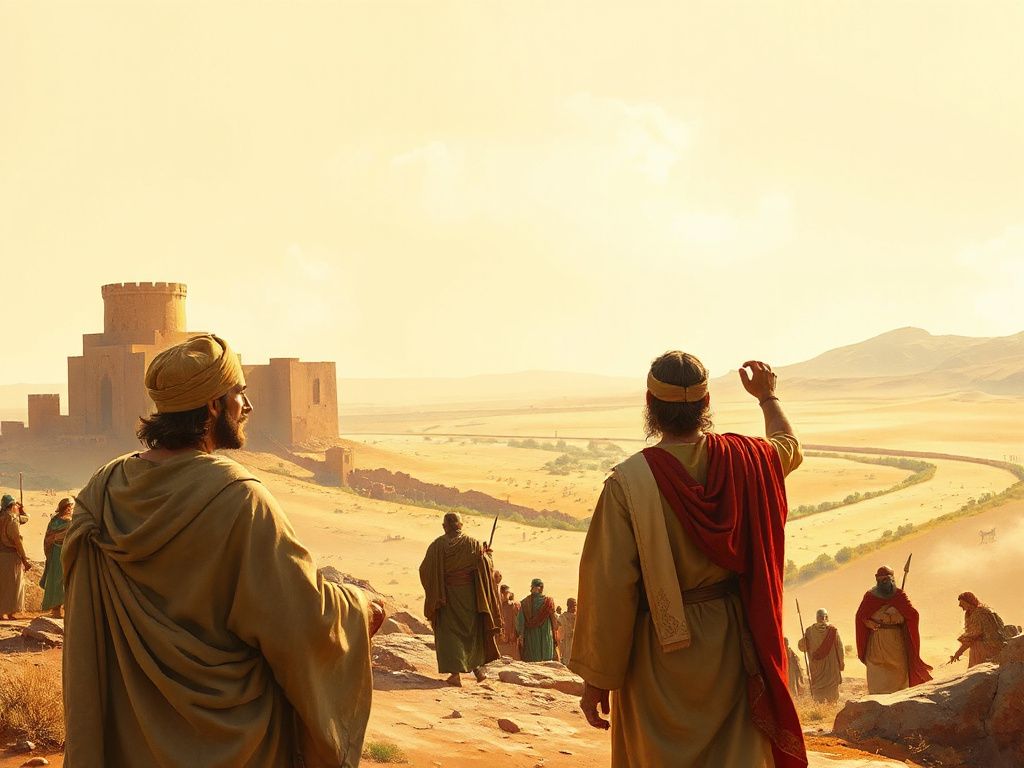
Joshua 11:23 — The Conquest Completed and the Land at Rest
Joshua 11:23 summarizes the entire conquest: the land is taken, divided among the tribes, and the land has rest from war.
Scripture
23So Joshua took the whole land, according to all that Jehovah spake unto Moses; and Joshua gave it for an inheritance unto Israel according to their divisions by their tribes. And the land had rest from war.
What this passage means
Verse 23 functions as the literary capstone of the conquest narrative. After the detailed campaigns against the northern coalition (vv. 1–14) and the summary of Joshua's obedience to Moses' commands (v. 15), the verse compresses the entire effort into one declarative statement: Joshua took the whole land. The phrase 'according to all that Jehovah spake unto Moses' ties the outcome back to the divine promises given through Moses in Numbers 34 and Deuteronomy, presenting the conquest not as a human military achievement but as the fulfillment of spoken divine word.
The second half of the verse, 'Joshua gave it for an inheritance unto Israel according to their divisions by their tribes,' signals the next major phase of the book. The verb 'gave' (Hebrew natan) frames the land as an inheritance distributed by God through Joshua, not a conquest prize. The reference to tribal divisions establishes that the allocation is structured, covenantal, and corporate rather than individual. This prepares the reader for the allotment narratives of Joshua 13–21.
The closing clause, 'And the land had rest from war,' is theologically significant. In the Hebrew idiom, 'rest' (Hebrew shaqat) carries the sense of cessation of hostility and the enjoyment of settled life. The summary does not yet describe the completion of the distribution (which the rest of the book narrates), nor does it claim there is no further conflict (chapters 13–22 still involve remaining enemies and tribal responsibilities). Rather, it marks the end of the major campaign phase and points forward to the tribal allotment.
Context
Chapter 11 opens with a coalition of northern kings rallying against Israel (vv. 1–5). Jehovah responds by promising victory at Merom (v. 6), and Joshua executes a sudden attack that defeats the coalition, hocks the horses, and burns the chariots (vv. 7–9). The capture of Hazor, the coalition's leading city, is singled out (vv. 10–11). Joshua then takes the cities of all these kings in accordance with Moses' command (vv. 12–15). A second summary (vv. 16–17) expands the geography of the conquest from Mount Halak to Baal-gad and notes that the campaign against these kings took a long time (v. 18). Only the Hivites of Gibeon made peace (v. 19), and the chapter attributes the hardened opposition to Jehovah's purpose (v. 20). The chapter then notes the removal of the Anakim from the hill country (vv. 21–22) before reaching its climactic summary in v. 23.
The curated material provides no additional cross references or original-language data. The note for both verse and chapter is null, so the only interpretive material available is the chapter text itself. Within that text, the themes of obedience to Moses' instruction, the completeness of the takeover, and the transition from warfare to inheritance are emphasized repeatedly, especially in verses 15, 18, 20, and 23.
Common questions
Does Joshua 11:23 mean the conquest of Canaan is fully complete?
The verse summarizes that Joshua took the whole land and the land had rest from major war, but the rest of the book (chapters 13–22) still describes tribal allotments and remaining territories to be possessed. The summary marks the end of the united campaign phase rather than total elimination of every enemy.
Why does the verse link the result to what Jehovah spoke to Moses?
The phrase 'according to all that Jehovah spake unto Moses' frames the conquest as the fulfillment of prior divine revelation rather than a human accomplishment. It signals covenant continuity between Moses' era and Joshua's leadership, showing that Joshua's obedience is measured against Moses' commission.
What does 'the land had rest from war' mean here?
The clause marks the cessation of the large-scale military campaigns described in Joshua 1–11. The word 'rest' does not mean total peace with no remaining enemies; it denotes the transition from concentrated warfare to the slower process of tribal settlement and inheritance distribution that fills the rest of the book.