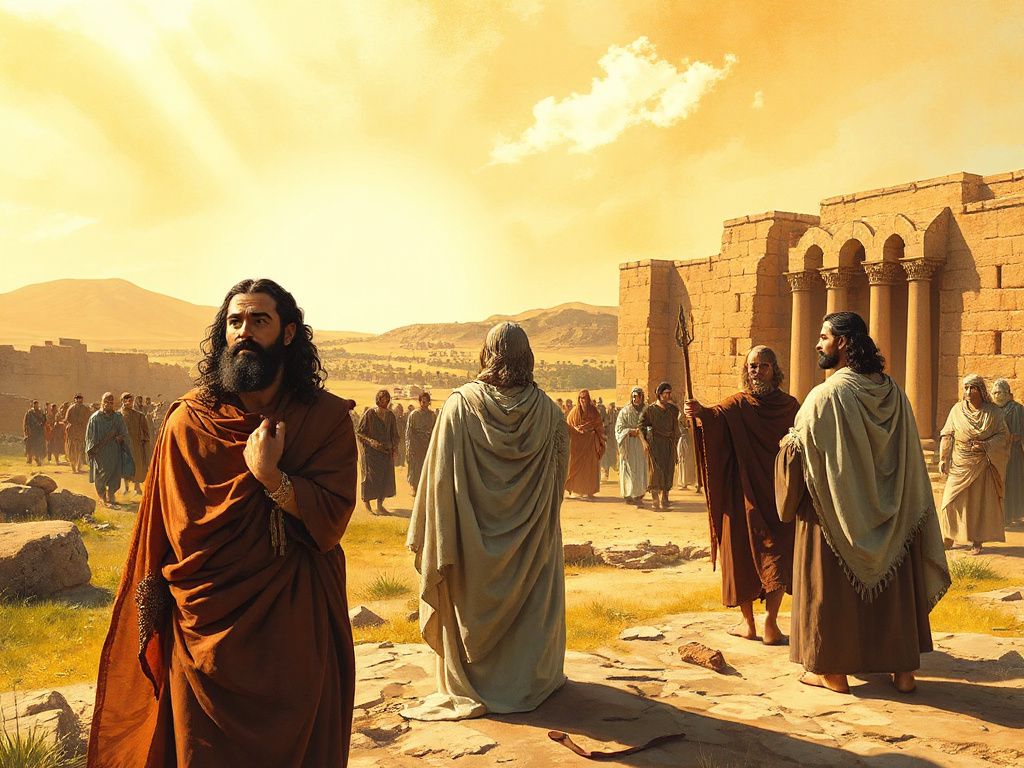
BIBLE VERSE STUDY
Judges 2:21-23 — Why the Nations Remained
In Judges 2:21-23 the Lord announces that He will stop driving out the remaining nations and will leave them in the land to test whether Israel will keep His way.
Scripture
21I also will not henceforth drive out any from before them of the nations that Joshua left when he died;
22that by them I may prove Israel, whether they will keep the way of Jehovah to walk therein, as their fathers did keep it, or not.
23So Jehovah left those nations, without driving them out hastily; neither delivered he them into the hand of Joshua.
What this passage means
Verses 21-23 close the prologue of Judges (chs. 1-2) by stating God's stated reason for leaving the nations in the land. The wording — "I also will not henceforth drive out any from before them of the nations that Joshua left when he died" — ties the surviving nations directly to Joshua's incomplete conquest. The Lord frames His decision as a response to Israel's prior covenant unfaithfulness (cf. 2:20) rather than as a lapse in His power.
Verse 22 makes the purpose explicit: the remaining nations are kept "that by them I may prove Israel, whether they will keep the way of Jehovah to walk therein, as their fathers did keep it, or not." The verb translated "prove" presents the nations as a testing instrument; Israel's faithfulness to the covenant way, not its military victories, is what is at stake. The comparison "as their fathers did keep it" holds the present generation up to the standard of the exodus generation's obedience.
Verse 23 summarizes the outcome: "Jehovah left those nations, without driving them out hastily; neither delivered he them into the hand of Joshua." The phrase "without driving them out hastily" does not describe delay or weakness; in context it underscores that the Lord's deliberate restraint is itself the testing arrangement described in v. 22. The closing clause, "neither delivered he them into the hand of Joshua," sharply distinguishes the Lord's purpose in Joshua's generation from His purpose now.
Context
Judges 2:21-23 is set within the theological prologue of the book (2:1-23). The angel of Jehovah's earlier statement at 2:3 — "I will not drive them out from before you; but they shall be as thorns in your sides, and their gods shall be a snare unto you" — anticipates the announcement that comes in vv. 21-23. The intervening verses (2:6-19) recount Joshua's death, the rise of a generation that "knew not Jehovah" (2:10), the cycle of apostasy, oppression, and deliverance through judges, and finally the degeneration after each judge died (2:19).
Verses 20-23 form a single speech in which the Lord's anger against Israel is stated (v. 20) and then His consequent policy is declared (vv. 21-23). The chapter thus reads vv. 21-23 as the divine explanation for the religious chaos that dominates the rest of Judges: the surviving nations are not an oversight in the conquest but a deliberate covenantal test.
Common questions
Why does the Lord say He will no longer drive out the nations?
According to Judges 2:20, the Lord explains that Israel has "transgressed my covenant which I commanded their fathers, and have not hearkened unto my voice." The decision to leave the nations is therefore given as a covenantal response to Israel's unfaithfulness, stated immediately before vv. 21-23.
What is the purpose of leaving the nations in the land according to this passage?
Verse 22 states the purpose plainly: "that by them I may prove Israel, whether they will keep the way of Jehovah to walk therein, as their fathers did keep it, or not." The nations function as a test of covenant faithfulness, with the standard set by Israel's fathers.
Does "without driving them out hastily" imply the Lord was unable or unwilling to act?
In its context the clause emphasizes deliberate restraint, not weakness. Verse 22 explicitly identifies the restraint as a test of Israel, and the closing line "neither delivered he them into the hand of Joshua" presents the surviving nations as part of a different purpose from the one the Lord pursued in Joshua's generation.