BIBLE BOOK GUIDE
Lamentations
5 chapters
Laments over Jerusalem's destruction that acknowledge God's righteous judgment while clinging to His faithfulness and hoping for restoration.
Why this book was written
Written after Jerusalem's fall in 586 BC, the author laments the devastated city through five acrostic poems. He expresses the depth of suffering, confesses sin, pleads with God, and calls upon His mercy—comforting the remnant with the hope that God's faithfulness endures even in judgment.
Structure
- 1Zion's Lament (Aleph)
- 2Sorrow Under the Lord's Anger
- 3Hope and Meditation of the Sufferer
- 4Contrast Between the City's Past and Present
- 5Intercession and Hope for Restoration
Major themes
The Destruction of Jerusalem
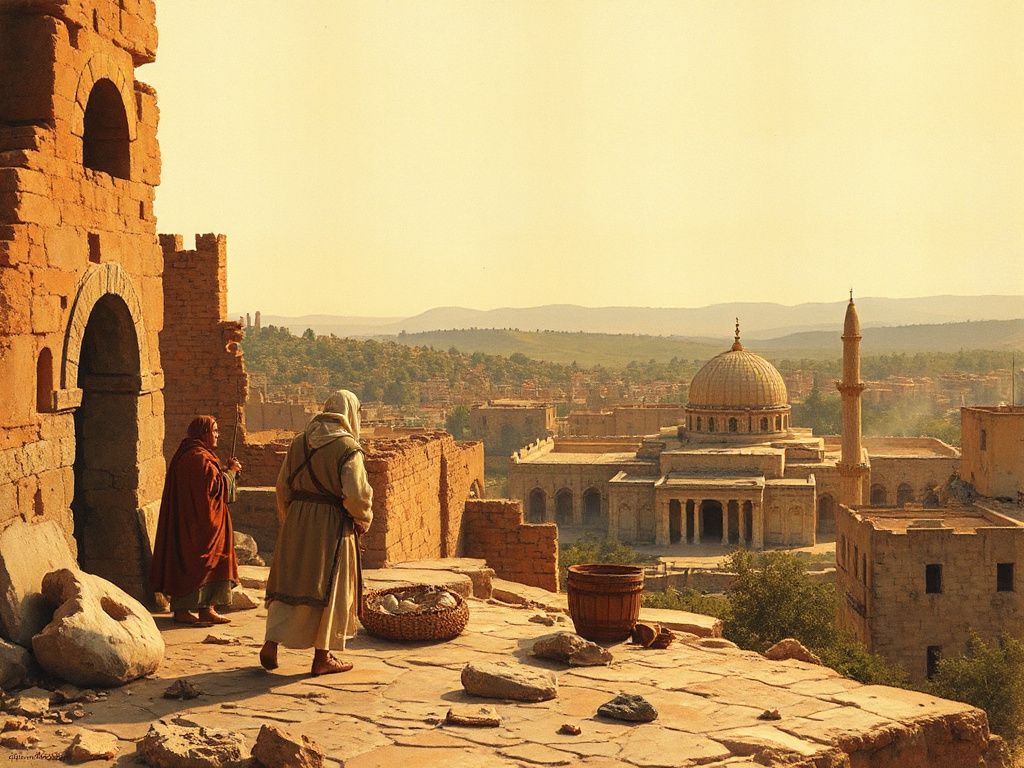
The book vividly depicts the ruined city, the burned temple, and the exiled people, showing the real consequences of divine judgment (1:1-4; 2:8-9).
How it points to Christ
Though Lamentations does not directly prophesy the Messiah, it points to the Man of Sorrows who bears our griefs (cf. Isa 53:4). Jeremiah's cry for God's faithfulness amid suffering prefigures Christ, who on the cross cried 'My God, why have you forsaken me?' (cf. Matt 27:46) yet still trusted the Father. The movement from lament to hope in this book foreshadows the turn from sorrow to joy at Christ's resurrection.
Key verses
- 1:1The opening lament—how the city once full of people now sits alone like a widow—sets the tone for the entire book.
- 1:18Acknowledging the Lord's righteousness while pleading for Him to see the suffering—exemplifying the book's twin posture of repentance and appeal.
- 2:22The author calls on God to summon the destruction He threatened, showing faith in God's sovereignty even amid suffering.
- 3:21–23The book's theological center—recalling God's love and mercies in the midst of despair fuels hope; a key turning-point of faith.
- 3:55A plea to be delivered from the depths—modeling personal and communal cry from the abyss of suffering.
- 4:13Connects Jerusalem's fall directly to the sins of prophets and priests—linking suffering to its moral cause.
- 5:19Despite suffering, the confession that the Lord reigns forever—the climactic declaration of faith and hope that closes the book.
Read chapter by chapter
Questions for reflection
- ·When you suffer, will you honestly pour out your pain to God as Jeremiah did, rather than suppress or flee from it? (cf. Lam 2:19)
- ·Do you believe God's steadfast love and faithfulness remain even when He disciplines or seems silent? (cf. Lam 3:22-23)
- ·How do you respond to those who suffer around you — with quick answers, or with willingness to weep alongside them? (cf. Lam 1:9; John 11:35)
- ·After reading all five chapters, does your heart, like Jeremiah's, move from despair to looking up to God? What hinders that shift in you?
Want to read Lamentations start to finish? Open the reader for parallel Chinese/English text and ask anything as you go.
Start reading Lamentations