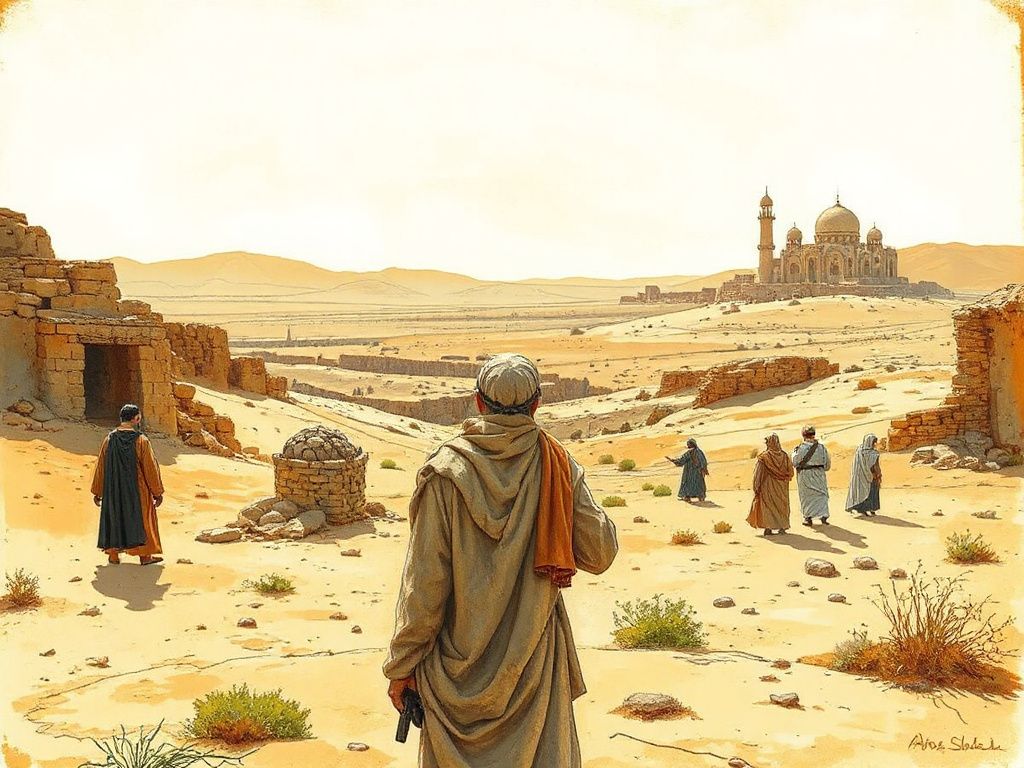
BIBLE VERSE STUDY
Nahum 1:15 — Good Tidings Upon the Mountains
Nahum 1:15 proclaims a messenger bringing good tidings and peace on the mountains, summoning Judah to renewed worship because the oppressor is cut off.
Scripture
15Behold, upon the mountains the feet of him that bringeth good tidings, that publisheth peace! Keep thy feasts, O Judah, perform thy vows; for the wicked one shall no more pass through thee; he is utterly cut off.
What this passage means
The verse opens with an attention-grabbing summons: “Behold, upon the mountains the feet of him that bringeth good tidings, that publisheth peace!” The image is a runner or herald arriving over the hills, bearing news of deliverance. The wording draws on the messenger imagery familiar across the prophetic books, where a herald’s arrival signals the outcome of a battle or the verdict of God. Here the news is unambiguously good: tidings and peace together, the reversal of everything the preceding verses threatened against the enemy.
The second half addresses Judah directly: “Keep thy feasts, O Judah, perform thy vows.” Because the threat has been removed, covenant worship can resume without fear. The feasts in view are the appointed religious gatherings, and the vows are the commitments Judah made in the crisis. The call to “keep” and “perform” them is a summons to faithful response now that deliverance has come.
The verse closes with a reason clause: “for the wicked one shall no more pass through thee; he is utterly cut off.” This final line ties the herald’s good news to the destruction announced in the preceding verses (the breaking of the yoke in v. 13 and the cutting off of the name and idols in v. 14). The oppressor’s permanent removal is the ground for both the messenger’s message and Judah’s worship.
Context
Nahum 1 opens with a divine portrait: a jealous, avenging God who is nevertheless slow to anger and a stronghold for those who take refuge in him (vv. 2–3, 7). The chapter then turns to a coming flood-like end for Nineveh (vv. 8–9) and addresses an evil counselor who has devised wickedness against Jehovah (v. 11). Verses 12–14 speak of the enemy being cut down, Judah’s yoke broken, and the idols of the enemy’s house removed. Verse 15 forms the climactic announcement that follows this sequence of judgment: the war is over, and the messenger is already running with the news.
Because Nahum 1:15 is the final verse of the chapter, it functions as a hinge — concluding the opening judgment oracle and pointing forward. The imperative to keep feasts and pay vows assumes a restored community life now that the oppressor is gone. The chapter itself supplies no further material; the verse is read as a self-contained conclusion to the unit.
Common questions
Why is Nahum 1:15 sometimes numbered as Nahum 2:1?
The verse numbering shifts between Hebrew and certain other textual traditions. In the Hebrew canon, what appears as chapter 2, verse 1 in many English Bibles corresponds to 1:15 in the Hebrew verse count. The content of the verse — the messenger on the mountains, the call to keep feasts, and the cutting off of the wicked — remains the same across numbering systems.
Who is the messenger bringing good tidings in this verse?
The verse does not name the messenger within the text itself. It describes his role — bringing good tidings and publishing peace — and his arrival on the mountains. Within the immediate context of Nahum 1, he functions as a herald announcing the destruction of the oppressor and the restoration of Judah’s worship. The chapter does not identify him further.
What is the relationship between the destruction of the wicked and the call to keep feasts?
The verse links them with a “for” clause: the reason Judah is called to keep feasts and perform vows is that the wicked one will no longer pass through and is utterly cut off. The removal of the threat is the ground for resuming covenant worship without fear and for fulfilling the vows made during the crisis.