BIBLE CHAPTER STUDY
Proverbs 1: Purpose, Wisdom's Call, and the Two Paths
Proverbs 1 opens with Solomon's purpose for the book—to impart wisdom, instruction, and discernment rooted in the fear of the Lord—then warns the son against joining violent sinners and depicts personified Wisdom publicly pleading with the simple, scoffers, and fools.
Scripture
1The proverbs of Solomon the son of David, king of Israel:
2To know wisdom and instruction; To discern the words of understanding;
3To receive instruction in wise dealing, In righteousness and justice and equity;
4To give prudence to the simple, To the young man knowledge and discretion:
5That the wise man may hear, and increase in learning; And that the man of understanding may attain unto sound counsels:
6To understand a proverb, and a figure, The words of the wise, and their dark sayings.
7The fear of Jehovah is the beginning of knowledge; But the foolish despise wisdom and instruction.
8My son, hear the instruction of thy father, And forsake not the law of thy mother:
9For they shall be a chaplet of grace unto thy head, And chains about thy neck.
10My son, if sinners entice thee, Consent thou not.
11If they say, Come with us, Let us lay wait for blood; Let us lurk privily for the innocent without cause;
12Let us swallow them up alive as Sheol, And whole, as those that go down into the pit;
13We shall find all precious substance; We shall fill our houses with spoil;
14Thou shalt cast thy lot among us; We will all have one purse:
15My son, walk not thou in the way with them; Refrain thy foot from their path:
16For their feet run to evil, And they make haste to shed blood.
17For in vain is the net spread In the sight of any bird:
18And these lay wait for their own blood; They lurk privily for their own lives.
19So are the ways of every one that is greedy of gain; It taketh away the life of the owners thereof.
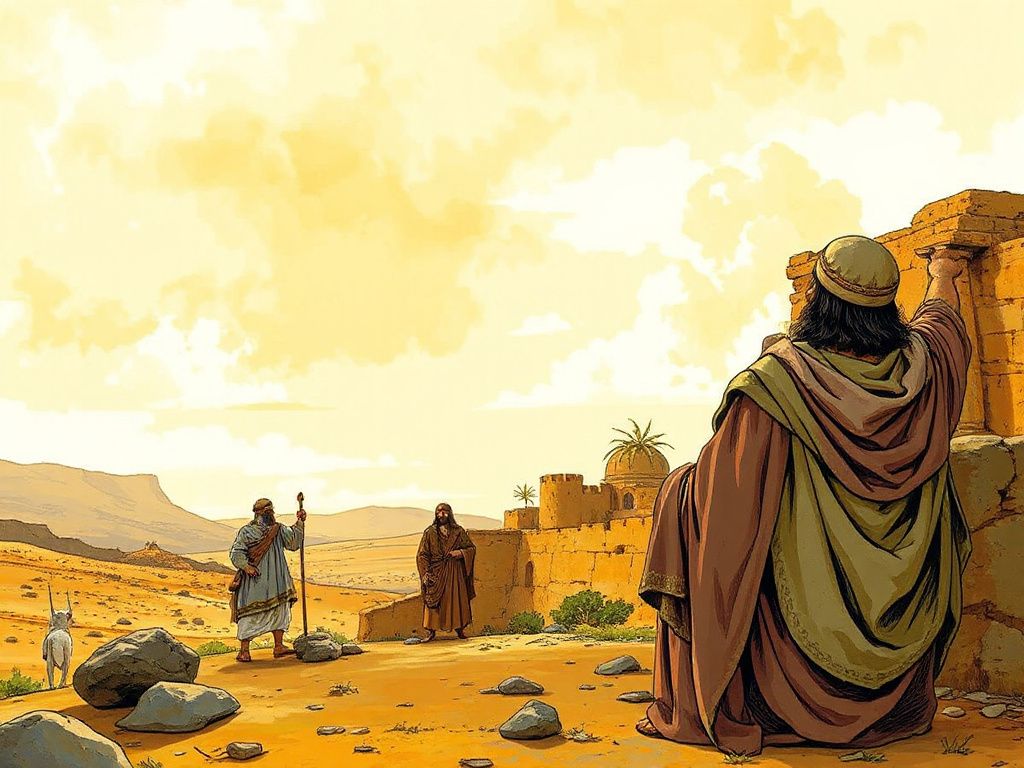
20Wisdom crieth aloud in the street; She uttereth her voice in the broad places;
21She crieth in the chief place of concourse; At the entrance of the gates, In the city, she uttereth her words:
22How long, ye simple ones, will ye love simplicity? And scoffers delight them in scoffing, And fools hate knowledge?
23Turn you at my reproof: Behold, I will pour out my spirit upon you; I will make known my words unto you.
24Because I have called, and ye have refused; I have stretched out my hand, and no man hath regarded;
25But ye have set at nought all my counsel, And would none of my reproof:
26I also will laugh in the day of your calamity; I will mock when your fear cometh;
27When your fear cometh as a storm, And your calamity cometh on as a whirlwind; When distress and anguish come upon you.
28Then will they call upon me, but I will not answer; They will seek me diligently, but they shall not find me:
29For that they hated knowledge, And did not choose the fear of Jehovah:
30They would none of my counsel; They despised all my reproof.
31Therefore shall they eat of the fruit of their own way, And be filled with their own devices.
32For the backsliding of the simple shall slay them, And the careless ease of fools shall destroy them.
33But whoso hearkeneth unto me shall dwell securely, And shall be quiet without fear of evil.
What this passage means
Proverbs 1 functions as the book's preface and thesis. Verses 2–6 lay out a six-fold purpose: to know wisdom and instruction, to discern understanding, to receive instruction in righteousness, justice, equity and prudence, to give the simple shrewdness and the young knowledge and discretion, to let the wise grow in learning, and to understand a proverb and the dark sayings of the wise. The list widens outward from the naive to the experienced, showing that the book addresses every level of reader.
Verse 7 forms the theological hinge of the chapter—and arguably of the entire book. 'The fear of Jehovah is the beginning of knowledge' ties all six preceding goals together: wisdom is not merely intellectual skill but a relational posture toward God. The paired contrast, 'the foolish despise wisdom and instruction,' establishes the two paths that will run through the rest of Proverbs: those who heed this fear and those who reject it.
Verses 8–33 unfold those two paths dramatically. Verses 8–19 warn 'my son' against joining sinners who ambush the innocent, with the vivid image that the net spread in a bird's sight is in vain, so these violent men are really ambushing themselves. Verses 20–33 then personify Wisdom as a public figure crying in the streets; she offers reproof that will be poured out like a spirit, but warns that those who refuse will eat the fruit of their own way, while those who hear her will dwell securely.
Context
The provided chapter note only indicates that this chapter was backfilled from Proverbs outside the P0/P1 priority set, with no additional commentary. The cross_references supplied with this chapter center on two themes. Job 28:28, Psalms 111:10, Proverbs 9:10, Proverbs 15:33, and Ecclesiastes 12:13 all echo verse 7 by placing the fear of the Lord as the starting point of wisdom. Psalms 112:1, Psalms 25:12–13, Proverbs 12:1, Proverbs 10:1, and Proverbs 18:2 expand the themes of heeding instruction and of the fool's self-destructive refusal of knowledge. Proverbs 1:22 itself reappears as a self-reference, marking the opening of Wisdom's public speech.
Together these references show how Proverbs 1 is deliberately framed as the doorway to the whole wisdom tradition: its purpose statement in verses 2–6, its theological anchor in verse 7, and its twin scenes of parental warning and Wisdom's public appeal in verses 8–33 each connect to recurring threads elsewhere in Proverbs and the Writings.
Key words in the original
- H2451 חָכְמָה (ḥoḵmāh, 'wisdom') appears in verse 2 as the first goal of Proverbs. The gloss defines it as 'wisdom (in a good sense),' showing that from its opening the book frames wisdom positively rather than as mere cleverness. The verse pairs it with מוּסָר (mûsār, 'instruction/discipline'), suggesting wisdom here includes moral formation, not only knowledge.
- H4148 מוּסָר (mûsār, 'instruction') in verses 2 and 3 is glossed as 'properly, chastisement; figuratively, reproof, warning or instruction; also restraint.' Its appearance in both the purpose statement (v. 2) and the third purpose line (v. 3) shows that correction and discipline are foundational, not optional, to Proverbs' project of shaping wise conduct in righteousness, justice, and equity.
- H4209 מְזִמָּה (məzimmāh, 'discretion') in verse 4 is defined as 'a plan, usually evil (machination), sometimes good (sagacity).' In this verse it takes the positive sense of 'discretion' given to 'the young man' alongside דַּעַת (daʿaṯ, 'knowledge'), showing that Proverbs uses a word whose default meaning is scheming to denote constructive planning when paired with the fear of the Lord.
Related verses
- Job 28:28 Job 28:28 supplies the earliest canonical echo of Proverbs 1:7: 'the fear of the Lord, that is wisdom; and to depart from evil is understanding.' Together the two texts place the fear of the Lord at the source of true wisdom and link it to moral action, not just insight.
- Proverbs 9:10 Proverbs 9:10 repeats the formula of 1:7 almost verbatim: 'The fear of Jehovah is the beginning of wisdom; and the knowledge of the Holy One is understanding.' The repetition shows that the principle stated in the book's opening chapter is not incidental but is the controlling confession of the entire collection, culminating the block of father-son discourses that begins in chapter 1.
- Psalms 111:10 Psalms 111:10 frames the fear of the Lord as 'the beginning of wisdom' and immediately adds that all who do his commandments have 'a good understanding.' The pairing matches Proverbs 1:7 and 1:3, where the fear of the Lord is linked with instruction in righteousness, justice, and equity.
Common questions
What is the purpose statement of Proverbs as given in chapter 1?
Verses 2–6 give a six-part purpose: to know wisdom and instruction, to discern the words of understanding, to receive instruction in righteous, just, and equitable conduct, to give prudence to the simple, to give the young knowledge and discretion, and to let the wise increase in learning and understand proverbs and the dark sayings of the wise.
Why is verse 7 considered the theological key to Proverbs?
Verse 7 grounds all the practical goals of verses 2–6 in a relationship with God: 'The fear of Jehovah is the beginning of knowledge.' It also sets up the two-path contrast—those who receive wisdom and those who despise it—that structures the rest of the book.
What are the two scenes in verses 8–33, and how do they relate?
Verses 8–19 give a parental warning against joining violent sinners who ambush the innocent, showing that such greed is self-destructive. Verses 20–33 shift to personified Wisdom publicly appealing to the simple, scoffers, and fools, offering reproof but warning that those who refuse will eat the fruit of their own way, while those who hear will dwell securely. Together they present the same two-path choice from two voices: the father and Wisdom herself.