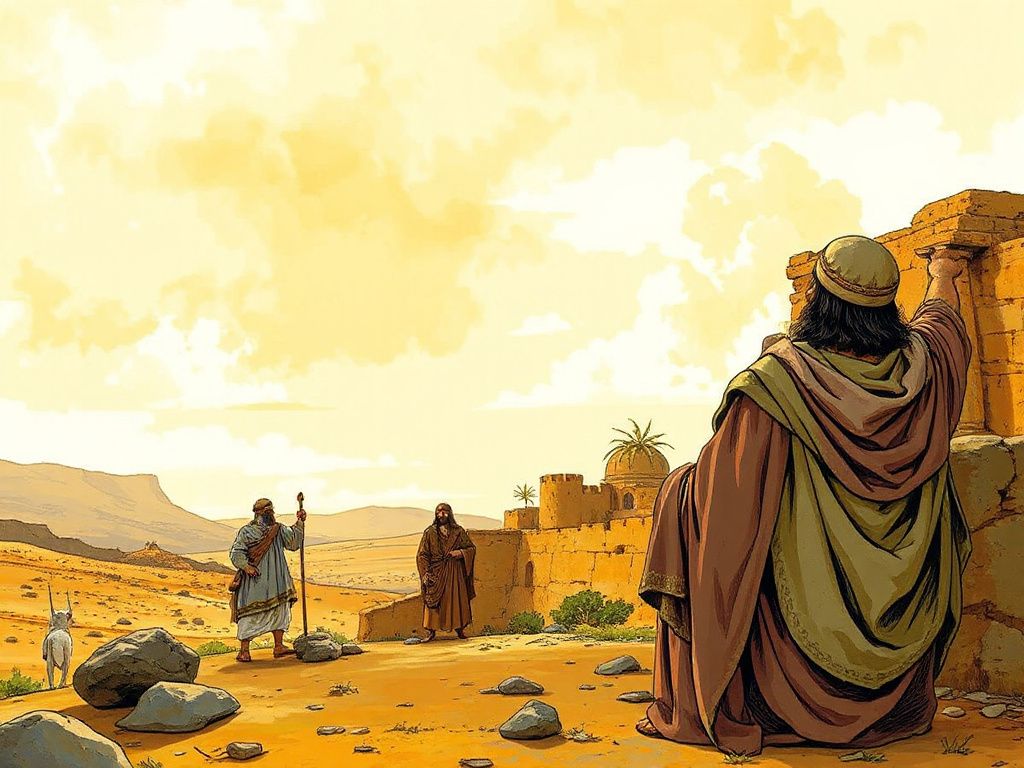
BIBLE VERSE STUDY
Proverbs 12:7 — The Overthrow of the Wicked and the Standing House
Proverbs 12:7 states that the wicked are overthrown and cease to be, while the house of the righteous endures.
Scripture
7The wicked are overthrown, and are not; But the house of the righteous shall stand.
What this passage means
The proverb is built on a sharp contrast between two destinies. On one side, the wicked are overthrown and 'are not' — the Hebrew sense is that they are no longer present, no longer findable among the living. On the other side, the house of the righteous shall stand, meaning the household, name, and inheritance of the righteous remain in place.
Where earlier verses in the chapter focus on the words and counsel that distinguish the wicked from the righteous, this proverb zooms out to the outcome. It does not promise that the righteous will avoid all trouble, but that what they build — their house — will outlast them, while the wicked leave nothing behind.
The pairing is total: a complete removal for the one, a stable standing for the other. The verse functions as a summary judgment on the chapter's repeated contrast between righteousness and wickedness, tying character to consequence in the strongest possible terms.
Context
Within Proverbs 12, this proverb sits at the center of a series of paired sayings: the thoughts of the righteous are just versus the counsels of the wicked (v. 5), the words of the wicked lying in wait for blood versus the mouth of the upright delivering (v. 6), and immediately after, the perverse-hearted being despised versus the wise being commended (v. 8). Verse 7 is the structural pivot where the chapter moves from describing the character of the two groups to declaring their end.
Earlier verses in the chapter already frame this outcome: the root of the righteous shall not be moved (v. 3) and the root of the righteous yieldeth fruit (v. 12). Verse 7 sharpens that picture by adding the language of house and standing, making the permanence of the righteous concrete and visible, while the disappearance of the wicked is stated absolutely.
Common questions
What does 'are not' mean in this proverb?
It indicates total removal — the wicked no longer exist or cannot be found after they are overthrown. The proverb pairs this disappearance with the continuing standing of the righteous house.
Does 'house' refer only to a building?
In Proverbs 12:7, 'house' means the household — family, name, and inheritance that endure after the person. The contrast is between a lasting legacy and one that vanishes.
How does this verse relate to the rest of Proverbs 12?
It serves as the turning point of the chapter. Verses before it describe the words and thoughts of the righteous and wicked, and this proverb declares the final outcome of those two ways, which the verses after it then illustrate in concrete situations.