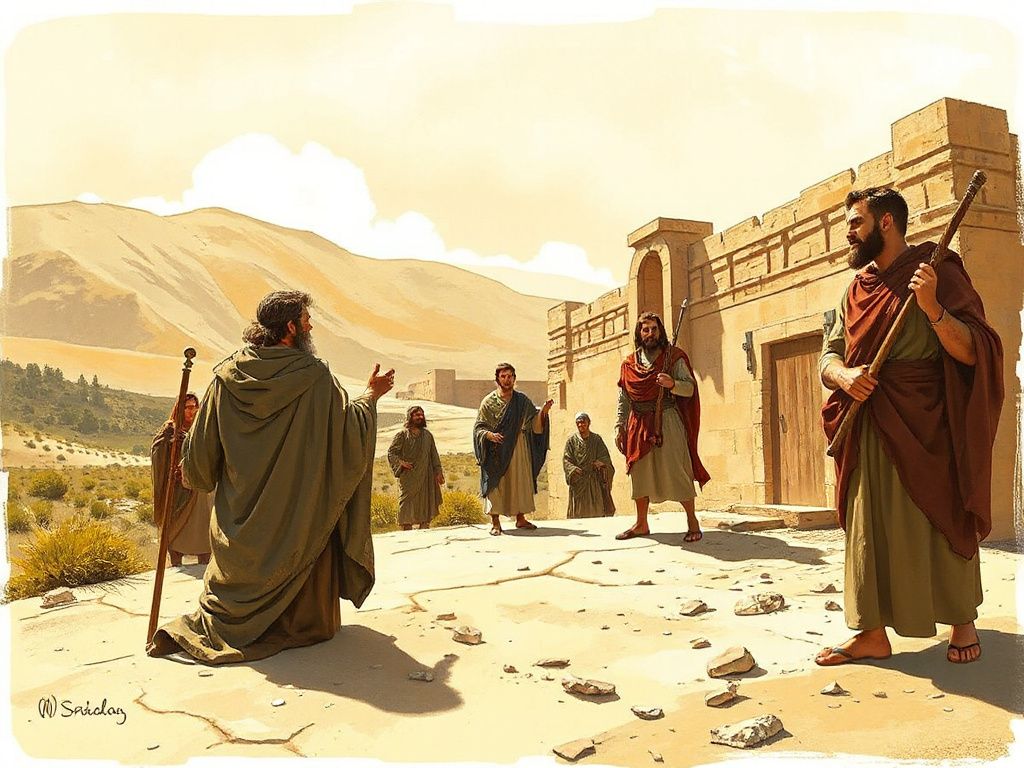
BIBLE CHAPTER STUDY
Psalms 84 — Longing for the House of God
A Korahite psalm praising the blessedness of dwelling near God, tracing the pilgrim journey from weeping to strength, and trusting Jehovah of hosts as sun and shield.
Scripture
1For the Chief Musician; set to the Gittith. A Psalm of the sons of Korah. How amiable are thy tabernacles, O Jehovah of hosts!
2My soul longeth, yea, even fainteth for the courts of Jehovah; My heart and my flesh cry out unto the living God.
3Yea, the sparrow hath found her a house, And the swallow a nest for herself, where she may lay her young, Even thine altars, O Jehovah of hosts, My King, and my God.
4Blessed are they that dwell in thy house: They will be still praising thee. Selah
5Blessed is the man whose strength is in thee; In whose heart are the highways to Zion.
6Passing through the valley of Weeping they make it a place of springs; Yea, the early rain covereth it with blessings.
7They go from strength to strength; Every one of them appeareth before God in Zion.
8O Jehovah God of hosts, hear my prayer; Give ear, O God of Jacob. [[Selah
9Behold, O God our shield, And look upon the face of thine anointed.
10For a day in thy courts is better than a thousand. I had rather be a doorkeeper in the house of my God, Than to dwell in the tents of wickedness.
11For Jehovah God is a sun and a shield: Jehovah will give grace and glory; No good thing will he withhold from them that walk uprightly.
12O Jehovah of hosts, Blessed is the man that trusteth in thee.
What this passage means
The psalm opens with a cry of affection for God's dwelling place: even a single day in His courts is worth more than a thousand elsewhere, and the lowly post of doorkeeper surpasses the tents of wickedness (v. 10). The repeated beatitude — 'Blessed are they that dwell in thy house' (v. 4) and 'Blessed is the man that trusteth in thee' (v. 12) — frames the whole poem and identifies presence with God as the supreme good.
The middle movement traces a journey. Pilgrims pass 'through the valley of Weeping' and transform it into a place of springs; they 'go from strength to strength, every one of them appeareth before God in Zion' (vv. 6–7). The difficult road itself becomes a source of refreshment, and what begins as longing ends in open worship, summed up in the bold confession that 'Jehovah God is a sun and a shield' who withholds no good thing from the upright (v. 11).
The closing petition asks God to 'look upon the face of thine anointed' (v. 9), tying personal longing to the community's king and priest. The psalm thus moves from private yearning to communal pilgrimage and finally to confident trust, presenting nearness to God as both the pilgrim's destination and the believer's continual portion.
Context
Psalms 84 is attributed to the sons of Korah and set for the Chief Musician on the Gittith. The superscription places it within the Korahite collection, and the Korahite psalms as a group are associated with singers who served at the Temple. The provided text gives no further historical details beyond the heading. The psalm's language pictures a pilgrim traveling toward Zion, and its final beatitude links those who make that journey to those who simply trust in Jehovah of hosts.
Key words in the original
- H3039 H3039 (yəḏîḏôṯ) is glossed 'loved' and underlies the question 'How amiable are thy tabernacles!' (v. 1). The term carries affection stronger than mere pleasantness, hinting at deep personal devotion.
- H3700 H3700 (niḵsəp̄āh), glossed 'longs', describes the soul's pining for God's courts in v. 2. The root connotes growing pale with desire, fitting the psalm's portrait of aching yearning.
- H3615 H3615 (kāləṯāh), glossed 'faints', intensifies the previous 'longs' in v. 2. The pairing paints total exhaustion in desire, reaching the limit of the worshipper's endurance.
Related verses
- Psalms 27:4 Both psalms center on a single supreme desire — to dwell in God's house and behold His beauty — making this a natural companion for understanding the longing in Psalms 84.
- Psalms 34:9 The repeated beatitude in Psalms 84 ('Blessed…') echoes the fear of Jehovah theme of Psalms 34, linking reverence for God with the absence of want.
- Revelation 21:23 The image of God as 'a sun and a shield' (v. 11) resonates with Revelation's vision of the new Jerusalem needing no sun, for the glory of God and the Lamb illumine it.
Common questions
Who wrote Psalms 84?
The superscription attributes the psalm to the sons of Korah. The provided text offers no further detail on authorship beyond this designation.
What does 'the valley of Weeping' refer to?
The psalm itself only names it as a valley through which pilgrims pass on the way to Zion (v. 6). The provided material does not identify it with any specific historical or geographical location.
What does it mean that God is 'a sun and a shield'?
The verse immediately pairs the title with the promise that Jehovah 'will give grace and glory' and withhold no good thing from the upright (v. 11). The provided text presents 'sun' as life-giving light and 'shield' as protection, together summarizing the comprehensive care the upright receive.