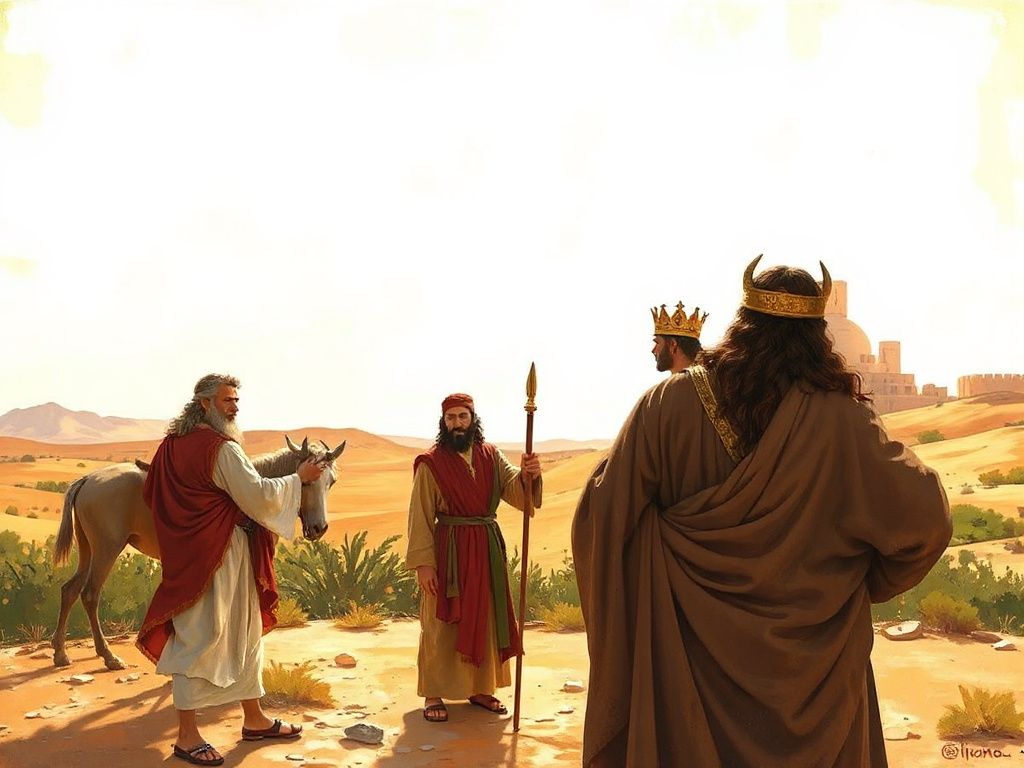
ESTUDIO DEL VERSÍCULO
1 Reyes 12:12 — El regreso del pueblo a Roboam
Al tercer día, Jeroboam y el pueblo volvieron a Roboam como él había indicado, esperando su respuesta a su petición de un yugo más ligero.
Escritura
- 12.Al tercer día vino Jeroboam con todo el pueblo a Roboam, según el rey lo había mandado, diciendo: Volved a mí al tercer día.So Jeroboam and all the people came to Rehoboam the third day, as the king bade, saying, Come to me again the third day.
Qué significa este pasaje
El versículo 12 marca el momento en que la delegación cumple la condición de Roboam. En 12:5 él les había dicho: «Apartaos aún por tres días, y luego venid a mí», y aquí el pueblo obedece exactamente: Jeroboam y todo el pueblo vinieron a Roboam al tercer día, como el rey había mandado. El versículo enfatiza la puntualidad y el orden: el pueblo honró el tiempo señalado por el rey, presentándose listo para oír su respuesta a su petición de 12:4 (aligerar el duro servicio).
El versículo también funciona como pivote en la narrativa. Hasta este punto la historia se ha contado desde el lado de Roboam: su consulta con los ancianos (12:6–7), su rechazo de su consejo, y su vuelta a los jóvenes (12:8–11). El versículo 12 devuelve la镜头 al pueblo: llegan, y ahora el rey debe hablar. El versículo siguiente (12:13) registra que respondió al pueblo duramente, de modo que 12:12 es la bisagra entre la consulta y la crisis.
Finalmente, 12:12 establece la ironía que 12:15 nombrará: el rey no escuchó al pueblo; porque esto fue una cosa dispuesta por Jehová, para confirmar su palabra. El regreso obediente del pueblo al tercer día será respondido no con alivio, sino con un yugo más pesado. El versículo es breve, pero su ubicación —pueblo obediente, momento fatídico— es lo que lo hace estructuralmente importante en el capítulo.
Contexto
El capítulo 12 abre con la asamblea en Siquem, donde Israel se reúne para proclamar rey a Roboam (12:1). Jeroboam, que había huido a Egipto de delante de Salomón, es llamado de regreso y se une a la delegación que pide a Roboam aligerar el yugo que Salomón impuso (12:2–4). Roboam pide tres días, y luego consulta primero a los ancianos que sirvieron a Salomón —quienes aconsejan servidumbre y buenas palabras— y luego a los jóvenes de su propia generation, quienes lo urgen a responder con dureza (12:5–11).
El versículo 12 se sitúa entre ese consejo y su ejecución. Los versículos 13–15 luego muestran a Roboam eligiendo la respuesta de los jóvenes, negándose ante el pueblo, y el comentario editorial del narrador de que esto fue de Jehová para confirmar su palabra hablada por Ahías el silonita a Jeroboam. El resto del capítulo traza la división: Israel se va a sus tiendas (12:16), Adoram el recaudador de Roboam es apedreado (12:18), Jeroboam es hecho rey sobre Israel (12:20), el oráculo de Semaías prohíbe a Judá pelear (12:22–24), y Jeroboam establece los becerros de oro en Bet-el y Dan (12:28–33).
Preguntas frecuentes
¿Por qué el versículo 12 enfatiza «el tercer día» y «como el rey había mandado»?
La repetición subraya que el pueblo cumplió su parte del acuerdo. Roboam había pedido tres días (12:5), y el versículo deja claro que regresaron exactamente cuando se les dijo, lo cual agudiza el contraste con Roboam, quien responderá rechazando su petición y acumulando un yugo más pesado sobre ellos (12:13–14).
¿Cómo se conecta el versículo 12 con el resto del capítulo?
El versículo 12 es el pivote: el pueblo llega listo para oír una respuesta, y los versículos siguientes muestran a Roboam dando la respuesta dura (12:13–14). El versículo 15 luego explica el resultado: la división fue dispuesta por Jehová para confirmar su palabra hablada por Ahías el silonita, y el resto del capítulo despliega las consecuencias: Israel se va, Jeroboam es hecho rey, y Jeroboam establece los becerros de oro.
¿Contiene el versículo 12 mismo algún juicio sobre Roboam?
El versículo en sí es neutral y reportativo: simplemente registra el regreso del pueblo. El juicio viene en los versículos circundantes: el buen consejo de los ancianos es rechazado (12:8), se da la respuesta dura (12:13–14), y el versículo 15 atribuye el resultado al propósito de Jehová. El versículo 12 provee el momento que hace posibles esos juicios.