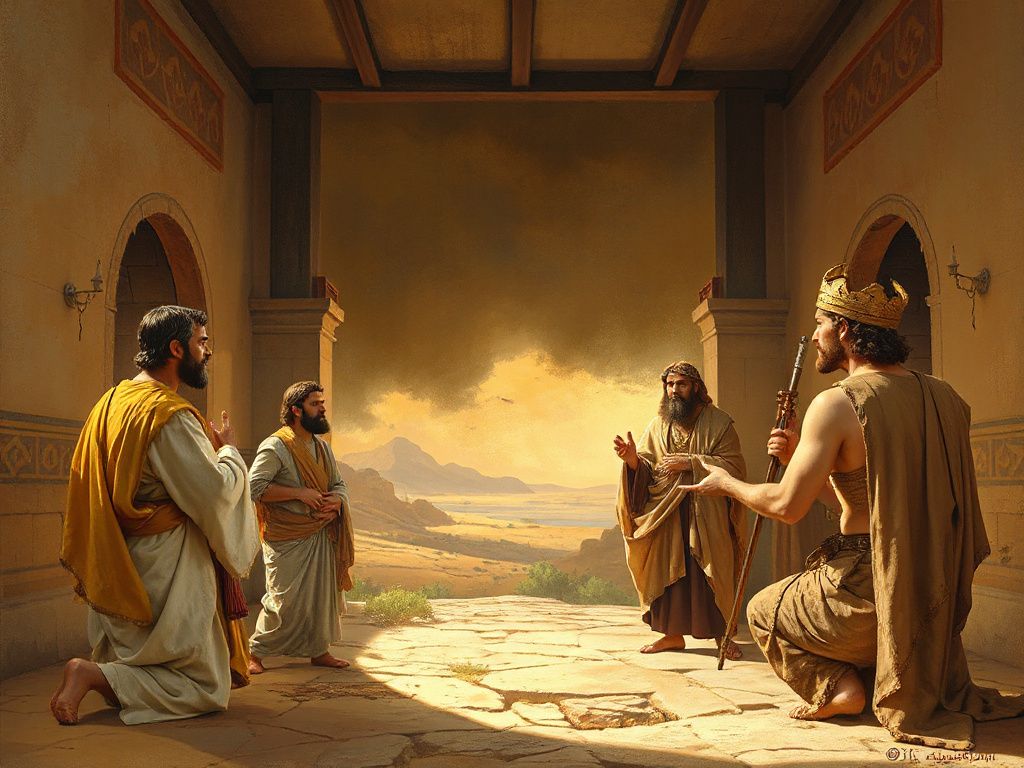
ESTUDIO DEL VERSÍCULO
1 Samuel 16:7 — Dios mira el corazón
Dios le dice a Samuel que no juzgue por la apariencia o la estatura de Eliab, porque el Señor mira el corazón mientras que el hombre solo ve lo exterior.
Escritura
- 7.Y Jehová respondió a Samuel: No mires a su parecer, ni a lo grande de su estatura, porque yo lo desecho; porque Jehová no mira lo que mira el hombre; pues el hombre mira lo que está delante de sus ojos, pero Jehová mira el corazón.But Jehovah said unto Samuel, Look not on his countenance, or on the height of his stature; because I have rejected him: for Jehovah seeth not as man seeth; for man looketh on the outward appearance, but Jehovah looketh on the heart.
Qué significa este pasaje
El versículo registra la reprensión directa de Jehová a la evaluación de Samuel en el versículo 6. Al ver a Eliab, Samuel había supuesto: "Ciertamente el ungido de Jehová está delante de él", juzgando al hijo mayor por lo que era físicamente impresionante. Dios revierte ese juicio con una corrección doble: no mires su semblante, ni mires la altura de su estatura. Los dos elementos señalados —el rostro y la estatura— son los criterios que los humanos normalmente usan para identificar a un rey, y el versículo los enumera precisamente para que el lector note lo que se está dejando de lado.
La razón dada es teológica: "Yo lo he rechazado". El rechazo ya está decidido antes de que comience el discurso divino; la prohibición de mirar no es una invitación a mirar más, sino una advertencia contra el criterio equivocado. El fundamento del rechazo se enuncia luego como un contraste: Jehová no ve como el hombre ve. La repetición de "ve" enmarca el contraste: el ver del hombre (limitado a la apariencia exterior) se opone al ver de Jehová (que alcanza el corazón). El versículo no dice simplemente que Dios ve más; dice que Dios ve de manera diferente.
La línea final es el centro interpretativo del versículo: "porque el hombre mira la apariencia exterior, pero Jehová mira el corazón". En el vocabulario del propio versículo, la "apariencia exterior" corresponde a lo que registra el ojo, mientras que "el corazón" denota la persona interior —la sede de la voluntad, la lealtad y el carácter. El versículo establece así una hermenéutica que rige el resto del capítulo: cuando siete de los hijos de Isaí pasan ante Samuel y todos son rechazados, el criterio que se aplica no es visible para ningún evaluador humano.
Contexto
El capítulo sitúa el versículo dentro de una narrativa de comisión. En 16:1, Jehová le dice a Samuel que deje de lamentarse por Saúl y vaya a Isaí el belemita, porque se ha provisto un rey entre sus hijos. El viaje se disfraza de sacrificio (vv. 2–5), y los ancianos de Belén tiemblan ante la llegada de Samuel (v. 4). El versículo funciona como el pivote del capítulo: se pronuncia en el preciso momento en que se presenta al primer candidato, Eliab, y explica por qué los siete hijos que posteriormente pasan ante Samuel (vv. 8–10) son todos rechazados.
La estructura del capítulo hace que la enseñanza del versículo sea verificable dentro del propio capítulo. Después de rechazar a siete hijos, por fin es elegido el menor —David, descrito con rasgos físicos notables— (vv. 11–12). La instrucción divina en 16:7 no elimina la descripción física (el v. 12 todavía registra la apariencia de David), pero insiste en que tal descripción no es la base de la selección. La unción sigue de inmediato (v. 13), y el resto del capítulo traza los destinos contrastados del recién ungido David y el ya rechazado Saúl, cuyo espíritu lo perturba de parte de Jehová.
Preguntas frecuentes
¿Por qué es rechazado Eliab si parece un rey?
El versículo da la razón explícitamente: "Yo lo he rechazado". El fundamento declarado es que el estándar de juicio de Dios es el corazón, no la apariencia exterior o la estatura que impresionaron a Samuel en el versículo 6. El versículo no describe ninguna falta en Eliab más allá del criterio equivocado que se usó para evaluarlo.
¿Significa este versículo que la apariencia física siempre es irrelevante?
El versículo limita su afirmación a cómo Dios elige en este momento, contrastando la vista del hombre con la de Jehová. No dice que la apariencia sea pecaminosa o sin importancia en general; dice que la apariencia no es el criterio para la selección divina. El propio capítulo todavía registra la apariencia de David (v. 12) después de establecer el criterio.
¿Qué significa "el corazón" en este versículo?
En el propio emparejamiento que hace el versículo entre "apariencia exterior" y "el corazón", el corazón se refiere a la persona interior —la sede de la voluntad, la lealtad y el carácter— que no es visible al ojo humano. El punto del versículo es que el ver de Jehová alcanza lo que el ver del hombre no puede.