ESTUDIO DEL CAPÍTULO
1 Samuel 3 — El llamado de Samuel
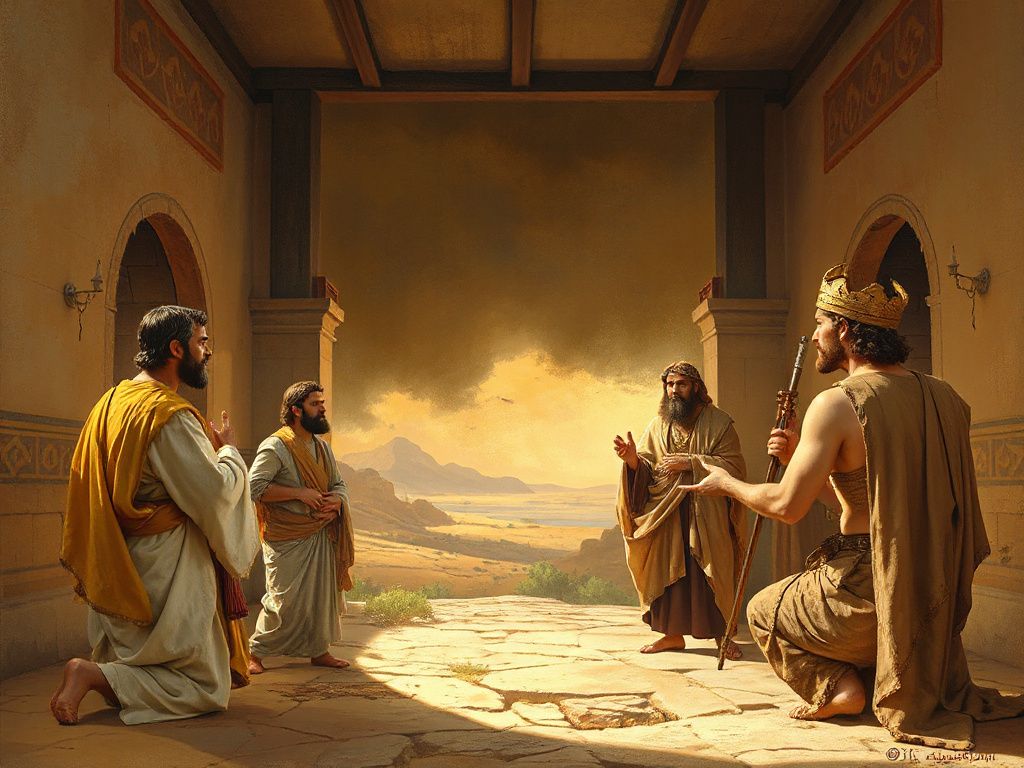
En una época en que las visiones divinas eran escasas, el SEÑOR llama tres veces al joven Samuel en el tabernáculo de Silo; con la orientación de Eli, Samuel aprende a responder y luego se le comunica que el juicio caerá sobre la casa de Eli.
Escritura
- 1.El joven Samuel ministraba a Jehová en presencia de Elí; y la palabra de Jehová escaseaba en aquellos días; no había visión con frecuencia.And the child Samuel ministered unto Jehovah before Eli. And the word of Jehovah was precious in those days; there was no frequent vision.
- 2.Y aconteció un día, que estando Elí acostado en su aposento, cuando sus ojos comenzaban a oscurecerse de modo que no podía ver,And it came to pass at that time, when Eli was laid down in his place (now his eyes had begun to wax dim, so that he could not see),
- 3.Samuel estaba durmiendo en el templo de Jehová, donde estaba el arca de Dios; y antes que la lámpara de Dios fuese apagada,and the lamp of God was not yet gone out, and Samuel was laid down to sleep, in the temple of Jehovah, where the ark of God was;
- 4.Jehová llamó a Samuel; y él respondió: Heme aquí.that Jehovah called Samuel; and he said, Here am I.
- 5.Y corriendo luego a Elí, dijo: Heme aquí, ¿Para qué me llamaste? Y Elí le dijo: Yo no he llamado; vuelve y acuéstate. Y él se volvió y se acostó.And he ran unto Eli, and said, Here am I; for thou calledst me. And he said, I called not; lie down again. And he went and lay down.
- 6.Y Jehová volvió a llamar otra vez a Samuel. Y levantándose Samuel, vino a Elí y dijo: Heme aquí; ¿para qué me has llamado? Y él dijo: Hijo mío, yo no he llamado; vuelve y acuéstate.And Jehovah called yet again, Samuel. And Samuel arose and went to Eli, and said, Here am I; for thou calledst me. And he answered, I called not, my son; lie down again.
- 7.Y Samuel no había conocido aún a Jehová, ni la palabra de Jehová le había sido revelada.Now Samuel did not yet know Jehovah, neither was the word of Jehovah yet revealed unto him.
- 8.Jehová, pues, llamó la tercera vez a Samuel. Y él se levantó y vino a Elí, y dijo: Heme aquí; ¿para qué me has llamado? Entonces entendió Elí que Jehová llamaba al joven.And Jehovah called Samuel again the third time. And he arose and went to Eli, and said, Here am I; for thou calledst me. And Eli perceived that Jehovah had called the child.
- 9.Y dijo Elí a Samuel: Ve y acuéstate; y si te llamare, dirás: Habla, Jehová, porque tu siervo oye. Así se fue Samuel, y se acostó en su lugar.Therefore Eli said unto Samuel, Go, lie down: and it shall be, if he call thee, that thou shalt say, Speak, Jehovah; for thy servant heareth. So Samuel went and lay down in his place.
- 10.Y vino Jehová y se paró, y llamó como las otras veces: ¡Samuel, Samuel! Entonces Samuel dijo: Habla, porque tu siervo oye.And Jehovah came, and stood, and called as at other times, Samuel, Samuel. Then Samuel said, Speak; for thy servant heareth.
- 11.Y Jehová dijo a Samuel: He aquí haré yo una cosa en Israel, que a quien la oyere, le retiñirán ambos oídos.And Jehovah said to Samuel, Behold, I will do a thing in Israel, at which both the ears of every one that heareth it shall tingle.
- 12.Aquel día yo cumpliré contra Elí todas las cosas que he dicho sobre su casa, desde el principio hasta el fin.In that day I will perform against Eli all that I have spoken concerning his house, from the beginning even unto the end.
- 13.Y le mostraré que yo juzgaré su casa para siempre, por la iniquidad que él sabe; porque sus hijos han blasfemado a Dios, y él no los ha estorbado.For I have told him that I will judge his house for ever, for the iniquity which he knew, because his sons did bring a curse upon themselves, and he restrained them not.
- 14.Por tanto, yo he jurado a la casa de Elí que la iniquidad de la casa de Elí no será expiada jamás, ni con sacrificios ni con ofrendas.And therefore I have sworn unto the house of Eli, that the iniquity of Eli's house shall not be expiated with sacrifice nor offering for ever.
- 15.Y Samuel estuvo acostado hasta la mañana, y abrió las puertas de la casa de Jehová. Y Samuel temía descubrir la visión a Elí.And Samuel lay until the morning, and opened the doors of the house of Jehovah. And Samuel feared to show Eli the vision.
- 16.Llamando, pues, Elí a Samuel, le dijo: Hijo mío, Samuel. Y él respondió: Heme aquí.Then Eli called Samuel, and said, Samuel, my son. And he said, Here am I.
- 17.Y Elí dijo: ¿Qué es la palabra que te habló? Te ruego que no me la encubras; así te haga Dios y aun te añada, si me encubrieres palabra de todo lo que habló contigo.And he said, What is the thing that Jehovah hath spoken unto thee? I pray thee, hide it not from me: God do so to thee, and more also, if thou hide anything from me of all the things that he spake unto thee.
- 18.Y Samuel se lo manifestó todo, sin encubrirle nada. Entonces él dijo: Jehová es; haga lo que bien le pareciere.And Samuel told him every whit, and hid nothing from him. And he said, It is Jehovah: let him do what seemeth him good.
- 19.Y Samuel creció, y Jehová estaba con él, y no dejó caer a tierra ninguna de sus palabras.And Samuel grew, and Jehovah was with him, and did let none of his words fall to the ground.
- 20.Y todo Israel, desde Dan hasta Beerseba, conoció que Samuel era fiel profeta de Jehová.And all Israel from Dan even to Beer-sheba knew that Samuel was established to be a prophet of Jehovah.
- 21.Y Jehová volvió a aparecer en Silo; porque Jehová se manifestó a Samuel en Silo por la palabra de Jehová.And Jehovah appeared again in Shiloh; for Jehovah revealed himself to Samuel in Shiloh by the word of Jehovah.
Qué significa este pasaje
El capítulo comienza con dos contrastes marcados en el versículo 1: el niño Samuel está «al servicio de Jehovah delante de Eli», pero «la palabra de Jehovah era preciousa en aquellos días; no había visión frecuente». El servicio en el santuario continúa, pero la revelación directa por parte de Dios se ha vuelto escasa. Esto prepara el escenario: lo que sigue es Dios irrumpiendo en un período de silencio.
La triple llamada de los versículos 4–10 constituye el núcleo literario del capítulo. Samuel, que «todavía no conocía a Jehovah, ni la palabra de Jehovah le había sido revelada» (v. 7), confunde la voz divina con la de Eli. Solo después de la tercera llamada Eli «percibió que Jehovah había llamado al niño» (v. 8) y le ordena: «Habla, Jehovah, porque tu siervo escucha». La repetición no solo destaca la inexperiencia de Samuel, sino que muestra cómo depender de la disposición para escuchar a Dios: se le indica cómo responder antes de que llegue el mensaje.
Los versículos 11–14 transmiten el mensaje mismo: el juicio sobre la casa de Eli por no refrenar a sus hijos. Luego se cierra fundamentando la vocación profética de Samuel: «Jehovah estaba con él, y no dejó caer ninguna de sus palabras en tierra» (v. 19), y «todo Israel… supo que Samuel había sido establecido como profeta de Jehovah» (v. 20). El capítulo trata sobre el tránsito de la autoridad profética desde el sacerdote fracasado Eli hasta el joven profeta Samuel.
Contexto
Los materiales proporcionados sitúan este capítulo en un momento en que la revelación de Dios se había vuelto «preciosa» y las visiones no eran «frecuentes» (v. 1). La condición de los hijos de Eli —que «no conocían a Jehovah» y «se acarrearon una maldición»— y la incapacidad de Eli para refrenarlos forman el trasfondo contra el cual el SEÑOR anuncia que ningún sacrificio ni holocausto puede expiar la culpa de la casa de Eli (vv. 12–14). El capítulo comienza con Samuel durmiendo en el templo donde se guardaba el arca de Dios, mientras la lámpara aún ardía (v. 3), y termina con «Jehovah apareció otra vez en Silo… por la palabra de Jehovah» (v. 21).
Las referencias cruzadas proporcionadas refuerzan dos temas del capítulo: los períodos en que la palabra del SEÑOR es escasa (Amós 8:11–12; Salmos 74:9) y el principio de que las palabras proféticas genuinas no caen en tierra (1 Reyes 8:56; 1 Samuel 9:6). Juntas presentan 1 Samuel 3 tanto como respuesta a una hambruna de escucha como inauguración de un profeta cuyas palabras demuestran ser dignas de confianza.
Palabras clave del original
- H3368 La palabra hebrea (yāqār, «rara/preciosa») del versículo 1 se usa para cosas altamente valoradas. Aplicada a «la palabra de Jehovah», sugiere que la palabra era estimada precisamente porque llegaba con tan poca frecuencia; es un modo de traducir poco habitual que encuentra eco en la referencia cruzada de Amós 8:11–12 («una hambruna… de escuchar las palabras de Jehovah»).
- H2377 El término ḥāzôn («visión») del versículo 1 designa la forma específica de revelación que se había vuelto inusual. Junto con «frecuente» (H6555, nip̄rāṣ, «extenderse»), el versículo contrapone una visión aislada y vinculada con un flujo de visiones que ya no se «extendía».
- H5288 La palabra nnaʿar («niño») del versículo 1 se usa ampliamente para designar a un joven desde la infancia hasta la adolescencia, y aquí se aplica a Samuel. La expresión especialmente matizada «el niño Samuel» destaca que aquel a quien ahora se llama, según los criterios normales, no está calificado para recibir revelación.
Versículos relacionados
- Amos 8:11 Amós describe una futura «hambruna… de escuchar las palabras de Jehovah». 1 Samuel 3 comienza con esa escasez ya hecha realidad («la palabra de Jehovah era preciousa… no había visión frecuente»), de modo que Amós aclara qué clase de hambruna se le presenta al lector.
- 1 Samuel 9:6 El siervo de Saúl describe a un «varón de Dios… tenido en honor; todo lo que dice sucede surely». El versículo 19 de 1 Samuel 3 fundamenta esa reputación: «Jehovah estaba con él, y no dejó caer ninguna de sus palabras en tierra». El capítulo anterior explica cómo Samuel se ganó tal confianza.
- 1 Samuel 2:12 El capítulo precedente establece la causa del juicio anunciado en 3:11–14: «los hijos de Eli eran hombres viles; no conocían a Jehovah». Leer 2:12 junto con el capítulo 3 muestra por qué el silenciamiento de la casa de Eli es un juicio moral, no meramente ritual.
Preguntas frecuentes
¿Por qué Samuel seguía corriendo hacia Eli?
Según el versículo 7, «Samuel todavía no conocía a Jehovah, ni la palabra de Jehovah le había sido revelada». Había crecido en el templo, pero nunca había experimentado personalmente que Dios le hablara, por lo que la única voz a la que podía atribuir las llamadas era la de Eli.
¿Qué debía hacer Eli con sus hijos?
El versículo 13 enuncia la acusación: «sus hijos se acarrearon una maldición, y él no los refrenó». Como sumo sacerdote y padre, Eli tenía autoridad para disciplinarlos por su conducta en el santuario; el capítulo presenta su incapacidad para hacerlo como el fundamento del juicio inexpiable sobre su casa.
¿Significa «para siempre» (v. 14) que la casa de Eli nunca podría arrepentirse?
El versículo 14 especifica lo que no puede expiar: «ni con sacrificio ni con holocausto para siempre». La formulación se dirige al sistema sacrificial: ningún otro rito puede saldar la deuda ya contraída. Si esto excluye cualquier misericordia futura queda fuera de lo que el propio capítulo resuelve.