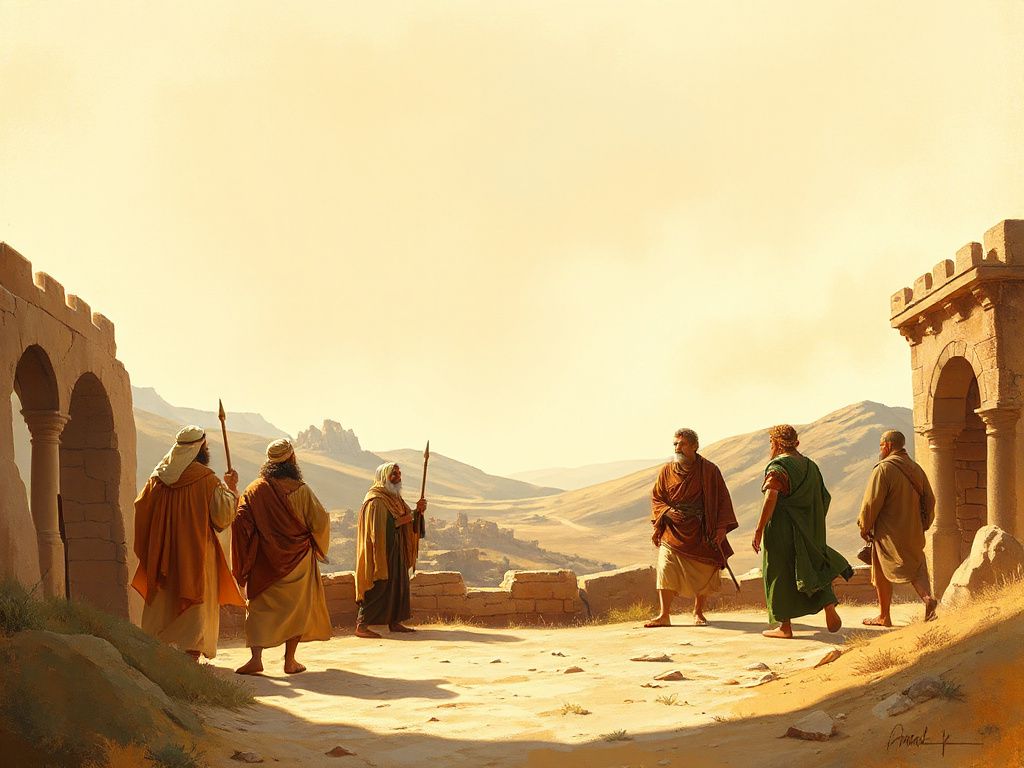
ESTUDIO DEL VERSÍCULO
2 Reyes 19:34 — La defensa que Dios hace de Jerusalén por causa de David
Dios promete proteger a Jerusalén de Senaquerib para su propia gloria y por causa de su promesa a David.
Escritura
- 34.Porque yo ampararé esta ciudad para salvarla, por amor a mí mismo, y por amor a David mi siervo.For I will defend this city to save it, for mine own sake, and for my servant David's sake.
Qué significa este pasaje
El versículo 34 es el eje del oráculo de Isaías contra Senaquerib: tras anunciar que el rey asirio no entrará en la ciudad, no lanzará una flecha, no se acercará con escudo y volverá por el mismo camino por donde vino (vv. 32–33), el profeta da la razón: «Porque yo defenderé esta ciudad para salvarla, por amor de mí mismo y por amor de mi siervo David». La ciudad es preservada por quien Dios es y por lo que Él prometió a David, no por la fuerza militar de Judá ni solo por la justicia de Ezequías.
Se mencionan dos motivos. «Por amor de mí mismo» fundamenta la promesa en el honor y la consistencia de Dios mismo; su nombre está en juego porque el Rabsaces lo ha ridiculizado como uno entre muchos dioses (cf. v. 10) e Isaías ha enmarcado el conflicto como una blasfemia contra el Santo de Israel (v. 22). «Por amor de mi siervo David» fundamenta la promesa en el pacto de Dios con David —la garantía de que la dinastía davídica y la ciudad de David perdurarían (cf. 2 Sam 7). El versículo une así la crisis inmediata con dos realidades permanentes: el carácter de Dios y su pacto.
El versículo tiene la fuerza de un juramento legal y profético. Se sitúa entre la declaración de juicio contra Senaquerib (vv. 21–28) y la garantía de un remanente que echa raíces (vv. 29–31), y precede directamente al cumplimiento registrado en el v. 35, donde el ángel del SEÑOR golpea el campamento asirio. La promesa del v. 34 es, por tanto, tanto el fundamento declarado de la liberación venidera como una ventana a cómo Dios obra en la historia: mediante una fidelidad al pacto que apunta a su propia gloria.
Contexto
El versículo se inserta dentro de la respuesta de Isaías a Ezequías tras la carta blasfema de Senaquerib. Ezequías ha extendido la carta delante del SEÑOR y ha orado para que Dios los salvara «para que todos los reinos de la tierra conozcan que tú, oh SEÑOR, eres el único Dios» (v. 19). Isaías responde: «Por cuanto me has rogado contra Senaquerib, rey de Asiria, yo te he oído» (v. 20), y procede con el oráculo. El motivo del «remanente» en los vv. 29–31 ya establece que el propósito de Dios se extiende más allá del momento: los sobrevivientes volverán a «echar raíz abajo y llevar fruto arriba», y de Jerusalén saldrá un remanente —«el celo del SEÑOR hará esto» (vv. 30–31).
El v. 34 es el fundamento explicativo de los vv. 32–33 y el preludio inmediato de los vv. 35–37. El ejército asirio es golpeado por el ángel del SEÑOR (185.000, v. 35); Senaquerib se retira a Nínive y luego es asesinado por sus propios hijos en el templo de Nisroc (vv. 36–37). El capítulo presenta así el v. 34 como la razón divina declarada que conecta la oración de Ezequías, el remanente prometido y la caída histórica del ejército asirio.
Preguntas frecuentes
¿Por qué dice Dios que defiende Jerusalén «por amor de mí mismo»?
Según el propio capítulo, el nombre de Dios está en juego porque los mensajeros de Senaquerib lo han ridiculizado como uno entre muchos dioses (v. 10), e Isaías enmarca el conflicto como una desafío al «Santo de Israel» (v. 22). La oración de Ezequías pide también la liberación «para que todos los reinos de la tierra conozcan que tú, oh SEÑOR, eres el único Dios» (v. 19). La autodefensa de Dios y la manifestación de su unicidad son la razón declarada en el contexto.
¿A qué se refiere «por amor de mi siervo David»?
La frase apunta al compromiso del pacto de Dios con David —que la dinastía davídica y su ciudad serían sostenidas. Dentro de 2 Reyes 19, el versículo mismo solo enuncia la frase; el capítulo no detalla los pormenores del pacto. La nota en el material proporcionado lo resume como la actuación de Dios «por su promesa a David», mostrando su fidelidad al pacto.
¿Cómo se cumple la promesa del v. 34 en el capítulo?
El versículo siguiente registra el cumplimiento: «el ángel del SEÑOR salió e hirió en el campamento de los asirios a ciento ochenta y cinco mil» (v. 35). Senaquerib entonces parte y regresa a Nínive (v. 36) y luego es asesinado en el templo de su dios (v. 37). La defensa prometida en el v. 34 corresponde así al colapso histórico del asedio asirio registrado en los vv. 35–37.