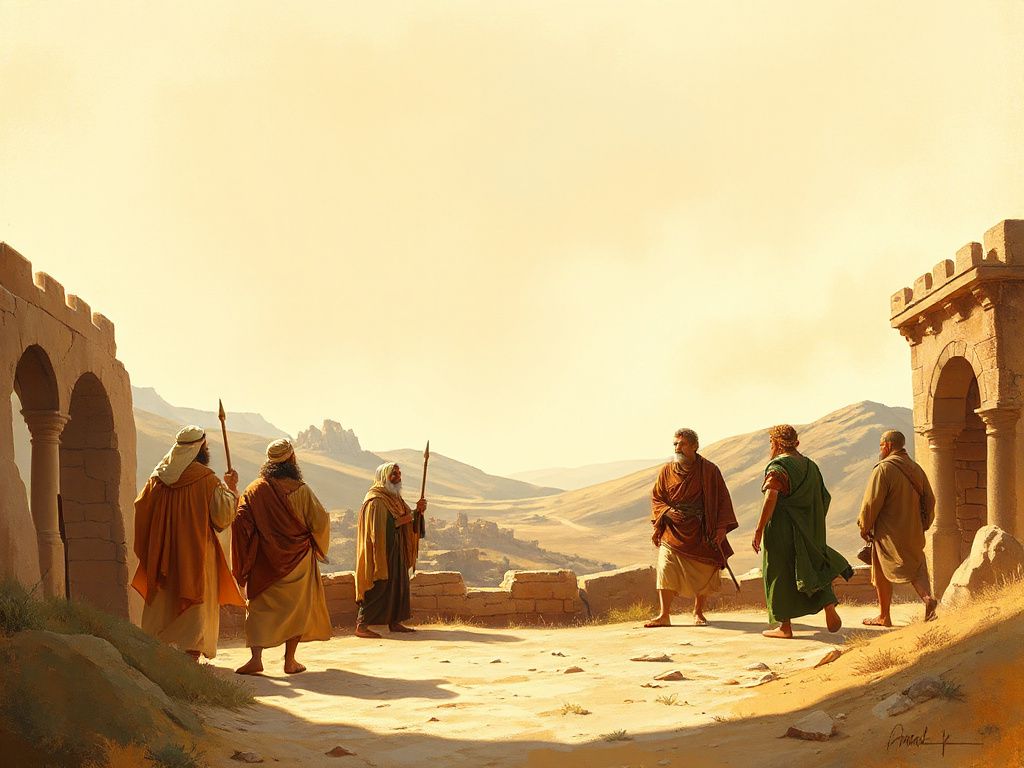
ESTUDIO DEL VERSÍCULO
2 Reyes 23:25 — La incomparable devoción de Josías
El versículo 25 resume el reinado de Josías como el ejemplo sin igual de fidelidad wholehearted al pacto entre los reyes de Israel o Judá.
Escritura
- 25.No hubo otro rey antes de él, que se convirtiese a Jehová de todo su corazón, de toda su alma y de todas sus fuerzas, conforme a toda la ley de Moisés; ni después de él nació otro igual.And like unto him was there no king before him, that turned to Jehovah with all his heart, and with all his soul, and with all his might, according to all the law of Moses; neither after him arose there any like him.
Qué significa este pasaje
El versículo es un veredicto editorial de una sola oración sobre el reinado de Josías, presentándolo como el punto de referencia para la fidelidad al pacto. Se enumeran tres órganos internos de devoción: corazón, alma y fuerzas. Esta tríada coincide con el lenguaje de Deuteronomio 6:5 y 10:12, y el versículo mismo identifica el estándar con el que se mide a Josías: toda la ley de Moisés. La afirmación de que ningún rey antes ni después de él se volvió al Señor de esta manera es una declaración absoluta, que sitúa a Josías en la cima de una larga secuencia de fracasos en 2 Reyes.
La frase se volvió a Jehová presenta el reinado de Josías como un retorno desde la apostasía más que como un compromiso por primera vez. El contexto del capítulo 23 es una purga generalizada: se eliminan ídolos, lugares altos, postes de Asera, altares a Baal y al ejército del cielo, mediums y espiritistas; se renueva el pacto y se celebra una pascua. Luego el versículo juzga que, de entre todos los reyes de esa historia, solo Josías realizó este volverse con una devoción completa y sin reservas.
Al mismo tiempo, el versículo 26 matiza inmediatamente el veredicto: la gran ira del Señor contra Judá a causa de las provocaciones de Manasés no se aparta. La devoción incomparable de un solo rey no anula el pecado acumulado de la nación. Por lo tanto, el pasaje hace dos cosas a la vez. Exalta a Josías como el estándar y muestra que incluso quien marca el estándar no puede逆转 un patrón nacional de idolatría.
Contexto
El versículo 25 se encuentra al final de la narrativa de la reforma de Josías. El capítulo comienza con el rey reuniendo a los ancianos y al pueblo para escuchar el libro del pacto, y luego se obliga a sí mismo y al pueblo a caminar en pos de Jehová. A partir de ahí, el capítulo relata una eliminación sistemática de los objetos e instalaciones idólatras de Judá, la profanación del altar en Bet-el y la matanza de los sacerdotes de los lugares altos. Los versículos 21-24 se centran luego en la celebración de una pascua, registrada como sin igual desde los días de los jueces, y en la purga de mediums, terafines e ídolos. El versículo 25 es el juicio que resume todo esto.
Los versículos que siguen inmediatamente dejan en claro que la reforma no decidió el destino de la nación. La ira del Señor contra Judá a causa de Manasés no se aparta, y Él declara que removerá a Judá y desechará a Jerusalén y la casa de la cual dijo que su nombre estaría allí. El propio Josías muere poco después en Megido, y se dice que los reyes que le suceden, Joacaz y Joacim, hicieron lo malo ante los ojos del Señor. Por lo tanto, el capítulo presenta la devoción de Josías como un punto alto que es real pero incapaz de invertir la trayectoria de la nación.
Preguntas frecuentes
¿Significa este versículo que Josías nunca pecó?
El versículo juzga la dirección de su reinado como un volverse al Señor con todo su corazón, su alma y sus fuerzas conforme a la ley de Moisés. No afirma perfección sin pecado. El propio capítulo registra más tarde que Necao, faraón de Egipto, lo mató en Megido, y 2 Crónicas 35:20-22 informa que Josías fue contra el rey de Egipto a pesar de una advertencia divina. El versículo mide la devoción al pacto, no un comportamiento intachable.
¿Por qué el versículo 26 sigue inmediatamente con un juicio sobre Judá?
La yuxtaposición es deliberada. El versículo 25 exalta a Josías como el rey sin igual, y el versículo 26 establece que la ira feroz del Señor contra Judá, a causa de todas las provocaciones de Manasés, no se apartó. La devoción wholehearted de un rey no compensa la idolatría acumulada de la nación. La reforma es real y el veredicto sobre Josías es genuino, pero no invierte el patrón nacional.
¿Cómo se relaciona este versículo con el resto de 2 Reyes?
Los libros de los Reyes evalúan a cada monarca por su fidelidad al pacto, comenzando con la monarquía dividida y trazando un declive constante. El reinado de Josías en los capítulos 22-23 se presenta como un breve punto alto dentro de ese declive. El versículo 25 culmina ese punto alto con la más fuerte commendación otorgada a cualquier rey en el libro, mientras que los versículos siguientes muestran que incluso este punto alto no puede impedir la eventual remoción de Judá de la tierra, lo cual se cumple en los capítulos posteriores a la muerte de Josías.