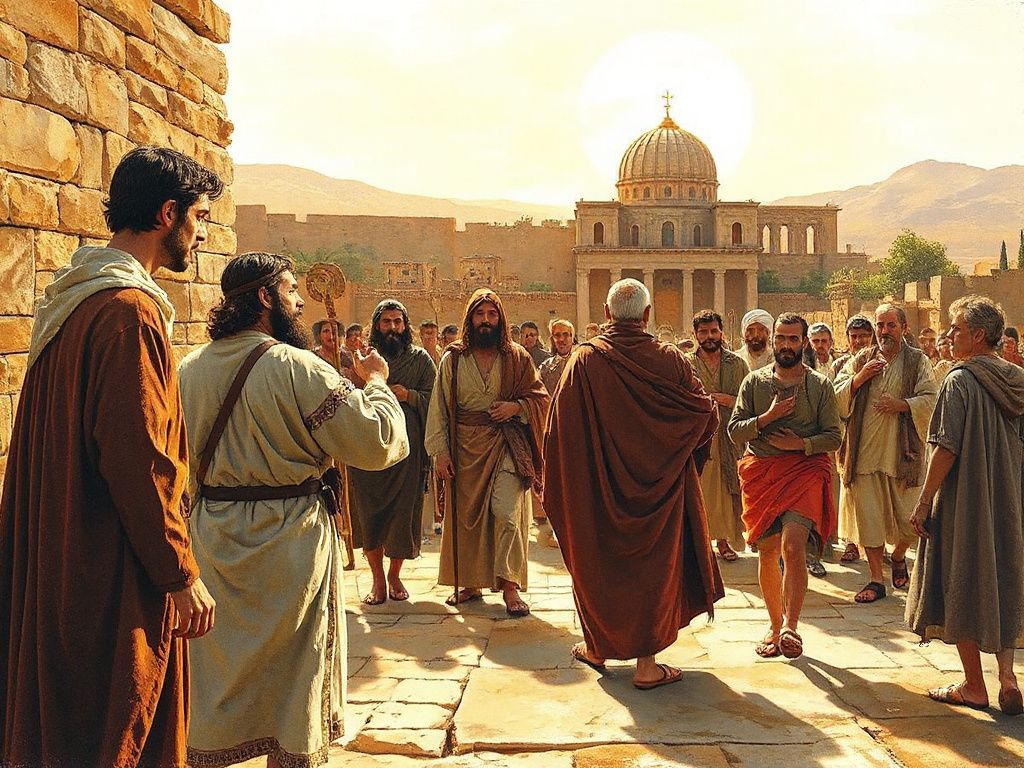
ESTUDIO DEL VERSÍCULO
Hechos 15:7-11 — El discurso de Pedro en el Concilio de Jerusalén
En el Concilio de Jerusalén, Pedro argumenta que Dios ya aprobó a los gentiles al darles el Espíritu Santo y purificar sus corazones por la fe, de modo que los creyentes no deben imponer el yugo mosaico.
Escritura
- 7.Y después de mucha discusión, Pedro se levantó y les dijo: Varones hermanos, vosotros sabéis cómo ya hace algún tiempo que Dios escogió que los gentiles oyesen por mi boca la palabra del evangelio y creyesen.And when there had been much questioning, Peter rose up, and said unto them, Brethren, ye know that a good while ago God made choice among you, that by my mouth the Gentiles should hear the word of the gospel, and believe.
- 8.Y Dios, que conoce los corazones, les dio testimonio, dándoles el Espíritu Santolo mismo que a nosotros;And God, who knoweth the heart, bare them witness, giving them the Holy Spirit, even as he did unto us;
- 9.y ninguna diferencia hizo entre nosotros y ellos, purificando por la fe sus corazones.and he made no distinction between us and them, cleansing their hearts by faith.
- 10.Ahora, pues, ¿por qué tentáis a Dios, poniendo sobre la cerviz de los discípulos un yugo que ni nuestros padres ni nosotros hemos podido llevar?Now therefore why make ye trial of God, that ye should put a yoke upon the neck of the disciples which neither our fathers nor we were able to bear?
- 11.Antes creemos que por la gracia del Señor Jesús seremos salvos, de igual modo que ellos.But we believe that we shall be saved through the grace of the Lord Jesus, in like manner as they.
Qué significa este pasaje
La apelación de Pedro se fundamenta en lo que Dios ya había hecho entre los gentiles antes de que el concilio se reuniera. Recuerda a la asamblea que Dios lo eligió mucho antes para llevar el evangelio a los gentiles (v. 7), que Dios confirmó esa obra dando a los gentiles el Espíritu Santo (v. 8), y que Dios purificó sus corazones por la fe sin hacer distinción entre judío y gentil (v. 9). El argumento no proviene primordialmente de la Escritura ni de la tradición, sino del acto divino previo: si Dios ya ha aceptado a los gentiles, el concilio no puede, en buena conciencia, rechazarlos.
El segundo movimiento del discurso es una advertencia contra revertir lo que Dios ha hecho. Pedro pregunta por qué los creyentes fariseos «tentarían a Dios» imponiendo a los discípulos gentiles un yugo que «ni nuestros padres ni nosotros hemos podido llevar» (v. 10). La palabra «yugo» presenta la ley mosaica como una carga, y la pregunta retórica implica que exigir la circuncisión y la plena observancia de la ley a los conversos gentiles es oponerse, más que obedecer, al Dios que ya los ha recibido.
La conclusión define cómo funciona realmente la salvación. El versículo 11 enuncia la confesión central del discurso: «seremos salvos por la gracia del Señor Jesús, de la misma manera que ellos». La frase «de la misma manera que ellos» (literalmente «del mismo modo») es la clave: los creyentes judíos y los creyentes gentiles son salvos por el mismo medio. La cuestión no es si los creyentes judíos deben guardar la ley, sino si la ley es el instrumento de salvación. Pedro responde que no: la salvación es por la gracia del Señor Jesús, y esa gracia se aplica por igual a ambos grupos.
Contexto
Hechos 15 se abre con una aguda disputa: ciertos hombres de Judea enseñan que los creyentes gentiles deben ser circuncidados y guardar la ley de Moisés para ser salvos (15:1). Pablo y Bernabé disputan esto en Antioquía, y la iglesia los envía a Jerusalén para resolver la cuestión con los apóstoles y los ancianos (15:2-4). Cuando el concilio se reúne, los creyentes fariseos insisten en que la circuncisión y la observancia de la ley son requeridas (15:5-6). El discurso de Pedro en 15:7-11 es la primera respuesta importante a esa exigencia, y establece el fundamento teológico para el veredicto práctico de Santiago que sigue en 15:13-21.
El capítulo establece que el resultado del concilio no es una concesión, sino una confirmación de lo que Dios ya había hecho. Después de que Pedro habla, Bernabé y Pablo relatan las señales y prodigios que Dios realizó entre los gentiles, y Santiago fundamenta la decisión en los profetas (15:12-18). La carta final exime a los creyentes gentiles del requisito de la circuncisión, pidiendo solo que se abstengan de comida contaminada por ídolos, de inmoralidad sexual, de la carne de animales estrangulados y de sangre (15:19-29). Pedro enuncia el principio; Santiago lo aplica; la carta lo codifica.
Preguntas frecuentes
¿Por qué Pedro llama a la ley un «yugo que ni nuestros padres ni nosotros hemos podido llevar» (v. 10)?
La pregunta de Pedro es retórica y punzante. Al llamar a la ley un «yugo» que el mismo pueblo judío no pudo llevar, argumenta que la exigencia farisea de imponer la plena observancia de la ley a los conversos gentiles es tentar a Dios oponiéndose a una decisión divina ya tomada. El punto no es que la ley sea mala, sino que exigirla para la salvación rechaza la gracia por la cual Dios ya ha salvado a los gentiles (v. 11).
¿Cómo dice el versículo 11 que judíos y gentiles son salvos «de la misma manera»?
Pedro declara que los creyentes judíos y los creyentes gentiles son salvos «de la misma manera» (o «del mismo modo») «por la gracia del Señor Jesús». La frase equipara a ambos grupos bajo un único medio de salvación. Si los creyentes judíos son salvos por gracia, entonces los gentiles, que ya recibieron el Espíritu y un corazón purificado, son salvos por esa misma gracia. El versículo descarta cualquier sistema de salvación de dos vías.
¿Qué evidencia cita Pedro para la aceptación de los gentiles por parte de Dios?
Pedro fundamenta su argumento en tres actos divinos: (1) Dios lo eligió para llevar el evangelio a los gentiles (v. 7); (2) Dios, que conoce el corazón, dio a los gentiles el Espíritu Santo tal como había dado el Espíritu a los creyentes judíos (v. 8); y (3) Dios purificó sus corazones por la fe sin hacer ninguna distinción entre ellos y los creyentes judíos (v. 9). Estos actos previos de Dios —la elección, el don del Espíritu y la purificación— constituyen la base empírica del veredicto de que el concilio no debe imponer más requisitos a los gentiles.