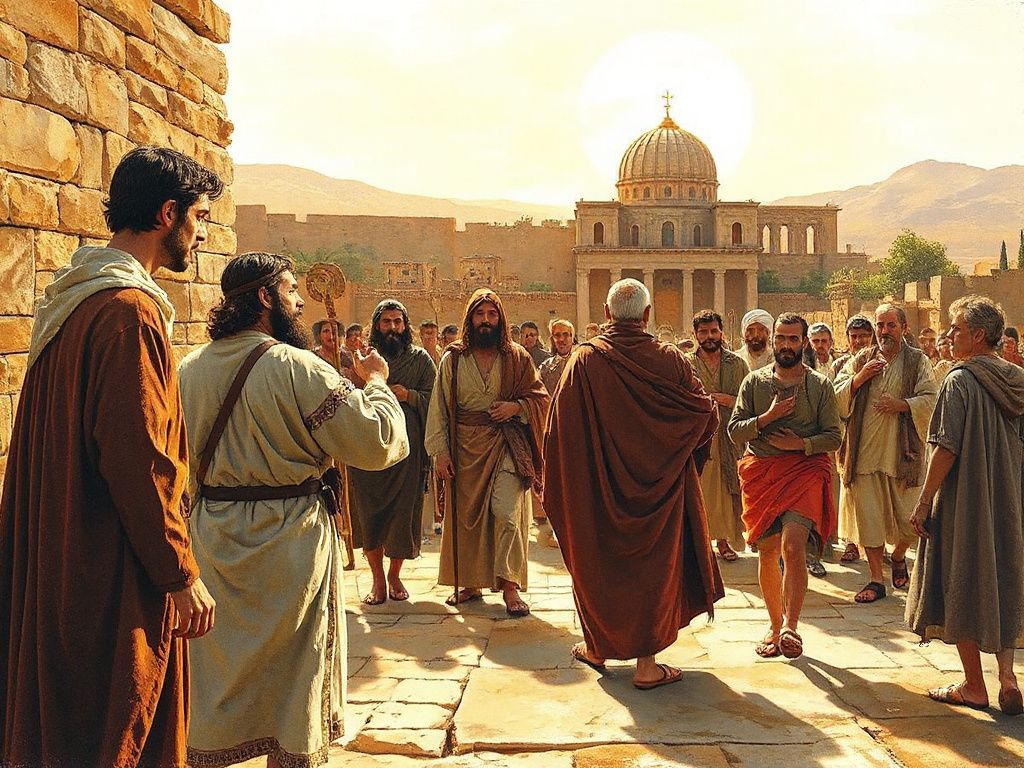
ESTUDIO DEL VERSÍCULO
Hechos 2:1-4 — La venida del Espíritu en Pentecostés
Hechos 2:1-4 describe a los discípulos reunidos en Pentecostés, donde un sonido del cielo, unas lenguas divididas como de fuego y el ser llenos del Espíritu Santo inauguran un nuevo evento en la iglesia primitiva.
Escritura
- 1.Cuando llegó el día de Pentecostés, estaban todos unánimes juntos.And when the day of Pentecost was now come, they were all together in one place.
- 2.Y de repente vino del cielo un estruendo como de un viento recio que soplaba, el cual llenó toda la casa donde estaban sentados;And suddenly there came from heaven a sound as of the rushing of a mighty wind, and it filled all the house where they were sitting.
- 3.y se les aparecieron lenguas repartidas, como de fuego, asentándose sobre cada uno de ellos.And there appeared unto them tongues parting asunder, like as of fire; and it sat upon each one of them.
- 4.Y fueron todos llenos del Espíritu Santo, y comenzaron a hablar en otras lenguas, según el Espíritu les daba que hablasen.And they were all filled with the Holy Spirit, and began to speak with other tongues, as the Spirit gave them utterance.
Qué significa este pasaje
El pasaje se abre con un marcador temporal: ha llegado el día de Pentecostés y el grupo está reunido junto en un mismo lugar. El verbo griego συμπληρόω (G4845) para el día que se cumple lleva el sentido de un tiempo predeterminado que alcanza su cumplimiento, enmarcando el evento como el cumplimiento de un momento previamente fijado más que como una ocurrencia arbitraria.
La venida del Espíritu se representa mediante dos fenómenos sensoriales: un sonido (ἦχος, G2279) como de un viento recio (πνοή, G4157) que πληρόω (G4137) toda la casa, y unas lenguas visibles (γλῶσσα, G1100) que se distribuyen (διαμερίζω, G1266) como fuego (πῦρ, G4442) y se posan sobre cada persona. El sonido y la vista juntos confieren al evento un carácter público y verificable dentro de la sala.
El versículo 4 afirma que todos fueron llenos del Espíritu Santo y comenzaron a hablar conforme el Espíritu les daba expresión. La gramática presenta al Espíritu como el sujeto activo que otorga el habla, de modo que las lenguas resultantes no se presentan como un ejercicio espiritual autogenerado, sino como un discurso habilitado por la propia iniciativa del Espíritu.
Contexto
Los cuatro versículos funcionan como la bisagra de Hechos 2: la pausa narrativa del versículo 1 establece la reunión, los versículos 2-3 describen la llegada, y el versículo 4 introduce el discurso que los versículos siguientes (5-7) continuarán desarrollando. El texto no especifica cuántas personas estaban presentes, el lugar exacto ni si los fenómenos fueron visibles para personas ajenas; la narración se mantiene estrictamente dentro de la sala.
La nota al pie proporcionada con la fuente etiqueta este momento como Pentecostés, el sermón de Pedro y la iglesia primitiva, tratando el pasaje como el umbral narrativo sobre el cual se despliega el resto del capítulo. El evento se presenta sin comentario interno sobre su significado, por lo que cualquier lectura de significación teológica (como lecturas de nueva creación o programáticas) depende de conexiones establecidas en otras partes del canon.
Palabras clave del original
- G4845 συμπληρόω: un compuesto de πληρόω que significa ser completamente llenado. Aquí describe el día de Pentecostés alcanzando su plenitud designada, enmarcando el evento como el momento oportuno más que como una sorpresa.
- G1266 διαμερίζω: dividir o repartir por completo. Se usa aquí para las lenguas que se distribuyen, lo que sugiere una asignación individualizada más que una llama única e indiferenciada.
- G4157 πνοή: aliento, brisa o respiración. La palabra se asocia con ἦχος (sonido) para evocar un viento recio sin identificar estrictamente los fenómenos como viento meteorológico.
Versículos relacionados
- Mark 16:17 La promesa de que los creyentes hablarán en nuevas lenguas establece Hechos 2 como la instancia inaugural de esa señal entre los discípulos.
- Acts 4:31 Un segundo llenado de los discípulos después de la oración, donde el lugar tiembla y ellos hablan la palabra con denuedo, muestra que la dinámica introducida en Hechos 2:1-4 se repite en la comunidad.
- Acts 13:52 Los discípulos siendo llenos de gozo y del Espíritu Santo asocia el llenado del Espíritu con un resultado emocional, complementando el resultado centrado en el habla de Hechos 2:4.
Preguntas frecuentes
¿Qué está sucediendo en Hechos 2:1-4?
El pasaje registra a los discípulos reunidos cuando llegó el día de Pentecostés, un sonido del cielo que llenó la casa, unas lenguas divididas como de fuego que aparecieron y se posaron sobre cada persona, y todos fueron llenos del Espíritu Santo y hablaron conforme el Espíritu les daba expresión.
¿Por qué el texto menciona Pentecostés específicamente?
πεντηκοστή (G4005) nombra la festividad, y el verbo συμπληρόω (G4845) para el día que se cumple indica que un período determinado ha llegado a su cumplimiento, presentando el evento como ocurrido en el tiempo señalado de esa festividad.
¿Cómo se describe el otorgamiento del habla por parte del Espíritu en el versículo 4?
La construcción griega presenta al Espíritu como el sujeto que otorga la expresión, de modo que el discurso de los discípulos se presenta como habilitado por la propia iniciativa del Espíritu y no producido por una técnica humana.