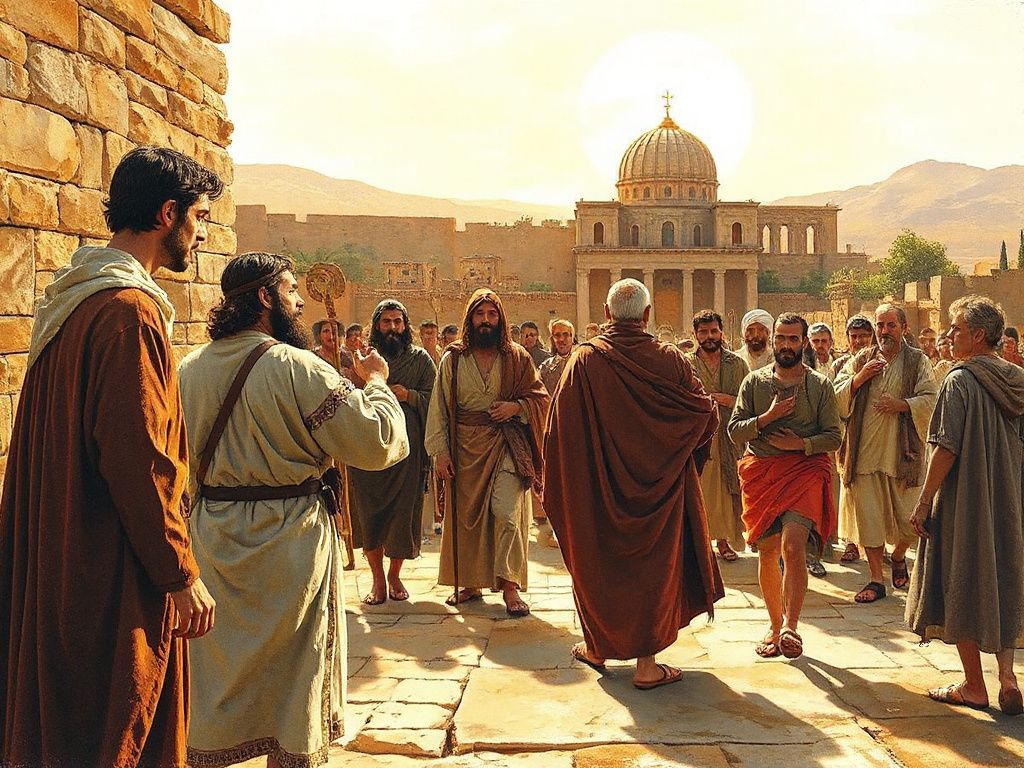
ESTUDIO DEL VERSÍCULO
Hechos 4:12 — La salvación no viene de otro nombre
Pedro, lleno del Espíritu Santo, declara ante los líderes de Israel que la salvación no se halla en ningún otro nombre dado entre los hombres bajo el cielo, sino solo en Jesucristo.
Escritura
- 12.Y en ningún otro hay salvación; porque no hay otro nombre bajo el cielo, dado a los hombres, en que podamos ser salvos.And in none other is there salvation: for neither is there any other name under heaven, that is given among men, wherein we must be saved.
Qué significa este pasaje
Hechos 4:12 es la frase culminante de la respuesta llena del Espíritu de Pedro a la pregunta del Sanedrín sobre el hombre cojo sanado. Tras afirmar que el hombre está sano en el nombre de Jesucristo de Nazaret —a quien los líderes crucificaron y a quien Dios resucitó de entre los muertos—, Pedro añade una declaración negativa categórica: «en ningún otro hay salvación». El versículo vincula la curación recién realizada con la afirmación más amplia de que el nombre de Jesús es el canal designado por Dios para la ayuda salvadora de la humanidad.
El versículo expone la razón de tal afirmación en un estilo sentencioso y semítico: «porque no hay otro nombre bajo el cielo, dado entre los hombres, en que podamos ser salvos». La expresión «dado entre los hombres» presenta el nombre no como uno ideado por los seres humanos, sino como uno provisto por Dios. «Bajo el cielo» funciona como un merismo que significa «en todo el orden creado», descartando toda alternativa por su alcance total. El «podamos» (δεῖ, dei) presenta la salvación como una necesidad divina más que como una opción humana.
Dado que el versículo 12 se presenta como el discurso directo de Pedro dentro de la narración, la declaración no es teología abstracta sino una afirmación pública y circunstancial: sigue a la cita del Salmo 118:22 acerca de la piedra rechazada por los edificadores que pasó a ser cabeza del ángulo. La salvación se presenta, por tanto, como vinculada al Cristo vindicado y exaltado, y el nombre por el cual el cojo fue sanado es el mismo nombre en el cual los seres humanos deben ser salvos.
Contexto
Hechos 4 se abre con Pedro y Juan arrestados tras sanar a un cojo y proclamar la resurrección en Jesús (vv. 1–3). Llevados ante los gobernantes, ancianos y escribas en Jerusalén —incluida la familia del sumo sacerdote—, se les pregunta con qué poder o nombre se realizó la acción (vv. 5–7). La respuesta de Pedro, llena del Espíritu, explica la curación «en el nombre de Jesucristo de Nazaret» (v. 10), identifica a Jesús como la piedra angular del Salmo 118 (v. 11) y culmina en la afirmación de exclusividad del versículo 12. Inmediatamente después, el consejo observa la valentía de hombres sin instrucción y no puede refutar al hombre sanado que está con ellos (vv. 13–14).
El capítulo registra luego la deliberación privada del consejo y su amenaza de silenciar a los apóstoles (vv. 15–18), la negativa de Pedro y Juan a obedecer a los hombres antes que a Dios (vv. 19–20), su liberación bajo la presión popular (vv. 21–22) y la reunión de oración de los creyentes en la que citan el Salmo 2, piden valentía y son llenos de nuevo del Espíritu (vv. 23–31). El capítulo cierra señalando la unidad de la comunidad y el continuo testimonio de los apóstoles sobre la resurrección con gran poder (vv. 32–37). El versículo 12 se sitúa así en el centro teológico: explica por qué el nombre de Jesús no puede ser silenciado.
Preguntas frecuentes
¿Por qué Hechos 4:12 dice «en ningún otro» si la salvación se ofrece a todos?
El versículo no limita quiénes pueden ser salvos, sino que declara el medio: la salvación no se canaliza a través de ningún otro nombre que Dios haya dado entre los hombres. El «podamos ser salvos» presenta la provisión de Dios como el camino necesario, no como una restricción de la misericordia divina hacia diversos grupos.
¿Cuál es la conexión entre el hombre cojo sanado y la afirmación sobre la salvación?
Pedro acaba de atribuir la curación al nombre de Jesucristo de Nazaret (v. 10) y ha identificado a Jesús como la piedra angular del Salmo 118 (v. 11). El versículo 12 generaliza: el nombre que físicamente sanó a un hombre es el nombre en el cual la humanidad entera debe ser salva. El milagro concreto es la ocasión para la afirmación universal.
¿«Dado entre los hombres» significa que los seres humanos escogieron el nombre de Jesús?
En contexto, la expresión presenta el nombre como divinamente dado, no ideado por los hombres. Pedro acaba de decir al concilio que Dios resucitó de entre los muertos al Jesús crucificado (v. 10), y el versículo 12 lo refleja al presentar el nombre salvador como uno provisto por Dios «bajo el cielo» —un merismo que abarca todo el orden creado.