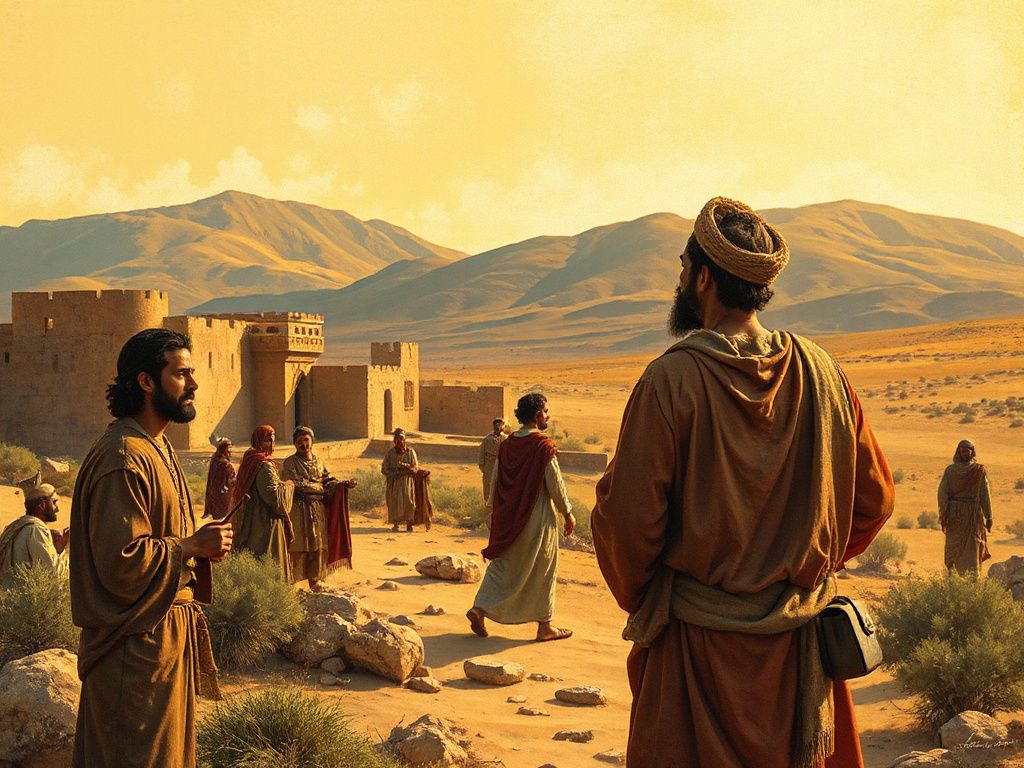
ESTUDIO DEL VERSÍCULO
Amós 4:12 — Prepárate para encontrarte con tu Dios
Después de enumerar cinco desastres que no lograron mover a Israel al arrepentimiento, Amós declara que el juicio ahora es cierto y convoca a la nación a encontrarse con Dios.
Escritura
- 12.Por tanto, de esta manera te haré a ti, oh Israel; y porque te he de hacer esto, prepárate para venir al encuentro de tu Dios, oh Israel.Therefore thus will I do unto thee, O Israel; and because I will do this unto thee, prepare to meet thy God, O Israel.
Qué significa este pasaje
El versículo 12 es el eje del capítulo. Une los cinco juicios enumerados en los versículos 6–11 (hambre, sequía, tizón, plaga y espada, y la destrucción de ciudades) y anuncia que el próximo acto será una confrontación directa con Dios. El «por tanto» inicial (ko en coreano: 그러므로) marca la conclusión lógica: como toda advertencia previa fue ignorada, ahora se hará algo decisivo.
La segunda línea explica la primera: «porque yo haré esto contigo» convierte la convocatoria en la razón del llamado a prepararse. La repetición de «oh Israel» en ambos extremos del versículo enmarca la dirección y le otorga peso solemne — la misma nación que fue interpelada en cada juicio anterior recibe ahora la orden de disponerse para un encuentro personal con su Señor del pacto.
El mandato de «prepárate para encontrarte con tu Dios» presupone un encuentro que tendrá lugar. El capítulo ha avanzado hacia este encuentro mediante advertencias escalonadas, y la doxología final del versículo 13 (que forma los montes, crea el viento, declara los pensamientos del hombre) identifica a quién es convocada Israel a encontrarse: Jehová, el Dios de los ejércitos.
Contexto
El capítulo 4 de Amós está estructurado alrededor de un estribillo. Los versículos 6, 8, 9, 10 y 11 terminan cada uno con el estribillo idéntico «y no habéis vuelto a mí, dice Jehová». El estribillo cataloga los cinco juicios escalonados — limpieza de dientes (hambre), lluvia retenida, tizón y añublo, plaga al modo de Egipto y la destrucción de ciudades como Sodoma y Gomorra. Cada negativa prepara la siguiente advertencia. El versículo 12 rompe el estribillo: las advertencias han terminado y se anuncia el encuentro mismo.
Los versículos 12 y 13 forman una conclusión emparejada. El versículo 12 emite la convocatoria; el versículo 13 responde a la pregunta implícita de a quién debe prepararse Israel para encontrar. Al identificar a Dios como aquel que forma los montes, crea el viento, declara los pensamientos y pisa las alturas de la tierra, la línea final eleva el encuentro fuera de la política hacia lo teológico: Israel no se prepara para enfrentarse a un ejército ni a una nación rival, sino al Creador soberano.
Preguntas frecuentes
¿Por qué se considera el versículo 12 un punto de inflexión en Amós 4?
Porque pone fin al estribillo quíntuple «y no habéis vuelto a mí» (versículos 6, 8, 9, 10, 11) y desplaza el capítulo de los juicios catalogados hacia un encuentro personal e inminente con Dios.
¿Qué implica «prepárate para encontrarte con tu Dios» sobre la naturaleza del evento venidero?
El mandato trata el encuentro como algo cierto — no es una advertencia hipotética sino una convocatoria. Junto con la descripción de Dios como Creador en el versículo 13, el encuentro se presenta como una comparecencia ante el Señor soberano más que como una confrontación política.
¿Cómo se relaciona el versículo 12 con el versículo 13?
El versículo 12 anuncia el encuentro; el versículo 13 identifica a quién debe encontrar Israel — Jehová, el Dios de los ejércitos, que forma los montes, crea el viento, declara los pensamientos del hombre y pisa las alturas de la tierra. Juntos forman el clímax del capítulo.