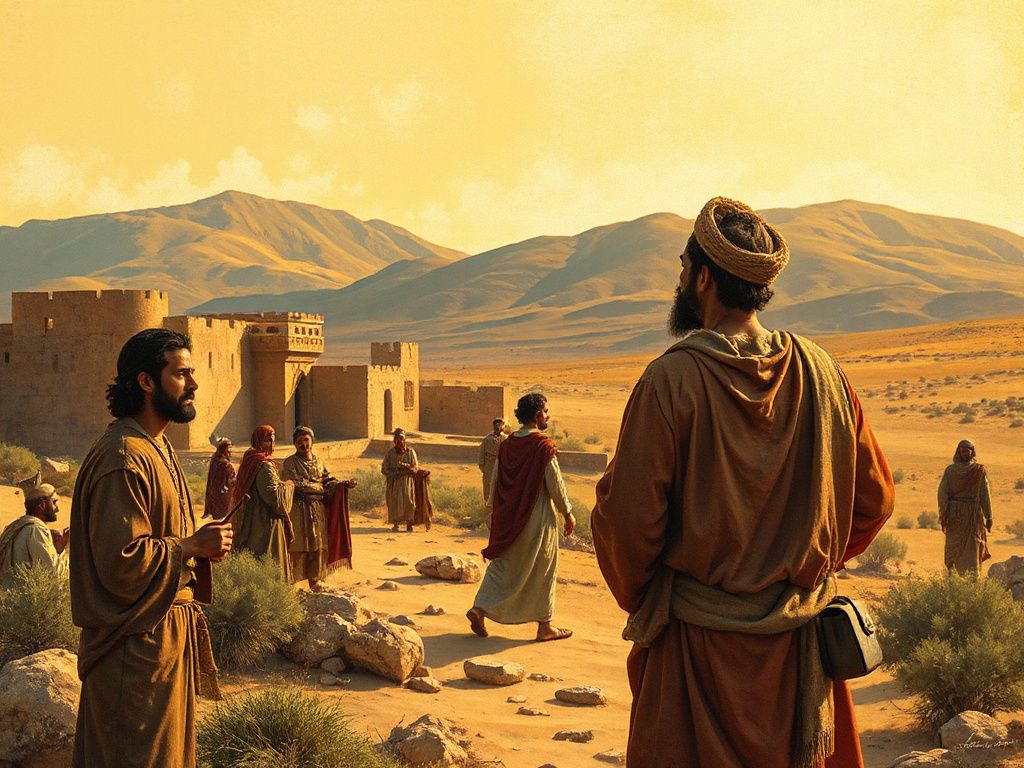
ESTUDIO DEL VERSÍCULO
Amós 7:7-8 — La Visión de la Plomada
El Señor sostiene una plomada junto a un muro y le dice a Amós que pondrá esa plomada en medio de Israel y no pasará más por encima de sus pecados.
Escritura
- 7.Me enseñó así: He aquí el Señor estaba sobre un muro hecho a plomo, y en su mano una plomada de albañil.Thus he showed me: and, behold, the Lord stood beside a wall made by a plumb-line, with a plumb-line in his hand.
- 8.Jehová entonces me dijo: ¿Qué ves, Amós? Y dije: Una plomada de albañil. Y el Señor dijo: He aquí, yo pongo plomada de albañil en medio de mi pueblo Israel; no lo toleraré más.And Jehovah said unto me, Amos, what seest thou? And I said, A plumb-line. Then said the Lord, Behold, I will set a plumb-line in the midst of my people Israel; I will not again pass by them any more;
Qué significa este pasaje
En esta tercera visión de Amós 7, el Señor está de pie junto a un muro que fue construido con una plomada, sosteniendo una plomada en Su mano. A diferencia de las dos visiones anteriores de langostas (v. 1-3) y fuego (v. 4-6), donde Amós intercedió y el Señor cedió, esta visión introduce un juicio irreversible. La plomada —una herramienta de constructor para probar la verticalidad— se convierte en el instrumento con el que Dios mide a Su pueblo.
El Señor pregunta a Amós: «¿qué ves?» y Amós responde: «Una plomada». El diálogo sigue el patrón de las visiones anteriores, pero el resultado es diferente. Dios dice: «He aquí, pondré una plomada en medio de mi pueblo Israel; no volveré a pasar más junto a ellos». La repetición de la herramienta de medición cambia el significado: lo que antes era un estándar para construir un muro ahora es el estándar contra el cual se está midiendo al mismo Israel, y se descubre que no está a nivel.
Donde las visiones anteriores fueron respondidas con «Jehová se arrepentirá» y «No será así», aquí la sentencia es definitiva. La plomada en la mano de Dios se convierte en la plomada puesta en medio de Israel —una medición continua e interna. La nación ya no puede depender del privilegio del pacto ni de la intercesión profética; el estándar ha sido aplicado y el veredicto se mantiene.
Contexto
Amós 7 contiene una secuencia de visiones (langostas, fuego, plomada), cada una introducida por «Jehová el Señor me mostró». En las dos primeras, Amós suplica: «¿cómo se sostendrá Jacob, pues es pequeño?», y el Señor cede. La tercera visión rompe ese patrón: no se registra ninguna intercesión, y el Señor declara que no volverá a pasar junto a Israel. El versículo siguiente (v. 9) expone de inmediato las consecuencias: los lugares altos de Isaac serán desolados, los santuarios de Israel asolados, y la casa de Jeroboam se levantará contra la espada.
La consecuencia final recae en el ámbito político cuando Amasías, sacerdote de Betel, denuncia a Amós ante el rey Jeroboam (v. 10-11), acusándolo de conspiración y citando su profecía de que Jeroboam morirá a espada e Israel será llevado cautivo. El capítulo registra entonces la defensa que hace Amós de su llamado profético (v. 14-15) y vuelve el oráculo contra el mismo Amasías (v. 16-17). La visión de la plomada es, por tanto, el eje que traslada el capítulo de visiones de juicio a una confrontación política concreta.
Preguntas frecuentes
¿Por qué es significativa una plomada en esta visión?
Una plomada es una herramienta de constructor que se usa para probar si un muro está verdaderamente vertical. El Señor la sostiene junto a un muro ya construido con una plomada, y luego declara que colocará ese mismo estándar de medición en medio de Israel. La imagen transmite que el mismo Israel está a punto de ser medido conforme al estándar de Dios y se descubrirá que no está a nivel.
¿En qué se diferencia esta visión de las dos anteriores en el capítulo?
En las dos primeras visiones (langostas en v. 1-3, fuego en v. 4-6), Amós intercede con «¿cómo se sostendrá Jacob, pues es pequeño?», y el Señor dice que cederá. En la visión de la plomada, no se registra ninguna intercesión y el Señor declara: «no volveré a pasar más junto a ellos», marcando un giro decisivo de la misericordia al juicio firme.
¿Cuál es la conexión entre la plomada y la casa de Jeroboam mencionada en el v. 9?
El versículo 9 sigue inmediatamente a la visión de la plomada y da su aplicación concreta: los lugares altos de Isaac serán desolados, los santuarios de Israel asolados, y el Señor se levantará contra la casa de Jeroboam con la espada. La plomada mide así los centros religiosos y la casa real de Israel en conjunto como estructuras fuera de nivel respecto al estándar de Dios.