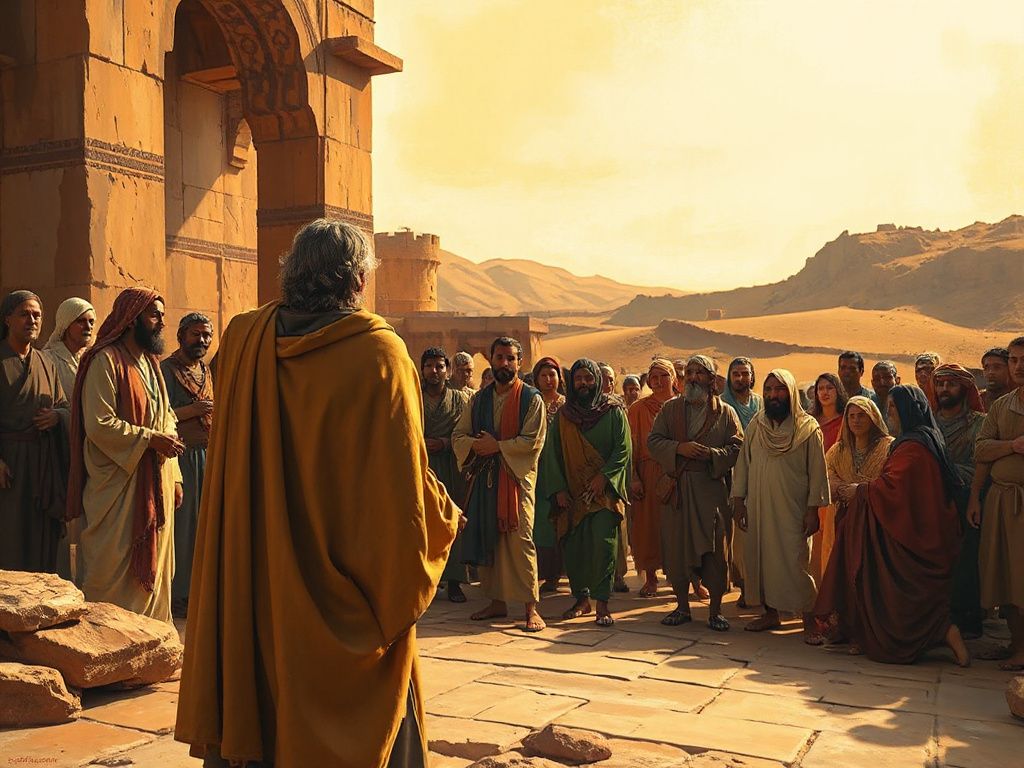
ESTUDIO DEL VERSÍCULO
Deuteronomio 30:11-20 — Escoge la vida: La palabra cerca de ti
Moisés declara que el mandamiento no está fuera de su alcance, sino cerca, en la boca y en el corazón, y llama a Israel a escoger entre la vida y la muerte, la bendición y la maldición: escoger la vida amando al Señor y apegándose a él.
Escritura
- 11.Porque este mandamiento que yo te ordeno hoy no es demasiado difícil para ti, ni está lejos.For this commandment which I command thee this day, it is not too hard for thee, neither is it far off.
- 12.No está en el cielo, para que digas: ¿Quién subirá por nosotros al cielo, y nos lo traerá y nos lo hará oír para que lo cumplamos?It is not in heaven, that thou shouldest say, Who shall go up for us to heaven, and bring it unto us, and make us to hear it, that we may do it?
- 13.Ni está al otro lado del mar, para que digas: ¿Quién pasará por nosotros el mar, para que nos lo traiga y nos lo haga oír, a fin de que lo cumplamos?Neither is it beyond the sea, that thou shouldest say, Who shall go over the sea for us, and bring it unto us, and make us to hear it, that we may do it?
- 14.Porque muy cerca de ti está la palabra, en tu boca y en tu corazón, para que la cumplas.But the word is very nigh unto thee, in thy mouth, and in thy heart, that thou mayest do it.
- 15.Mira, yo he puesto delante de ti hoy la vida y el bien, la muerte y el mal;See, I have set before thee this day life and good, and death and evil;
- 16.porque yo te mando hoy que ames a Jehová tu Dios, que andes en sus caminos, y guardes sus mandamientos, sus estatutos y sus decretos, para que vivas y seas multiplicado, y Jehová tu Dios te bendiga en la tierra a la cual entras para tomar posesión de ella.in that I command thee this day to love Jehovah thy God, to walk in his ways, and to keep his commandments and his statutes and his ordinances, that thou mayest live and multiply, and that Jehovah thy God may bless thee in the land whither thou goest in to possess it.
- 17.Mas si tu corazón se apartare y no oyeres, y te dejares extraviar, y te inclinares a dioses ajenos y les sirvieres,But if thy heart turn away, and thou wilt not hear, but shalt be drawn away, and worship other gods, and serve them;
- 18.yo os protesto hoy que de cierto pereceréis; no prolongaréis vuestros días sobre la tierra adonde vais, pasando el Jordán, para entrar en posesión de ella.I denounce unto you this day, that ye shall surely perish; ye shall not prolong your days in the land, whither thou passest over the Jordan to go in to possess it.
- 19.A los cielos y a la tierra llamo por testigos hoy contra vosotros, que os he puesto delante la vida y la muerte, la bendición y la maldición; escoge, pues, la vida, para que vivas tú y tu descendencia;I call heaven and earth to witness against you this day, that I have set before thee life and death, the blessing and the curse: therefore choose life, that thou mayest live, thou and thy seed;
- 20.amando a Jehová tu Dios, atendiendo a su voz, y siguiéndole a él; porque él es vida para ti, y prolongación de tus días; a fin de que habites sobre la tierra que juró Jehová a tus padres, Abraham, Isaac y Jacob, que les había de dar.to love Jehovah thy God, to obey his voice, and to cleave unto him; for he is thy life, and the length of thy days; that thou mayest dwell in the land which Jehovah sware unto thy fathers, to Abraham, to Isaac, and to Jacob, to give them.
Qué significa este pasaje
Los versículos 11–14 responden a una posible objeción: el mandamiento no está encerrado en el cielo ni al otro lado del mar. Moisés anticipa la pregunta: «¿Quién subirá por él hasta el cielo, o pasará al otro lado del mar para traerlo?» (vv. 12–13) y responde que la palabra ya está «muy cerca de ti, en tu boca y en tu corazón» (v. 14). La intención es mostrar la accesibilidad y la responsabilidad: Israel no puede alegar ignorancia ni imposibilidad. Lo que se requiere ya ha sido dicho y ya es conocido; la obediencia es cuestión de voluntad, no de adquisición.
Los versículos 15–18 presentan los dos caminos ante Israel en términos morales contundentes. «Vida y bien» se oponen a «muerte y mal» (v. 15). El camino positivo se concreta: amar al Señor, andar en sus caminos, guardar sus mandamientos, estatutos y ordenanzas, para que Israel viva, se multiplique y sea bendecido en la tierra (v. 16). El camino negativo se describe como un apartamiento del corazón, la negativa a escuchar, el dejarse arrastrar hacia otros dioses (v. 17). La consecuencia se anuncia como una segura perdición y el acortamiento de los días en la tierra (v. 18). La estructura es covenantal: condición y consecuencia se declaran abiertamente.
Los versículos 19–20 formalizan el momento como un acto de testigo legal. Se convocan los cielos y la tierra como testigos contra Israel (v. 19), una imagen judicial tomada de los tratados de alianza. La elección es vida y bendición frente a muerte y maldición, con la motivación indicada: ama al Señor, escucha su voz y apégate a él, «porque él es tu vida y la prolongación de tus días» (v. 20). La tierra prometida a Abraham, Isaac y Jacob (v. 20) es la recompensa concreta unida a la elección. Así, el mandato de «escoger la vida» no es una piedad vaga, sino una decisión covenantal con consecuencias declaradas.
Contexto
Deuteronomio 30 en su conjunto comienza con el escenario del exilio y el retorno (vv. 1–5), luego describe la promesa de Dios de circuncidar el corazón para que Israel le ame con todo el corazón y el alma y viva (vv. 6–7). Los versículos 8–10 vinculan esa obra divina con el lado humano: Israel debe convertirse, obedecer y guardar los mandamientos escritos en el libro de la ley. El pasaje central (vv. 11–20) se sigue directamente de este eje. Las promesas condicionales de restauración (vv. 1–10) hacen coherente el llamado a escoger la vida (vv. 15–20): como el retorno y la obediencia son posibles, la elección es real y decisiva.
En el conjunto del libro, este pasaje se sitúa dentro de los discursos finales de Moisés antes de que los israelitas crucen el Jordán (Deuteronomio 1–30). El binomio bendición y maldición, el testimonio de los cielos y la tierra, y el énfasis en el corazón reflejan el lenguaje de ratificación de la alianza que se encuentra en otras partes del libro. El discurso termina poco después con la renovación de la alianza, y los capítulos que siguen recogen el nombramiento de Josué y el cántico de Moisés.
Preguntas frecuentes
¿Por qué Moisés dice que el mandamiento no está en el cielo ni al otro lado del mar?
Moisés anticipa las excusas. En los vv. 12–13 imagina a alguien preguntando quién subirá al cielo o cruzará el mar para traer de vuelta la palabra. La respuesta (v. 14) es que la palabra ya está en la boca y en el corazón. El punto es que la obediencia no está bloqueada por la distancia o la imposibilidad; la responsabilidad recae sobre el que ya ha recibido la palabra.
¿Qué significa «escoge la vida» en el versículo 19?
Es un llamado covenantal enmarcado por los cielos y la tierra como testigos. Entre la vida y la muerte, la bendición y la maldición, se ordena a Israel escoger la vida. El versículo siguiente define concretamente cómo se ve esa elección: amar al Señor, obedecer su voz y apegarse a él, porque él es la vida de Israel y la prolongación de sus días en la tierra prometida.
¿Cómo se relaciona este pasaje con los versículos circundantes sobre el retorno y la restauración (vv. 1–10)?
Los versículos 1–10 presentan el exilio de Israel y la promesa de Dios de逆转 su cautividad (de volverlo del cautiverio) y circuncidar su corazón para que le ame. Los versículos 11–20 se apoyan en esto al insistir en que, dada esta cercanía y la obra divina ya comenzada, la elección de obedecer es real y decisiva. La restauración es ofrecida; al lado humano corresponde escoger la vida.