ESTUDIO DEL VERSÍCULO
Deuteronomio 31:6 — Sé fuerte, porque el SEÑOR va contigo
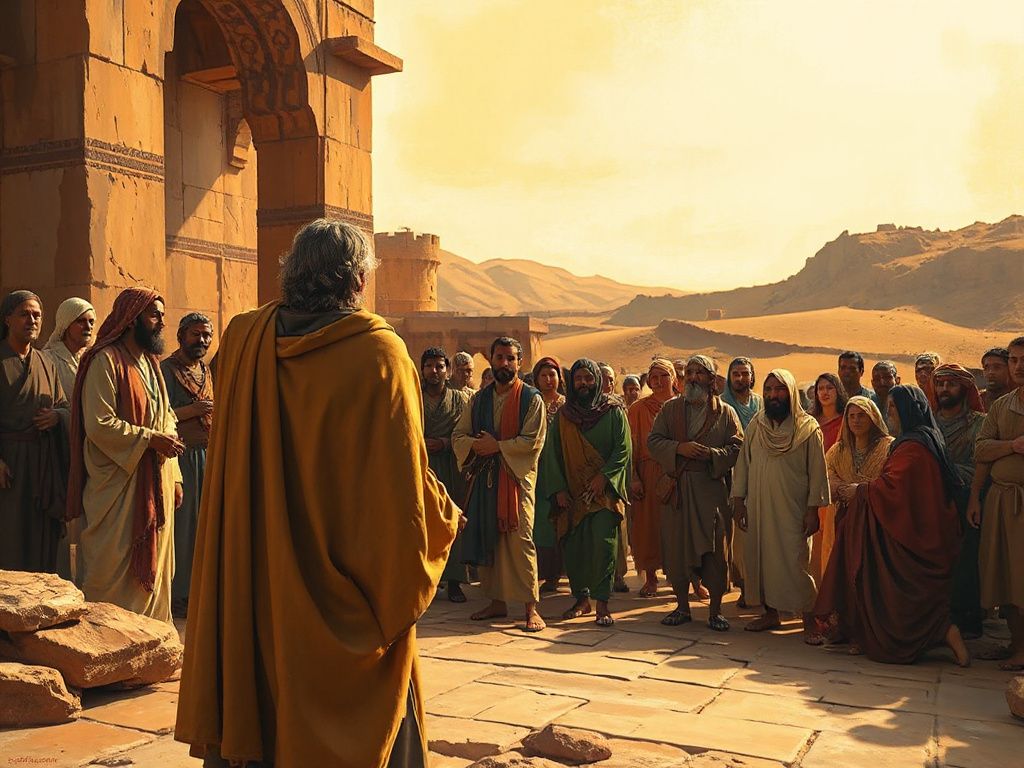
Moisés ordena a Israel ser fuerte y valiente porque Jehová su Dios va con ellos y nunca los fallará ni los abandonará.
Escritura
- 6.Esforzaos y cobrad ánimo; no temáis, ni tengáis miedo de ellos, porque Jehová tu Dios es el que va contigo; no te dejará, ni te desamparará.Be strong and of good courage, fear not, nor be affrighted at them: for Jehovah thy God, he it is that doth go with thee; he will not fail thee, nor forsake thee.
Qué significa este pasaje
El versículo es una exhortación directa de Moisés a Israel: "Sé fuerte y valiente, no temas ni te aterrorices ante ellos". Tres mandatos se agrupan: fortaleza (חִזְקוּ), valentía (וֶאֱמָצוּ) y la doble negación de no temer ni ser aterrorizado. La repetición es retórica: Moisés anticipa un peligro real y lo enfrenta con una determinación reiterada. Luego el versículo fundamenta esa determinación en una sola cláusula: "porque Jehová tu Dios, él es el que va contigo".
La promesa sigue al mandato. La razón por la que Israel puede enfrentar a las naciones que tiene delante no es su propia capacidad militar, sino la presencia de Jehová, que "no te fallará ni te abandonará". Dos verbos de abandono — fallar (יַרְפְּךָ) y abandonar (יַעַזְבֶךָּ) — son negados. La gramática coloca el énfasis en la negación: el abandono divino es lo que Israel no necesita temer, porque es lo que Dios ha prometido que no sucederá.
Leído como una sola oración, el versículo va de la responsabilidad humana ("sé fuerte") a la fidelidad divina ("él no te fallará"). El valor exigido, por tanto, no es una valentía autooriginada, sino una respuesta fundamentada en el carácter de Dios. Moisés enmarca la próxima conquista de Israel no como un proyecto militar humano, sino como un acto en el que Dios va con ellos.
Contexto
El versículo se sitúa en los discursos finales de Moisés a Israel antes de su muerte y antes de que Israel cruce el Jordán. En los versículos inmediatamente anteriores, Moisés ha declarado que Jehová irá delante de Israel, destruirá a las naciones y las desposeerá (31:3–5). La exhortación en 31:6 sigue, por tanto, directamente a la promesa de que Dios mismo actuará contra los enemigos de Israel. Inmediatamente después, en 31:7–8, Moisés repite la misma exhortación a Josué personalmente ante todo Israel, y las mismas palabras reaparecen en 31:23 cuando Jehová exhorta a Josué por medio de Moisés. La repetición muestra que 31:6 es la forma pública de una exhortación dirigida tanto al pueblo como a su futuro líder.
El capítulo en su conjunto enmarca la exhortación sobre un trasfondo sobrio. Moisés anuncia que no cruzará el Jordán (31:2) y más adelante que Israel quebrantará el pacto después de entrar en la tierra (31:16–21). El cántico de testimonio en 31:19–22 se da precisamente porque se espera una futura apostasía. El valor se manda, pues, no en un escenario de triunfalismo, sino en el umbral de una tierra a la que Israel entrará sin Moisés y en la que después flaqueará. El mandato de ser fuerte se ancla en la promesa de presencia precisamente porque el capítulo mismo anticipa la ausencia y la infidelidad.
Preguntas frecuentes
¿Por qué el mandato se repite tres veces en este capítulo (31:6, 31:7, 31:23)?
La repetición funciona retóricamente: Moisés se dirige a Israel como un todo en 31:6, luego se vuelve a Josué personalmente ante todo Israel en 31:7, y 31:23 registra a Jehová exhortando a Josué por medio de Moisés con las mismas palabras. La triple repetición subraya la seriedad de la transición — la muerte de Moisés, el liderazgo de Josué y la entrada de Israel en la tierra — y arraiga la exhortación en la promesa inmutable de que Dios va con ellos.
¿Qué significa que Dios no "fallará" ni "abandonará" a Israel?
El versículo emplea dos verbos distintos de abandono y los niega a ambos. "Fallar" o "soltar" y "abandonar" o "dejar" describen lo que Israel podría esperar de un líder humano que se cansa, muere o se retira. La promesa excluye ambas cosas: Dios mismo va con Israel, de modo que el tipo de abandono propio de la debilidad humana no se aplica. La negación es la fuerza del versículo: el valor de Israel descansa en lo que Dios ha prometido que no sucederá.
¿El valor mandado en 31:6 es autooriginado o dado por Dios?
El versículo se dirige a los seres humanos en imperativo ("Sé fuerte y valiente"), de modo que el llamado a actuar se dirige genuinamente a Israel y a Josué. Al mismo tiempo, el fundamento dado para el mandato es enteramente divino: "Jehová tu Dios, él es el que va contigo". El valor mandado es, por tanto, una respuesta humana habilitada y garantizada por la presencia prometida de Dios — no una valentía autónoma, sino una determinación fundamentada en el carácter de Dios.