ESTUDIO DEL VERSÍCULO
Deuteronomio 32:4 — La justicia perfecta de la Roca
La perfección, la justicia, la fidelidad y el carácter recto de Dios son el estándar moral proclamado en Deuteronomio 32:4.
Escritura
- 4.El es la Roca, cuya obra es perfecta, Porque todos sus caminos son rectitud; Dios de verdad, y sin ninguna iniquidad en él; Es justo y recto.The Rock, his work is perfect; For all his ways are justice: A God of faithfulness and without iniquity, Just and right is he.
Qué significa este pasaje
El versículo presenta a Dios como «la Roca», subrayándolo como aquel cuyo carácter ofrece un estándar firme, y no como alguien variable o arbitrario. Su obra es perfecta, y todos sus caminos son justicia, de modo que el pasaje une las acciones de Dios con la rectitud de su carácter.
Dios también es llamado «un Dios de fidelidad y sin iniquidad». Estas frases afirman que él es confiable y está libre de maldad; no describen un ideal distante, sino al Dios cuyos caminos permanecen justos en toda circunstancia.
La descripción final, «Justo y recto es él», reitera la afirmación central del versículo. La justicia de Dios no es simplemente un atributo entre otros: es el carácter constante que se expresa en todo lo que hace.
Contexto
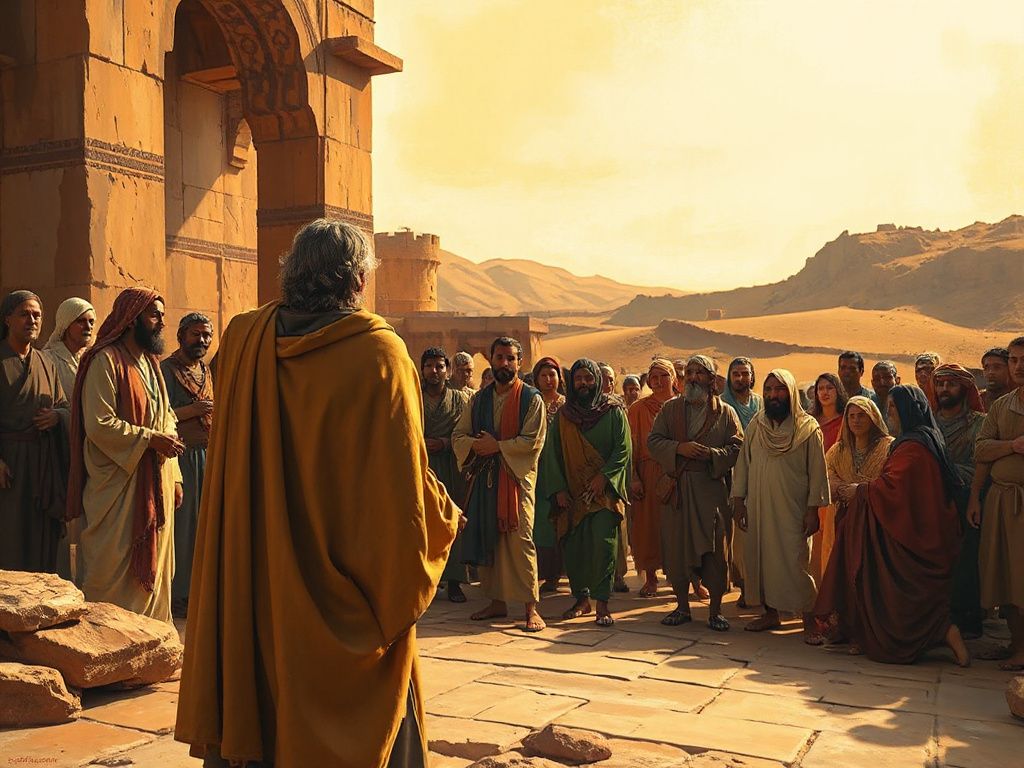
Los versículos 1–3 introducen una proclamación pública: se llama a los cielos y a la tierra a escuchar, y el nombre de Jehová ha de ser alabado antes de la declaración sobre Dios en el versículo 4.
Los versículos 5–7 contrastan de inmediato la respuesta corrupta y perversa del pueblo con el Dios al que tratan de ese modo. El canto que los rodea también recuerda la guía y el cuidado de Dios, mientras que versículos posteriores describen el juicio por la idolatría y la infidelidad. Este contexto hace del versículo 4 una declaración del estándar con el que se mide la conducta humana.
Preguntas frecuentes
¿Qué comunica «la Roca» en Deuteronomio 32:4?
Presenta a Dios como el carácter firme y confiable que está detrás de las palabras que siguen; el texto proporcionado no añade una explicación histórica o simbólica aparte más allá de este uso del título.
¿Por qué el versículo dice tanto «todos sus caminos son justicia» como «justo y recto es él»?
La repetición refuerza la misma afirmación central: la justicia y la rectitud no son acciones aisladas, sino expresiones constantes de quien Dios es.
¿Cómo se relaciona la descripción posterior del juicio en el capítulo con el versículo 4?
Los versículos posteriores describen el juicio por la corrupción, la idolatría y la infidelidad. En ese contexto, el versículo 4 identifica el estándar justo y fiel que expone la perversidad e injusticia humana.