ESTUDIO DEL VERSÍCULO
Esdras 1:5 — Dios mueve los corazones a regresar y reconstruir
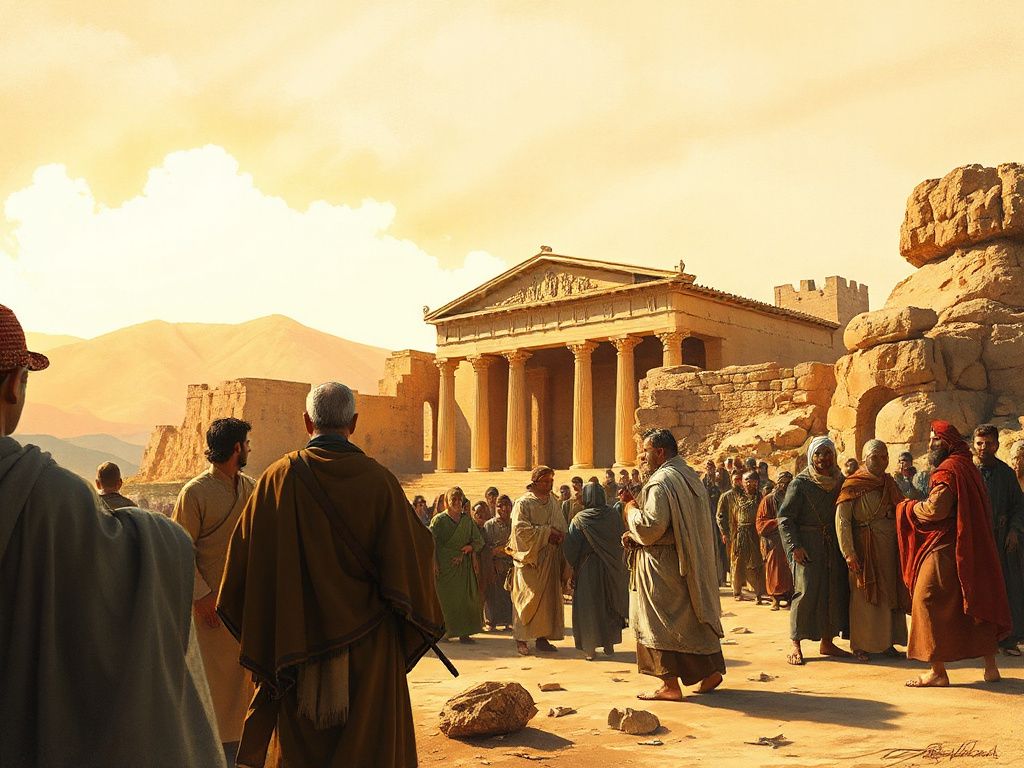
Esdras 1:5 relata que los líderes y el pueblo se dispusieron a regresar y reconstruir el templo de Jerusalén porque Dios movió su espíritu.
Escritura
- 5.Entonces se levantaron los jefes de las casas paternas de Judá y de Benjamín, y los sacerdotes y levitas, todos aquellos cuyo espíritu despertó Dios para subir a edificar la casa de Jehová, la cual está en Jerusalén.Then rose up the heads of fathers' houses of Judah and Benjamin, and the priests, and the Levites, even all whose spirit God had stirred to go up to build the house of Jehovah which is in Jerusalem.
Qué significa este pasaje
El versículo 5 nombra a cuatro grupos que responden al decreto de Ciro: los jefes de las casas paternas de Judá y Benjamín, los sacerdotes, los levitas y todos aquellos cuyo espíritu había movido Dios. La lista pasa de los líderes civiles a los funcionarios religiosos y a los individuos comunes, mostrando que la respuesta atraviesa las esferas sociales y sagradas. La expresión «se dispusieron» (con el sentido hebreo implícito en la cláusula) señala una acción decisiva; estas personas no siguen deliberando, sino que se levantan y se preparan para partir.
La frase clave «cuyo espíritu había movido Dios» atribuye directamente el levantamiento a la iniciativa divina. La misma raíz expresiva aparece antes en el capítulo en relación con Ciro, lo que indica que el edicto del rey pagano y la obediencia de los exiliados tienen una sola fuente: el movimiento que Dios obra en los corazones humanos. Por ello, el regreso y la reconstrucción se presentan no como un acontecimiento político, sino como un movimiento que Dios produce entre su pueblo.
El destino se especifica con precisión: «subir a reedificar la casa de Jehová que está en Jerusalén». La combinación de «subir» —una postura de alianza hacia Sion— y «reedificar la casa» vincula el versículo con el propósito más amplio de construir el templo expuesto en los versículos 2–4. El versículo 5 es el punto de inflexión en el que el permiso imperial de Ciro (vv. 1–4) recibe como respuesta la cooperación humana posibilitada por Dios.
Contexto
Los versículos 1–4 constituyen el trasfondo inmediato. El versículo 1 afirma que «Jehová movió el espíritu de Ciro» para que se cumpliera la palabra profética pronunciada por medio de Jeremías; los versículos 2–4 registran la proclama escrita de Ciro, que concede permiso para regresar, ordena la construcción del templo en Jerusalén e invita a la población circundante a prestar apoyo material. El versículo 5 es la primera respuesta a ese decreto dentro de la comunidad de la alianza.
Los versículos 6–11 muestran la confirmación externa del levantamiento descrito en el versículo 5: los vecinos suministran plata, oro, bienes y animales (v. 6); Ciro devuelve personalmente los utensilios del templo que Nabucodonosor había llevado (vv. 7–8), inventariados bajo la autoridad de Sesbasar, príncipe de Judá (vv. 9–11). Así, el capítulo presenta el mover de Dios (vv. 1, 5) como aquello que produce tanto un pueblo dispuesto (v. 5) como el regreso de los tesoros (vv. 7–11).
Preguntas frecuentes
¿Por qué el versículo 5 enumera cuatro grupos distintos?
La lista —los jefes de las casas paternas de Judá y Benjamín, los sacerdotes, los levitas y todos aquellos a quienes Dios movió— muestra que la respuesta a la reconstrucción del templo abarca a toda la comunidad: liderazgo civil, liderazgo sacerdotal, servicio levítico e individuos. Se enfatiza que ninguna parte de la comunidad retornada queda excluida de la obra y que el mover divino es el factor común que los une.
¿Cómo se relaciona la frase «cuyo espíritu había movido Dios» con el versículo 1?
El versículo 1 dice que Jehová movió el espíritu de Ciro; el versículo 5 afirma que Dios movió el espíritu de quienes se dispusieron a subir. La misma acción divina obra tanto mediante un rey pagano como mediante el pueblo de la alianza, presentando el regreso como un movimiento coordinado que se origina en Dios, en el cual el decreto de Ciro (vv. 2–4) recibe como respuesta el levantamiento del pueblo (v. 5).
¿Por qué enfatiza el versículo el «subir» a Jerusalén?
El lenguaje direccional «subir» refleja la teología de la alianza según la cual Sion es el lugar que Dios escogió para su nombre. En combinación con «reedificar la casa de Jehová que está en Jerusalén», el versículo presenta el regreso no meramente como un reasentamiento, sino como una peregrinación hacia el lugar de la morada de Dios, alineando el viaje del pueblo con el propósito expuesto en el decreto de Ciro (vv. 2–4).