ESTUDIO DEL VERSÍCULO
Esdras 3:11 — Alabanza en la fundación del Templo
Al colocar los cimientos del templo, el pueblo canta de forma antifonal, declarando que el Señor es bueno y que su amor perdura para siempre hacia Israel.
Escritura
- 11.Y cantaban, alabando y dando gracias a Jehová, y diciendo: Porque él es bueno, porque para siempre es su misericordia sobre Israel. Y todo el pueblo aclamaba con gran júbilo, alabando a Jehová porque se echaban los cimientos de la casa de Jehová.And they sang one to another in praising and giving thanks unto Jehovah, saying, For he is good, for his lovingkindness endureth for ever toward Israel. And all the people shouted with a great shout, when they praised Jehovah, because the foundation of the house of Jehovah was laid.
Qué significa este pasaje
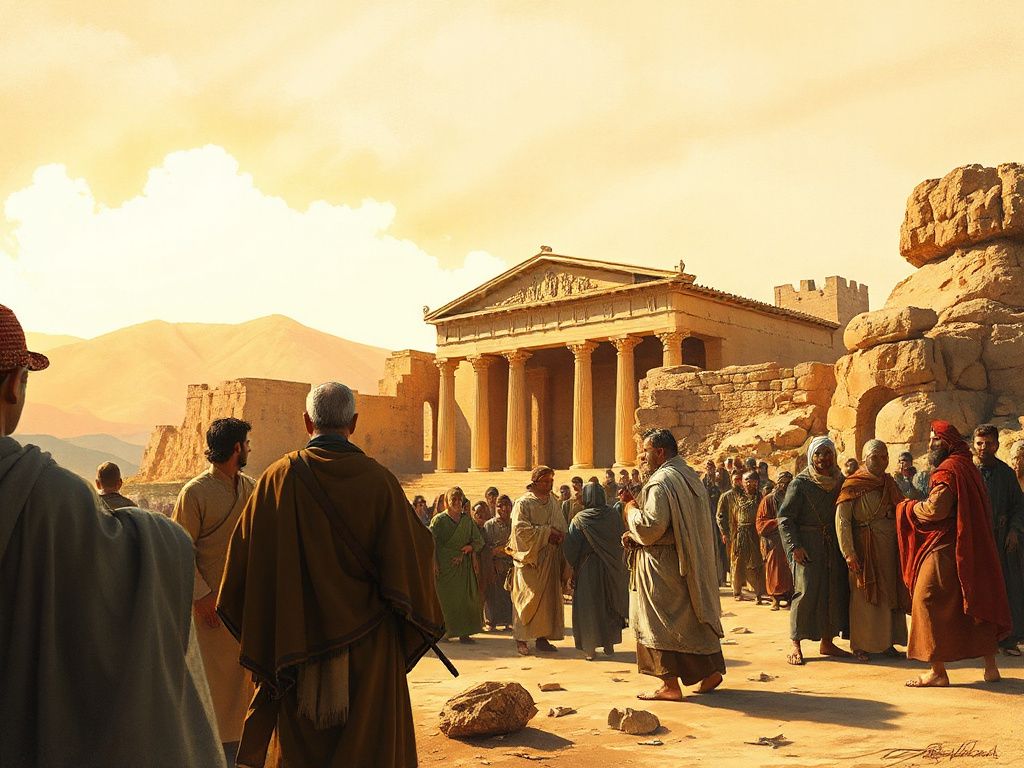
El versículo se centra en un acto corporativo de adoración en un momento decisivo: apenas se han colocado los cimientos del templo, y el pueblo responde con una alabanza coordinada. Dos grupos de líderes de adoración se ubican entre los constructores: los sacerdotes con trompetas y los levitas, hijos de Asaf, con címbalos, «para alabar a Jehová, conforme a la orden de David, rey de Israel» (3:10). Lo que sigue en 3:11 es el contenido de esa alabanza: un cántico antifonal en el que los cantores responden «el uno al otro», dando gracias a Jehová y declarando: «Porque es bueno, porque su misericordia es para siempre hacia Israel».
La declaración «Porque es bueno, porque su misericordia es para siempre hacia Israel» identifica el fundamento teológico de la celebración. La alegría del pueblo no se basa en el tamaño ni en el esplendor de la nueva estructura —el edificio en este punto es solo un cimiento—, sino en el carácter de Dios: su bondad y su misericordia perdurable (en hebreo, ʾĕsû·qāh; cf. Salmo 136, «porque su misericordia es para siempre»). Dado que la lealtad del pacto de Dios se presenta como eterna, la colocación de una sola piedra angular puede recibirse como evidencia de una misericordia que sobrevive al propio templo.
El versículo también enfatiza la dimensión pública y audible de la respuesta. Después de la declaración de los cantores, «todo el pueblo gritó con gran clamor», vinculando explícitamente el grito al acto de alabar a Jehová «porque se habían echado los cimientos de la casa de Jehová». El verbo «alabaron» y el resultado «gritaron» forman un único momento de adoración comunitaria, presentando la colocación de los cimientos como una ocasión primero para una acción de gracias cantada y luego para un estallido espontáneo de alabanza.
Contexto
Esdras 3 en su conjunto traza el retorno de la comunidad restaurada a la adoración del pacto antes de que el templo mismo sea reconstruido. Los versículos 2–6 describen la reedificación del altar, la reanudación de los holocaustos y la celebración de la Fiesta de los Tabernáculos «como está escrito» en la ley de Moisés, mientras que el versículo 6 señala que «no se habían echado aún los cimientos del templo de Jehová». Los capítulos 1–3 fundamentan esta obra en el decreto de Ciro (3:7) y en el liderazgo de Zorobabel y Josué (3:2, 8–9).
Dentro de ese capítulo, 3:10–13 forma una sola escena. El versículo 10 nombra las órdenes de adoración —sacerdotes con trompetas, levitas hijos de Asaf con címbalos— siguiendo «la orden de David, rey de Israel». El versículo 11 registra el cántico mismo y el clamor del pueblo. Los versículos 12–13 entonces complican la alegría: «muchos de los sacerdotes y de los levitas y de los jefes de las casas paternas, los ancianos que habían visto la primera casa», lloraban en alta voz, de modo que «el pueblo no podía discernir el ruido del clamor de alegría del ruido del llanto». La alabanza sin reservas de 3:11 se presenta así como una mitad de una respuesta mezclada en la ceremonia de los cimientos.
Preguntas frecuentes
¿Cuál es la declaración central en Esdras 3:11?
La declaración central es la confesión cantada del pueblo: «Porque es bueno, porque su misericordia es para siempre hacia Israel». El versículo vincula directamente esta confesión con la colocación de los cimientos del templo, presentando la bondad de Dios y su misericordia eterna como el motivo de la alabanza.
¿Por qué grita el pueblo en Esdras 3:11?
Según el versículo, todo el pueblo «gritó con gran clamor cuando alababan a Jehová, porque se habían echado los cimientos de la casa de Jehová». El clamor es la respuesta audible y comunitaria al acto de alabar al Señor en el momento en que se colocan los cimientos.
¿Cómo se relaciona Esdras 3:11 con el llanto de Esdras 3:12–13?
Los versículos 10–13 forman una sola escena de la colocación de los cimientos. El versículo 11 registra la alabanza de los cantores y el clamor del pueblo; los versículos 12–13 añaden entonces que los sacerdotes ancianos, los levitas y los jefes de las casas paternas que habían visto la primera casa «lloraban en alta voz», de modo que el ruido del clamor de alegría y el ruido del llanto no se podían distinguir. La alabanza en los cimientos se presenta así junto al duelo por aquello que los nuevos cimientos aún no son.