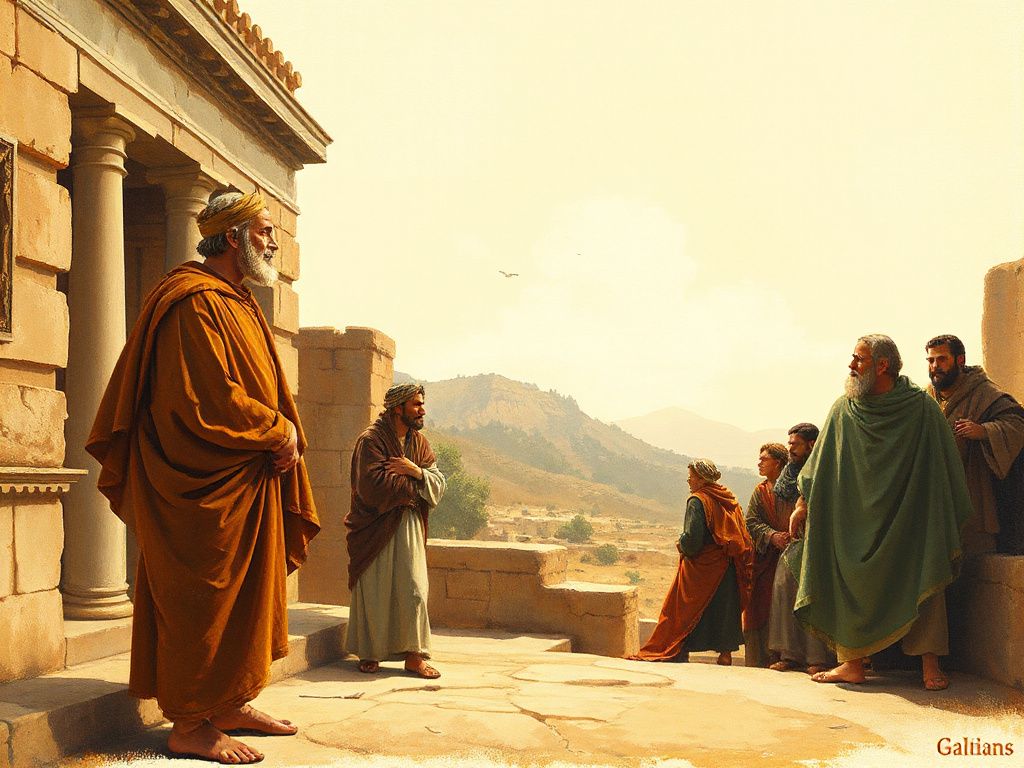
ESTUDIO DEL VERSÍCULO
Gálatas 2:20 — Crucificado con Cristo, viviendo por la fe
Gálatas 2:20 es la confesión en primera persona de Pablo de que el viejo yo ha sido crucificado con Cristo y de que su vida actual es vivida por la fe en el Hijo de Dios.
Escritura
- 20.Con Cristo estoy juntamente crucificado, y ya no vivo yo, mas vive Cristo en mí; y lo que ahora vivo en la carne, lo vivo en la fe del Hijo de Dios, el cual me amó y se entregó a sí mismo por mí.I have been crucified with Christ; and it is no longer I that live, but Christ living in me: and that life which I now live in the flesh I live in faith, the faith which is in the Son of God, who loved me, and gave himself up for me.
Qué significa este pasaje
Gálatas 2:20 comienza con la declaración «He sido crucificado con Cristo», utilizando un tiempo pasado completado que identifica al viejo yo del creyente con la muerte de Cristo. Ese mismo yo que antes vivía bajo la ley y bajo el pecado es tratado como habiendo sido puesto a muerte en ese evento, de modo que «ya no vivo yo» — el «yo» que gobierna la existencia de la persona ha sido removido y reemplazado.
La segunda cláusula añade: «sino que Cristo vive en mí», dando el contenido positivo de lo que reemplaza al viejo yo. La nueva identidad no es una versión mejorada del viejo yo, sino la presencia inhabitable de Cristo. Porque Cristo ahora vive en él, la vida que continúa viviendo «en la carne» — es decir, en la existencia corporal y terrenal ordinaria — no es dirigida por el yo, sino por «la fe, la fe que es en el Hijo de Dios». La fe es descrita como la esfera y el instrumento de la vida cristiana.
El versículo cierra con un credo personal: el Hijo de Dios «me amó y se entregó a sí mismo por mí». Esto fundamenta toda la declaración en un encuentro particular y personal. La justificación (ser declarado justo) es inseparable aquí de una relación: Cristo no es meramente un sacrificio expiatorio en general, sino el que amó y se entregó a sí mismo por este creyente individual.
Contexto
Gálatas 2:20 se sitúa en el clímax del argumento comenzado en 2:15–16, donde Pablo afirma que el hombre es justificado «por la fe en Cristo, y no por las obras de la ley». Los versículos 17–19 forman el puente: Pablo rechaza la acusación de que Cristo promueve el pecado (v. 17), declara que reconstruir lo que derribó lo haría transgresor (v. 18) y enuncia el principio «por la ley morí a la ley, para vivir para Dios» (v. 19). El versículo 20 despliega entonces de manera experiencial lo que significa esa afirmación de muerte y nueva vida. El versículo 21 cierra la unidad advirtiendo contra anular la gracia de Dios.
El capítulo en su conjunto establece el trasfondo polémico. Pablo describe su visita a Jerusalén (vv. 1–10), la confrontación con Pedro en Antioquía acerca de la comunión en la mesa con los gentiles (vv. 11–14) y la convicción compartida de que la justificación es por la fe en Cristo y no por las obras de la ley (vv. 15–16). En medio de este argumento, Pablo inserta su testimonio personal más concentrado, haciendo concreta la afirmación teológica en su propia biografía.
Preguntas frecuentes
¿Por qué Pablo dice que ha sido «crucificado con Cristo» en tiempo pasado?
El tiempo pasado completado trata la identificación del creyente con la muerte de Cristo como un evento consumado que tiene resultados continuos. El viejo yo ya ha sido puesto a muerte con Cristo; lo que permanece es la consecuencia: que la persona ya no vive como aquel viejo yo, sino como uno en quien Cristo vive.
¿Qué significa «ya no vivo yo, sino que Cristo vive en mí»?
Significa que el centro rector de la existencia de Pablo ha cambiado. El viejo yo que vivía bajo la ley y el pecado ha sido removido, y la presencia inhabitable de Cristo ahora dirige su vida. La vida cristiana, por tanto, no es auto-mejora, sino la expresión de Cristo viviendo por medio del creyente.
¿Cómo relaciona Gálatas 2:20 la justificación y la vida cristiana?
El versículo pasa de la justificación por la fe (v. 16), a través de la muerte del creyente con Cristo (v. 19), a la vida continua de fe (v. 20). La justificación no se separa de la santificación; ser declarado justo y vivir por la fe en el Hijo de Dios se presentan como dos caras de la misma unión con Cristo.