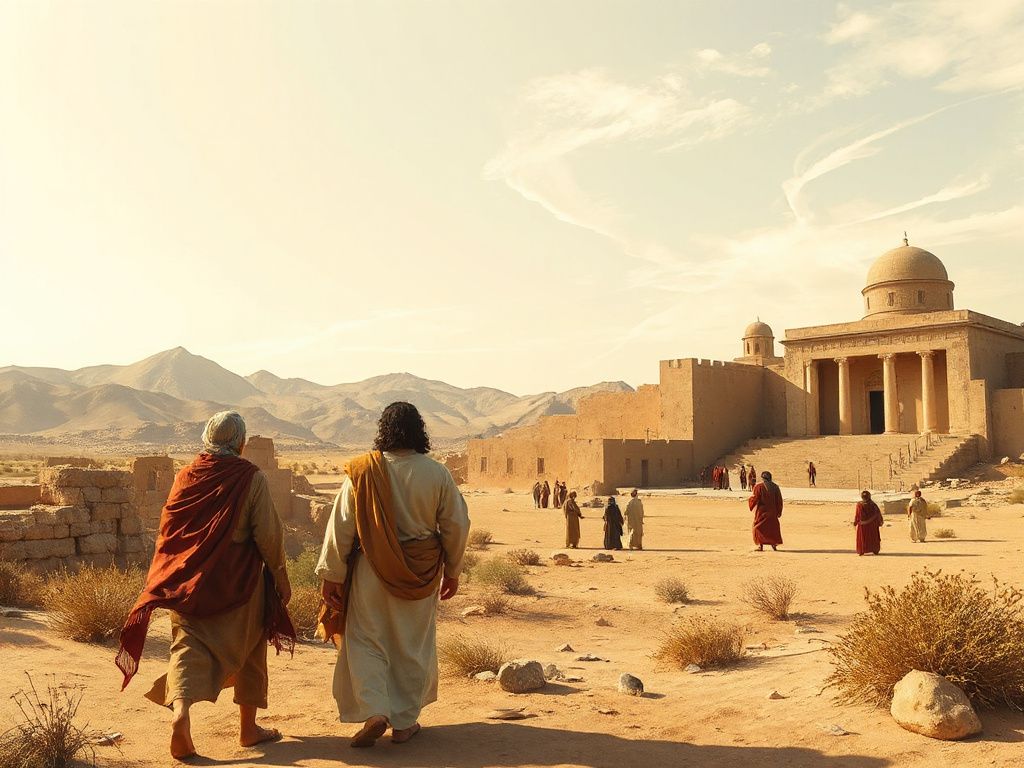
ESTUDIO DEL VERSÍCULO
Habacuc 3:19 — Fortaleza como pies de gacela
El versículo final de la oración de Habacuc: el Señor es la fortaleza del profeta, concediéndole un paso firme en las alturas a pesar de la devastación inminente.
Escritura
- 19.Jehová el Señor es mi fortaleza, El cual hace mis pies como de ciervas, Y en mis alturas me hace andar. Al jefe de los cantores, sobre mis instrumentos de cuerdas.Jehovah, the Lord, is my strength; And he maketh my feet like hinds' feet, And will make me to walk upon my high places.
Qué significa este pasaje
Habacuc 3:19 es la confesión culminante que concluye el salmo del profeta. Tras catalogar la pérdida de la higuera, la vid, el olivo, el campo, el rebaño y el ganado en el versículo 17, el hablante no retrocede a la desesperación, sino que identifica a «Jehová, el Señor» como su fortaleza. El nombre del pacto aparece primero, seguido del título de dominio soberano, y el posesivo «mi» ancla la confesión de manera personal: no se trata de teología genérica, sino del recurso propio del profeta.
La segunda línea compara sus pies con los «pies de las gacelas», el ciervo montés de paso firme que atraviesa alturas escarpadas sin caer. La figura representa estabilidad donde el equilibrio sería imposible para un caminante ordinario; el Señor concede un paso que la agilidad humana no puede procurar. Las «alturas» en el contexto de la oración de Habacuc evocan tanto las cumbres rocosas de la tierra como el terreno elevado de la adoración donde el adorador se mantiene seguro.
La tercera línea extiende la imagen: «caminar sobre mis alturas» es recorrer el terreno de la propia presencia y victoria de Dios, el mismo terreno recién recorrido en los versículos 3–15. Lo que parecía aterrador cuando Dios marchó sobre ello se convierte, por Su don, en el camino del adorador fiel. La fortaleza, por tanto, no es la eliminación de la dificultad, sino la gracia para mantenerse en pie y avanzar dentro de ella.
Contexto
Habacuc 3 es un salmo que se abre con una petición a Dios para que avive Su obra (v. 2) y luego recorre la marcha del Santo a través de la historia —desde Temán y Parán, partiendo la tierra con ríos, deteniendo el sol y la luna, trillando las naciones y trayendo salvación a Su pueblo (vv. 3–15). La respuesta física del profeta ante esta teofanía son huesos que tiemblan y labios que se estremecen (v. 16), y aun así elige esperar en silencio porque el día de la angustia es seguro.
Los versículos 17–19 forman la resolución. El poeta despoja toda fuente de seguridad humana —agricultura, ganado, cosecha— y encuentra, en el momento despojado, un único fundamento de gozo: el Señor mismo (v. 18). El versículo 19 traduce luego ese gozo en movimiento: el Señor provee la fortaleza y el paso firme para recorrer las alturas que acaba de revelar.
Preguntas frecuentes
¿Por qué el versículo identifica al Señor tanto como «Jehová» como «Señor»?
Los dos nombres resaltan aspectos distintos del carácter de Dios: el nombre del pacto denota Su fidelidad a Su pueblo, mientras que el título de dominio soberano subraya Su señorío sobre todo. Juntos presentan a un Dios que está vinculado a Sus promesas y es supremo sobre cada circunstancia que el profeta acaba de nombrar.
¿Qué comunica la imagen de los «pies de gacela»?
Las gacelas atraviesan alturas rocosas sin resbalar; su paso firme es proverbial. La figura comunica que el Señor concede al adorador una estabilidad y un paso firme que el esfuerzo humano por sí solo no puede producir, especialmente en terreno peligroso.
¿Cómo se relaciona el versículo 19 con los versículos 17–18?
Los versículos 17–18 despojan todo fundamento externo de confianza y luego afirman el gozo solo en Dios. El versículo 19 es la consecuencia práctica de ese gozo: a quien se regocija en el Dios de la salvación se le concede fortaleza y paso firme para caminar por las alturas de Su presencia. Así, la alabanza se convierte en peregrinación.