ESTUDIO DEL VERSÍCULO
Isaías 6:3 — El Trisagio de los Serafines
Los serafines sobre el trono de Dios claman unos a otros, declarando la naturaleza tres veces santa de Dios y la plenitud de la tierra con su gloria.
Escritura
- 3.Y el uno al otro daba voces, diciendo: Santo, santo, santo, Jehová de los ejércitos; toda la tierra está llena de su gloria.And one cried unto another, and said, Holy, holy, holy, is Jehovah of hosts: the whole earth is full of his glory.
Qué significa este pasaje
El sujeto del versículo 3 es el clamor antifonal de los serafines descrito en el versículo 2. A diferencia de una sola voz angélica, estos seres claman «uno al otro»: la alabanza es conversacional, transmitida de un lado a otro. Este formato recíproco establece el tono para toda la escena: la liturgia del cielo es comunitaria, no solitaria, y la respuesta de la creación a la presencia de Dios es adoración estructurada.
«Santo, santo, santo» es el único atributo en las Escrituras Hebreas expresado en triple repetición. La forma intensifica más que enumera; señala la santidad de Dios como absolutamente única, sin medida y fundamentalmente diferente de cualquier otra cosa que pueda llamarse santa. El predicado que sigue —«Jehová de los ejércitos» (YHWH tsabaoth)— identifica quién es este Dios santo: el Señor del pacto sobre todos los ejércitos celestiales.
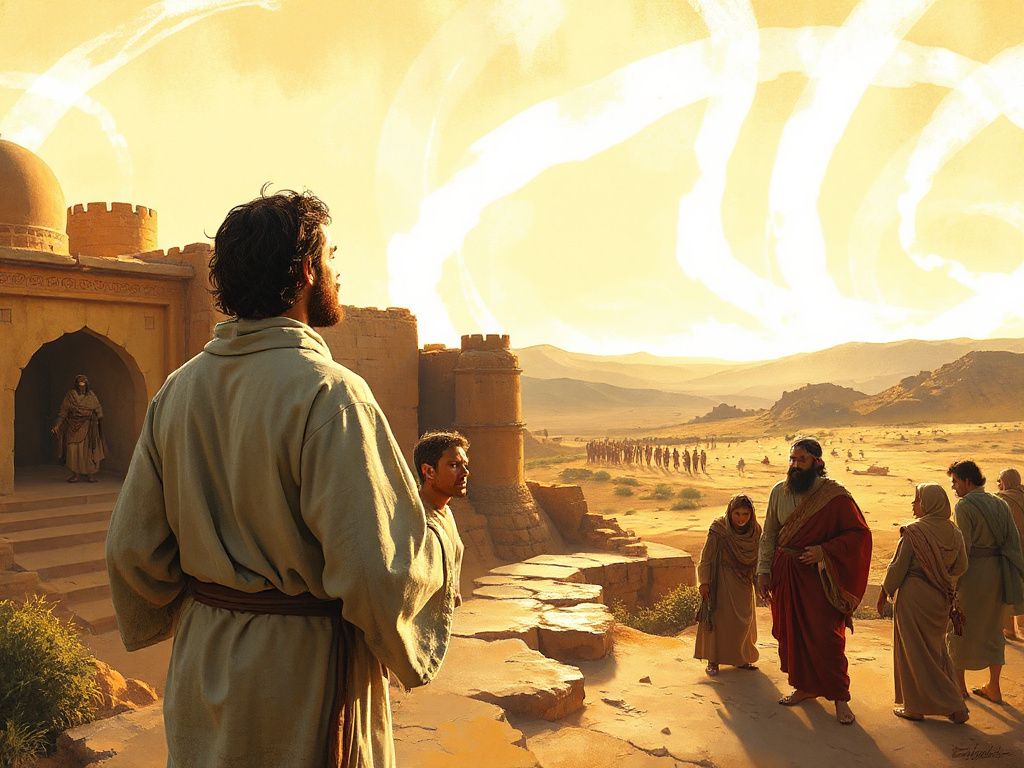
La segunda cláusula, «toda la tierra está llena de su gloria», extiende el alcance de la santidad de Dios más allá del templo. Mientras la visión ocurre dentro de un santuario lleno de humo (v. 4), los serafines declaran que la gloria divina no está contenida por muros. Lo que Isaías ve localmente, los ángeles lo afirman universalmente.
Contexto
Los versículos 1–2 establecen la escena: en el año en que murió el rey Uzías, Isaías ve al Señor en un trono alto dentro de un santuario, atendido por serafines de seis alas. El versículo 3 es el primer contenido audible de esa visión: el discurso que provoca el temblor de los umbrales y la casa llena de humo en el versículo 4. El versículo funciona por tanto como la bisagra entre lo que Isaías ve y cómo el templo responde físicamente.
Inmediatamente después, el profeta reacciona con confesión de inmundicia (v. 5), es limpiado con el carbón del altar (vv. 6–7), y se ofrece voluntariamente para hablar por el Señor (v. 8). La declaración de la santidad de Dios en el versículo 3 es lo que produce en Isaías su sentido de indignidad; la limpieza que sigue hace posible la comisión subsiguiente.
Preguntas frecuentes
¿Por qué se dice «santo» tres veces?
La triple repetición es un patrón hebreo de superlativo. No significa que Dios sea santo tres veces más, sino que su santidad es absoluta, completa y sin comparación — una forma reservada en las Escrituras para una intensificación única.
¿Qué significa «Jehová de los ejércitos» en este contexto?
El título identifica al Dios santo como YHWH, el Señor del pacto, que comanda todos los ejércitos celestiales (tsabaoth). Acompaña la santidad absoluta con el dominio soberano sobre toda hueste espiritual y física.
¿Cómo se relaciona «toda la tierra está llena de su gloria» con una visión dentro del templo?
Los serafines contrastan la visión localizada —un templo lleno de humo (v. 4)— con la afirmación universal de que la gloria de Dios llena toda la tierra. El templo revela lo que ya es verdad en todas partes; el santuario no contiene la presencia de Dios, sino que la hace visible.