ESTUDIO DEL CAPÍTULO
Job 37: La voz y la majestad de Dios en la tormenta
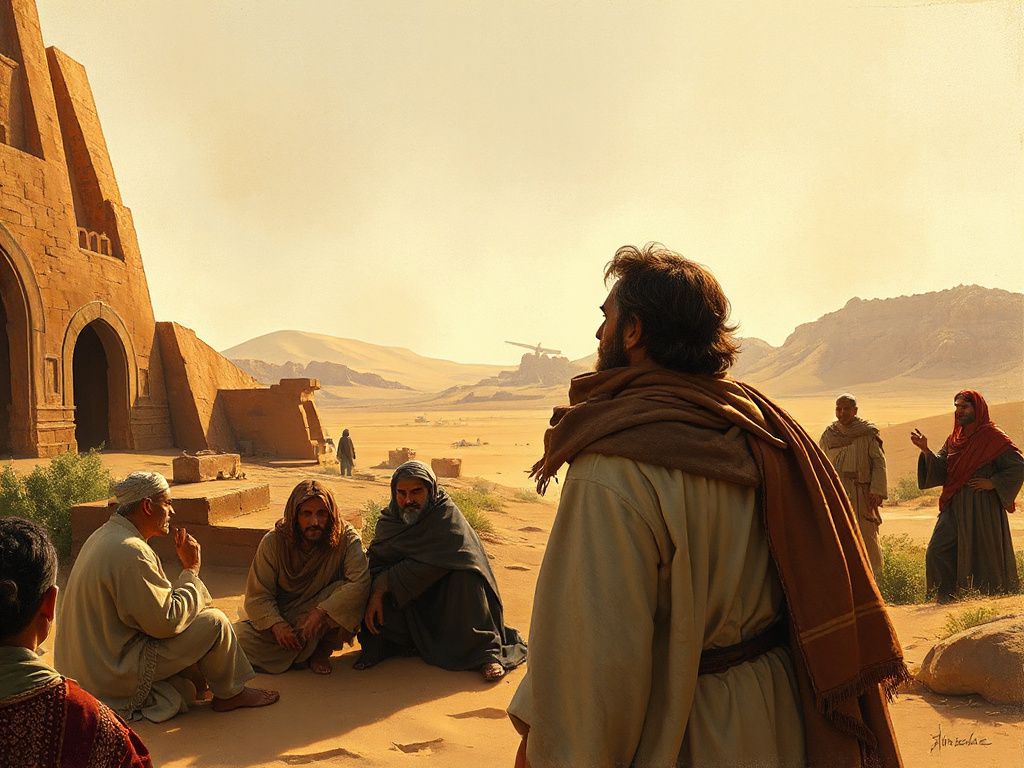
Eliú describe los truenos, los relámpagos, la nieve, la lluvia y el hielo de Dios, urging a Job a considerar las obras maravillosas de Dios, a quien nadie puede comprender.
Escritura
- 1.Por eso también se estremece mi corazón, Y salta de su lugar.Yea, at this my heart trembleth, And is moved out of its place.
- 2.Oíd atentamente el estrépito de su voz, Y el sonido que sale de su boca.Hear, oh, hear the noise of his voice, And the sound that goeth out of his mouth.
- 3.Debajo de todos los cielos lo dirige, Y su luz hasta los fines de la tierra.He sendeth it forth under the whole heaven, And his lightning unto the ends of the earth.
- 4.Después de ella brama el sonido, Truena él con voz majestuosa; Y aunque sea oída su voz, no los detiene.After it a voice roareth; He thundereth with the voice of his majesty; And he restraineth not the lightnings when his voice is heard.
- 5.Truena Dios maravillosamente con su voz; El hace grandes cosas, que nosotros no entendemos.God thundereth marvellously with his voice; Great things doeth he, which we cannot comprehend.
- 6.Porque a la nieve dice: Desciende a la tierra; También a la llovizna, y a los aguaceros torrenciales.For he saith to the snow, Fall thou on the earth; Likewise to the shower of rain, And to the showers of his mighty rain.
- 7.Así hace retirarse a todo hombre, Para que los hombres todos reconozcan su obra.He sealeth up the hand of every man, That all men whom he hath made may know it.
- 8.Las bestias entran en su escondrijo, Y se están en sus moradas.Then the beasts go into coverts, And remain in their dens.
- 9.Del sur viene el torbellino, Y el frío de los vientos del norte.Out of the chamber of the south cometh the storm, And cold out of the north.
- 10.Por el soplo de Dios se da el hielo, Y las anchas aguas se congelan.By the breath of God ice is given; And the breadth of the waters is straitened.
- 11.Regando también llega a disipar la densa nube, Y con su luz esparce la niebla.Yea, he ladeth the thick cloud with moisture; He spreadeth abroad the cloud of his lightning:
- 12.Asimismo por sus designios se revuelven las nubes en derredor, Para hacer sobre la faz del mundo, En la tierra, lo que él les mande.And it is turned round about by his guidance, That they may do whatsoever he commandeth them Upon the face of the habitable world,
- 13.Unas veces por azote, otras por causa de su tierra, Otras por misericordia las hará venir.Whether it be for correction, or for his land, Or for lovingkindness, that he cause it to come.
- 14.Escucha esto, Job; Detente, y considera las maravillas de Dios.Hearken unto this, O Job: Stand still, and consider the wondrous works of God.
- 15.¿Sabes tú cómo Dios las pone en concierto, Y hace resplandecer la luz de su nube?Dost thou know how God layeth his charge upon them, And causeth the lightning of his cloud to shine?
- 16.¿Has conocido tú las diferencias de las nubes, Las maravillas del Perfecto en sabiduría?Dost thou know the balancings of the clouds, The wondrous works of him who is perfect in knowledge?
- 17.¿Por qué están calientes tus vestidos Cuando él sosiega la tierra con el viento del sur?How thy garments are warm, When the earth is still by reason of the south wind?
- 18.¿Extendiste tú con él los cielos, Firmes como un espejo fundido?Canst thou with him spread out the sky, Which is strong as a molten mirror?
- 19.Muéstranos qué le hemos de decir; Porque nosotros no podemos ordenar las ideas a causa de las tinieblas.Teach us what we shall say unto him; For we cannot set our speech in order by reason of darkness.
- 20.¿Será preciso contarle cuando yo hablare? Por más que el hombre razone, quedará como abismado.Shall it be told him that I would speak? Or should a man wish that he were swallowed up?
- 21.Mas ahora ya no se puede mirar la luz esplendente en los cielos, Luego que pasa el viento y los limpia,And now men see not the light which is bright in the skies; But the wind passeth, and cleareth them.
- 22.Viniendo de la parte del norte la dorada claridad. En Dios hay una majestad terrible.Out of the north cometh golden splendor: God hath upon him terrible majesty.
- 23.El es Todopoderoso, al cual no alcanzamos, grande en poder; Y en juicio y en multitud de justicia no afligirá.Touching the Almighty, we cannot find him out: He is excellent in power; And in justice and plenteous righteousness he will not afflict.
- 24.Lo temerán por tanto los hombres; El no estima a ninguno que cree en su propio corazón ser sabio.Men do therefore fear him: He regardeth not any that are wise of heart.
Qué significa este pasaje
Job 37 comienza con el propio cuerpo de Eliú reaccionando ante el trueno que acaba de describir: su corazón tiembla y salta de su lugar (v. 1). Esta respuesta física serves como prueba de que ni siquiera el orador es inmune al asombro que inspira la voz de Dios. El capítulo luego cataloga esa voz mientras sale bajo todo el cielo, enviando relámpagos a los confines de la tierra (v. 3). Los truenos, los relámpagos, la nieve, la lluvia, el hielo y la calidez del viento del sur se presentan como emisiones directas del mandato de Dios (vv. 5–11).
La mitad del capítulo marca un giro teológico: las tormentas pueden venir 'para corrección, o para su tierra, o para misericordia' (v. 13). Los mismos elementos que aterrorizan pueden disciplinar, bendecir la tierra o demostrar misericordia. Eliú luego se dirige directamente a Job y le exige que 'se detenga y considere las obras maravillosas de Dios' (v. 14). Una serie de preguntas resaltan lo que Job no controla: el equilibrio de las nubes, el calentamiento de las vestiduras, la extensión del cielo como un espejo fundido (vv. 15–18).
El capítulo cierra volviendo al tema de la limitación humana. Nadie puede ordenar un discurso ante Dios a causa de las tinieblas (v. 19), y 'alcanzar al Todopoderoso, no podemos comprenderlo' (v. 23). Sin embargo, este Dios inescrutable es 'excelente en poder' y no pervertirá la justicia. La respuesta apropiada, por tanto, es el temor: 'Por tanto, los hombres le temen' (v. 24). La cláusula final del versículo, que Dios no mira a los sabios en su propia estimación, presenta la autosuficiencia humana como exactamente aquello contra lo que el capítulo advierte.
Contexto
Job 37 continúa el discurso de Eliú que comenzó en el capítulo 36. Dentro del material proporcionado, el argumento de Eliú pasa de las aflicciones de Dios como disciplina (36:9–12) a una descripción directa de cómo Dios manda los elementos. Trata los fenómenos meteorológicos como instrumentos del habla divina, vinculando los sonidos del trueno a 'la voz de su majestad' y el relámpago a una palabra que 'sale de su boca'.
Las preguntas finales del capítulo sobre la incapacidad humana para ordenar el discurso ante Dios preparan la respuesta de Job en el capítulo 38, donde Dios mismo habla 'desde el torbellino'. Los versículos contrastan repetidamente lo que los humanos no pueden comprender con lo que Dios lleva a cabo libremente, y la declaración final de que Dios 'no estima a los sabios de corazón' reprende implícitamente la insistencia anterior de Job en su propia integridad.
Palabras clave del original
- H6963 Glosada como 'voz' (qôl), esta palabra hebrea común aparece repetidamente en Job 37 para describir el trueno como el habla de Dios. La misma palabra se usa para la voz humana en el v. 20, reforzando el paralelismo entre la palabra divina en la tormenta y la palabra humana en respuesta a ella.
- H2729 El verbo ḥārad, glosado como 'tiembla', describe el corazón de Eliú en el v. 1. La raíz lleva el sentido de terror estremecedor; la misma persona que explica la grandeza de Dios se muestra temblando ante ella.
- H1899 Hegeh, glosado como 'ruido sordo', nombra el sonido 'que sale de su boca' (v. 2). La palabra sugiere un ruido bajo y murmurante, el tipo de trueno retumbante que parece hablar más que estrellarse.
Versículos relacionados
- Job 5:9 Eco de Job 37:5 ('él hace grandes cosas que no podemos comprender'). Ambos versículos insisten en que las obras de Dios superan la comprensión humana, enmarcando el asombro más que la investigación como la respuesta correcta.
- Romans 11:33 Se empareja naturalmente con Job 37:23 ('no podemos comprenderlo'). Ambos textos usan el lenguaje de la inescrutabilidad para los juicios y los caminos de Dios, mostrando la misma convicción teológica expresada a través de géneros muy diferentes.
- Ecclesiastes 3:11 Resuena con la pregunta repetida en Job 37 '¿Sabes tú…?'. Ambos pasajes subrayan que Dios ha puesto un límite a lo que los humanos pueden descubrir sobre sus obras, al tiempo que colocan dentro de ellos el impulso de buscar.
Preguntas frecuentes
¿Quién habla en Job 37 y a quién se dirige?
Eliú está hablando a Job. El capítulo forma parte del discurso de Eliú que comenzó en el capítulo 36, en el cual se dirige directamente a Job y le urge a considerar las obras maravillosas de Dios.
¿Cuál es el punto principal de Job 37?
El capítulo presenta los fenómenos meteorológicos como actos del habla y el mandato de Dios, y luego argumenta que, dado que los humanos no pueden comprender ni ordenar sus palabras ante tal Dios, la respuesta apropiada es el temor reverente en lugar de la autojustificación.
¿Cómo se conecta Job 37 con el capítulo siguiente?
Job 37 cierra subrayando que los humanos no pueden ordenar su discurso ante Dios (v. 19) y no pueden comprender al Todopoderoso (v. 23). Esto prepara el capítulo 38, donde finalmente Dios mismo responde a Job 'desde el torbellino'.