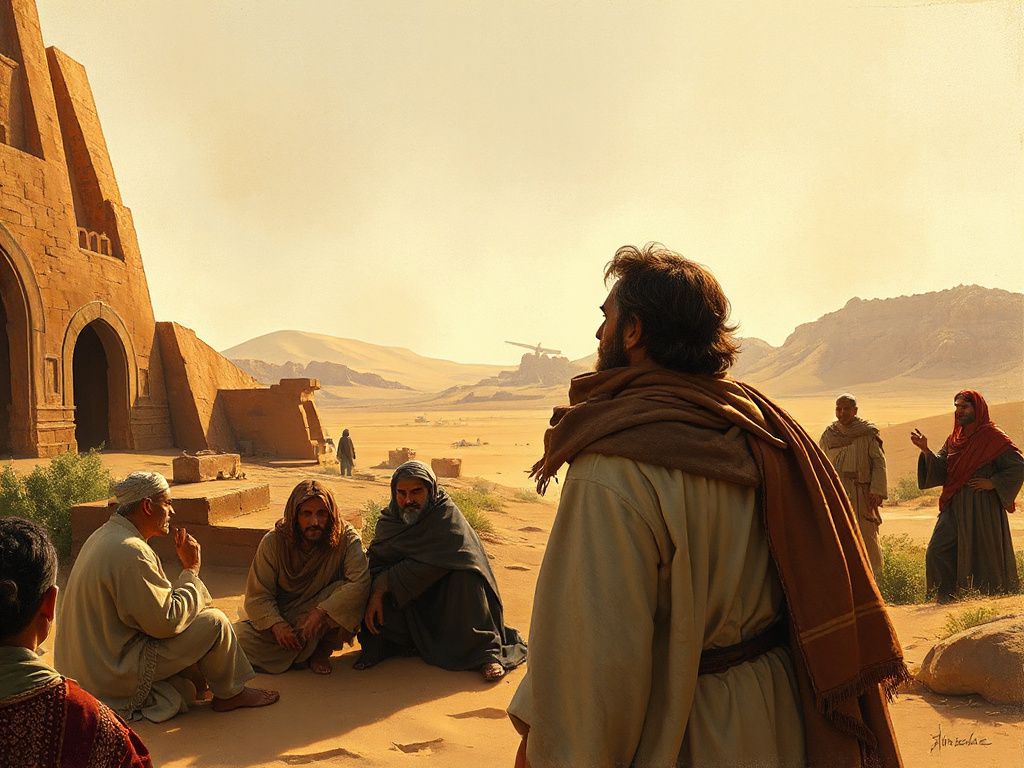
ESTUDIO DEL VERSÍCULO
Job 38:1 — Dios habla desde el torbellino
Job 38:1 registra la primera respuesta directa de Dios a Job, hablando desde el torbellino tras capítulos de silencio y sufrimiento.
Escritura
- 1.Entonces respondió Jehová a Job desde un torbellino, y dijo:Then Jehovah answered Job out of the whirlwind, and said,
Qué significa este pasaje
Job 38:1 registra el punto de inflexión del libro: Dios finalmente habla. El versículo señala dos detalles clave — el medio del discurso («desde el torbellino») y el destinatario («a Job»). Tras capítulos en los que los amigos de Job discutían sobre teología y el propio Job cuestionaba la justicia de Dios, el silencio divino se rompe. El hecho de que Dios hable es en sí mismo la respuesta, antes de cualquier contenido: la presencia precede a la explicación.
La expresión «desde el torbellino» establece el escenario para todo el discurso divino que sigue hasta el capítulo 41. Un torbellino (hebreo ruaḥ / tormenta) es un lenguaje de teofanía empleado en otros pasajes donde el encuentro humano con Dios implica una fuerza natural abrumadora. Job no viaja hacia Dios; Dios viene a Job, y el modo de llegada subraya que esto no es una discusión filosófica serena, sino una confrontación con una majestad sobrecogedora.
El cambio de interlocutor también es significativo. Los diálogos anteriores involucraban a Job y sus tres amigos, con Eliú como un orador posterior. Ahora el interlocutor cambia. Job ha exigido presentar su causa ante Dios (por ejemplo, Job 31:35–37); aquí Dios concede ese encuentro directamente. El versículo funciona así como la puerta de paso entre el lamento de Job y el interrogatorio divino de la creación.
Contexto
Job 38:1 abre el movimiento final del libro. Los capítulos 3–37 contienen el lamento de Job, los tres ciclos de discursos de los amigos, las disertaciones de Eliú y los juramentos finales de Job. El marco en prosa (caps. 1–2; 42:7–17) encierra estos diálogos. El capítulo 38 comienza la resolución, donde Dios habla directamente a Job por primera vez desde el prólogo. La nota seleccionada para el capítulo subraya que este discurso pone fin a un largo silencio con presencia y soberanía.
El capítulo completo que sigue al versículo 1 consiste enteramente en una serie de preguntas sobre la creación: los cimientos de la tierra (vv. 4–7), el mar (vv. 8–11), la mañana y el alba (vv. 12–15), el abismo y el mundo de los muertos (vv. 16–18), la luz y las tinieblas (vv. 19–21), los fenómenos meteorológicos (vv. 22–30), las constelaciones (vv. 31–33), y el sustento de las criaturas (vv. 39–41). El escenario del torbellino del versículo 1 enmarca todo este catálogo de la creación, estableciendo la atmósfera para lo que sigue.
Preguntas frecuentes
¿Por qué Dios habla desde un torbellino en lugar de hacerlo directamente?
Según el propio versículo, el torbellino es el escenario especificado del discurso de Dios. El texto lo presenta como el modo de teofanía que Dios elige aquí, transmitiendo una majestad abrumadora. El versículo no ofrece más explicación que registrar el escenario y el destinatario.
¿Es esta la primera vez que Dios habla en el libro de Job?
Dentro de los diálogos poéticos (caps. 3–37), Dios no habla directamente a Job; los hablantes son Job, sus amigos y Eliú. Job 38:1 marca la primera dirección de Dios a Job dentro de esa secuencia, enmarcada por el prólogo en prosa (caps. 1–2) donde Dios habla con Satanás.
¿Qué nos dice Job 38:1 antes de que Dios formule cualquier pregunta?
El versículo establece dos cosas antes de cualquier contenido: Dios habla (el silencio termina), y habla a Job específicamente (el destinatario). El hecho de que Dios hable se presenta en sí mismo como la resolución de la espera de Job, con el contenido de las preguntas por venir.