ESTUDIO DEL CAPÍTULO
Job 9 — El poder inrespondible de Dios y el dilema de Job
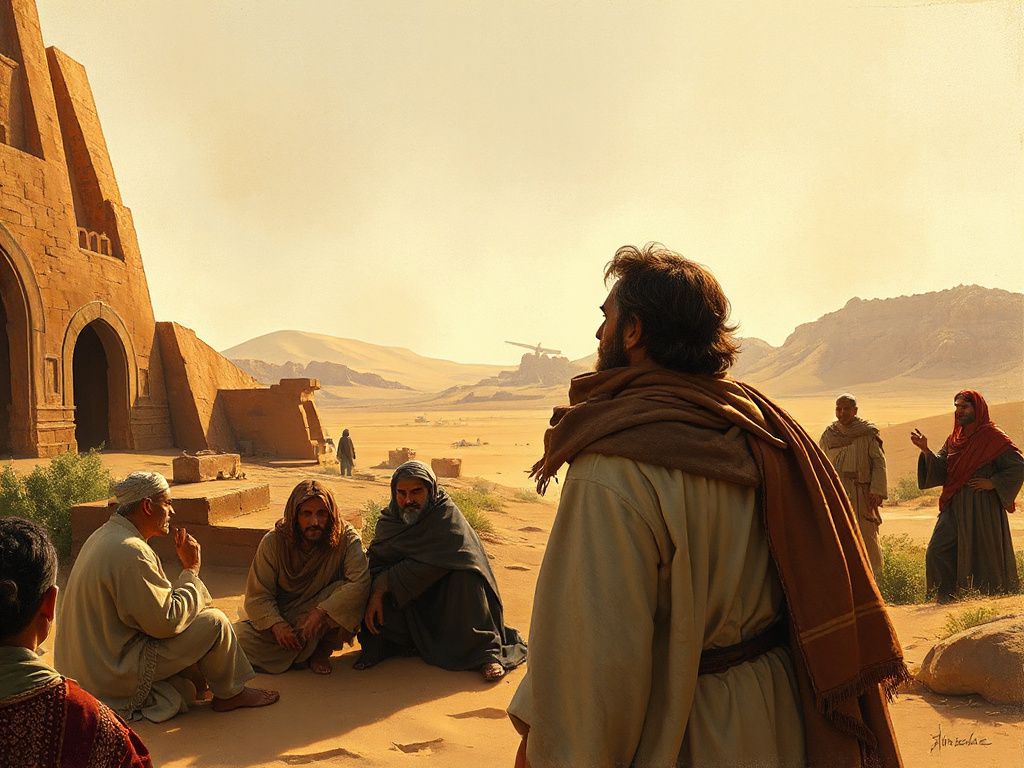
Job responde a Bildad confesando la grandeza soberana de Dios y argumentando que ningún ser humano puede disputar con éxito ni ser declarado justo ante tal Juez.
Escritura
- 1.Respondió Job, y dijo:Then Job answered and said,
- 2.Ciertamente yo sé que es así; ¿Y cómo se justificará el hombre con Dios?Of a truth I know that it is so: But how can man be just with God?
- 3.Si quisiere contender con él, No le podrá responder a una cosa entre mil.If he be pleased to contend with him, He cannot answer him one of a thousand.
- 4.El es sabio de corazón, y poderoso en fuerzas; ¿Quién se endureció contra él, y le fue bien?He is wise in heart, and mighty in strength: Who hath hardened himself against him, and prospered? --
- 5.El arranca los montes con su furor, Y no saben quién los trastornó;Him that removeth the mountains, and they know it not, When he overturneth them in his anger;
- 6.El remueve la tierra de su lugar, Y hace temblar sus columnas;That shaketh the earth out of its place, And the pillars thereof tremble;
- 7.El manda al sol, y no sale; Y sella las estrellas;That commandeth the sun, and it riseth not, And sealeth up the stars;
- 8.El solo extendió los cielos, Y anda sobre las olas del mar;That alone stretcheth out the heavens, And treadeth upon the waves of the sea;
- 9.El hizo la Osa, el Orión y las Pléyades, Y los lugares secretos del sur;That maketh the Bear, Orion, and the Pleiades, And the chambers of the south;
- 10.El hace cosas grandes e incomprensibles, Y maravillosas, sin número.That doeth great things past finding out, Yea, marvellous things without number.
- 11.He aquí que él pasará delante de mí, y yo no lo veré; Pasará, y no lo entenderé.Lo, he goeth by me, and I see him not: He passeth on also, but I perceive him not.
- 12.He aquí, arrebatará; ¿quién le hará restituir? ¿Quién le dirá: ¿Qué haces?Behold, he seizeth the prey, who can hinder him? Who will say unto him, What doest thou?
- 13.Dios no volverá atrás su ira, Y debajo de él se abaten los que ayudan a los soberbios.God will not withdraw his anger; The helpers of Rahab do stoop under him.
- 14.¿Cuánto menos le responderé yo, Y hablaré con él palabras escogidas?How much less shall I answer him, And choose out my words to reason with him?
- 15.Aunque fuese yo justo, no respondería; Antes habría de rogar a mi juez.Whom, though I were righteous, yet would I not answer; I would make supplication to my judge.
- 16.Si yo le invocara, y él me respondiese, Aún no creeré que haya escuchado mi voz.If I had called, and he had answered me, Yet would I not believe that he hearkened unto my voice.
- 17.Porque me ha quebrantado con tempestad, Y ha aumentado mis heridas sin causa.For he breaketh me with a tempest, And multiplieth my wounds without cause.
- 18.No me ha concedido que tome aliento, Sino que me ha llenado de amarguras.He will not suffer me to take my breath, But filleth me with bitterness.
- 19.Si habláremos de su potencia, por cierto es fuerte; Si de juicio, ¿quién me emplazará?If we speak of strength, lo, he is mighty! And if of justice, Who, saith he, will summon me?
- 20.Si yo me justificare, me condenaría mi boca; Si me dijere perfecto, esto me haría inicuo.Though I be righteous, mine own mouth shall condemn me: Though I be perfect, it shall prove me perverse.
- 21.Si fuese íntegro, no haría caso de mí mismo; Despreciaría mi vida.I am perfect; I regard not myself; I despise my life.
- 22.Una cosa resta que yo diga: Al perfecto y al impío él los consume.It is all one; therefore I say, He destroyeth the perfect and the wicked.
- 23.Si azote mata de repente, Se ríe del sufrimiento de los inocentes.If the scourge slay suddenly, He will mock at the trial of the innocent.
- 24.La tierra es entregada en manos de los impíos, Y él cubre el rostro de sus jueces. Si no es él, ¿quién es? ¿Dónde está?The earth is given into the hand of the wicked; He covereth the faces of the judges thereof: If it be not he, who then is it?
- 25.Mis días han sido más ligeros que un correo; Huyeron, y no vieron el bien.Now my days are swifter than a post: They flee away, they see no good,
- 26.Pasaron cual naves veloces; Como el águila que se arroja sobre la presa.They are passed away as the swift ships; As the eagle that swoopeth on the prey.
- 27.Si yo dijere: Olvidaré mi queja, Dejaré mi triste semblante, y me esforzaré,If I say, I will forget my complaint, I will put off my sad countenance, and be of good cheer;
- 28.Me turban todos mis dolores; Sé que no me tendrás por inocente.I am afraid of all my sorrows, I know that thou wilt not hold me innocent.
- 29.Yo soy impío; ¿Para qué trabajaré en vano?I shall be condemned; Why then do I labor in vain?
- 30.Aunque me lave con aguas de nieve, Y limpie mis manos con la limpieza misma,If I wash myself with snow water, And make my hands never so clean;
- 31.Aún me hundirás en el hoyo, Y mis propios vestidos me abominarán.Yet wilt thou plunge me in the ditch, And mine own clothes shall abhor me.
- 32.Porque no es hombre como yo, para que yo le responda, Y vengamos juntamente a juicio.For he is not a man, as I am, that I should answer him, That we should come together in judgment.
- 33.No hay entre nosotros árbitro Que ponga su mano sobre nosotros dos.There is no umpire betwixt us, That might lay his hand upon us both.
- 34.Quite de sobre mí su vara, Y su terror no me espante.Let him take his rod away from me, And let not his terror make me afraid:
- 35.Entonces hablaré, y no le temeré; Porque en este estado no estoy en mí.Then would I speak, and not fear him; For I am not so in myself.
Qué significa este pasaje
Job 9 comienza con Job concediendo la verdad del principio general de sus amigos de que los impíos no prosperan (vv. 1-2), pero inmediatamente plantea la pregunta: «¿Cómo puede el hombre ser justo con Dios?» El verbo hebreo traducido como «justo» (H6663, yiṣdaq) implica una declaración forense de justicia ante un juez. El punto de Job no es negar la justicia de Dios, sino la imposibilidad de que un acusado humano gane tal caso.
Los versículos 3-13 catalogan el poder cósmico de Dios: Él mueve montañas, sacude la tierra, manda al sol, sella las estrellas, extiende los cielos e hizo la Osa, Orión y las Pléyades (v. 9). La pregunta retórica de Job: «¿Quién se endureció contra él y prosperó?» prepara la conclusión: la ira de Dios no se aparta (v. 13).
En los vv. 14-35 Job argumenta que ni siquiera la justicia puede asegurar una audiencia. Si fuera llamado, Job no confiaría en el favor de Dios (v. 16). Aun siendo puro, su propia boca lo condenaría (v. 20). El capítulo cierra con el deseo desesperado de Job de un «árbitro» (v. 33) que pudiera poner su mano sobre ambas partes: un mediador entre Dios y el hombre.
Contexto
La nota curada identifica a Job 9 como parte de capítulos rellenados de Job fuera del rango P0/P1. Dentro del ciclo de discursos del libro, Job 9 sigue al segundo discurso de Bildad (cap. 8), que insistió en que Dios siempre recompensa a los justos y castiga a los impíos. La respuesta de Job afila el principio de los amigos hasta una conclusión insoportable: si nadie puede sostenerse ante el poder de Dios, entonces la aparente injusticia en el mundo no puede resolverse mediante argumento humano.
El capítulo provee el escenario textual para su conocida súplica de un mediador (v. 33). Sin el contexto precedente del capítulo 8, la fuerza de los vv. 14-35 como contraargumento a Bildad no puede medirse plenamente, ya que Job lleva la lógica de los amigos hasta su límite en lugar de introducir un tema nuevo.
Palabras clave del original
- H6663 El verbo yiṣdaq («ser justo») en el v. 2 tiene sentido forense: ser declarado justo en un ámbito legal. La pregunta de Job asume una sala de tribunal en la que Dios es el juez y la humanidad está siendo juzgada, no una comparación moral.
- H6663 En el v. 20 la misma raíz reaparece en la afirmación inquietante de Job: «mi propia boca me condenará». El marco forense significa que Job no está dudando de su inocencia moral, sino concediendo que la sala del tribunal en sí está en su contra.
- H6030 El verbo ʿāna («responder») gobierna el lenguaje dialógico de los vv. 1, 3 y 14-16. El punto reiterado de Job es que responder a Dios es estructuralmente imposible: la misma palabra usada para la respuesta humana se convierte en aquello que precisamente se niega.
Versículos relacionados
- Job 5:9 La confesión anterior de Bildad de que Dios hace «cosas grandes… sin número» es esencialmente reciclada por Job en 9:10. La diferencia es el tono: Bildad la usa para consolar; Job la usa para acusar la predicament humana.
- Romans 11:33 La doxología de Pablo sobre los juicios inescrutables de Dios coincide con el agotamiento retórico de Job 9. Ambos textos ubican el límite de la razón humana no en la obscuridad divina, sino en la infinitud de los caminos de Dios.
- Ephesians 3:20 Donde Job lamenta que Dios «hace cosas grandes e inescrutables, y maravillas sin número» (9:10), Pablo celebra al mismo Dios como capaz de hacer «excedente abundantemente sobre todo lo que pedimos o entendemos». El predicado compartido — obras que exceden la comprensión — enmarca el lamento de Job y la doxología de Pablo como dos respuestas a un mismo atributo divino.
Preguntas frecuentes
¿Niega Job la justicia de Dios en el capítulo 9?
Job no niega la justicia de Dios; cuestiona si un acusado humano puede alguna vez ser declarado justo ante tal Juez. El verbo hebreo del v. 2 es forense: se refiere al veredicto, no al carácter, por lo que el capítulo argumenta desde la asimetría del tribunal, no desde acusación alguna de maldad por parte de Dios.
¿Qué significa Job cuando pide un «árbitro» en 9:33?
Job desea un tercero que pueda «poner su mano sobre nosotros ambos»: alguien capaz de asir tanto a Dios como al hombre y arbitrar entre ellos. El texto mismo no ofrece identificación alguna; los lectores más adelante en la Escritura suelen conectar este anhelo con una figura mediadora, pero el capítulo solo registra el deseo, no su cumplimiento.
¿Por qué afirma Job que aun su propia boca lo condenaría (9:20)?
Job argumenta que en una sala de tribunal donde solo Dios define el estándar, cualquier autodefensa humana terminará probando los mismos cargos. El versículo 21 lo hace explícito: «Yo soy perfecto, y aun así desprecio mi vida». La afirmación trata sobre la imposibilidad de salir hablando bien ante un juez absoluto, no sobre culpa oculta.