ESTUDIO DEL VERSÍCULO
Joel 3:1-2 — El Valle del Juicio y el Retorno del Cautiverio
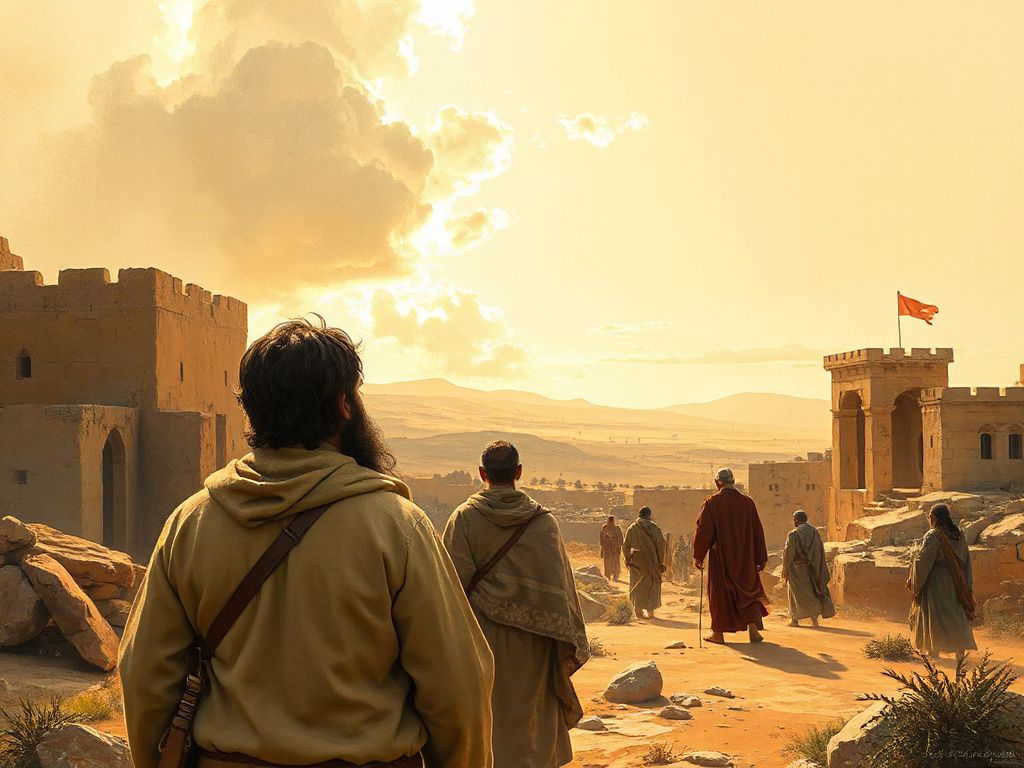
Dios promete restaurar a Judá y Jerusalén del cautiverio, y luego reunir a todas las naciones en el Valle de Josafat para ejecutar juicio a favor de Su pueblo disperso y Su tierra dividida.
Escritura
- 1.Porque he aquí que en aquellos días, y en aquel tiempo en que haré volver la cautividad de Judá y de Jerusalén,For, behold, in those days, and in that time, when I shall bring back the captivity of Judah and Jerusalem,
- 2.reuniré a todas las naciones, y las haré descender al valle de Josafat, y allí entraré en juicio con ellas a causa de mi pueblo, y de Israel mi heredad, a quien ellas esparcieron entre las naciones, y repartieron mi tierra;I will gather all nations, and will bring them down into the valley of Jehoshaphat; and I will execute judgment upon them there for my people and for my heritage Israel, whom they have scattered among the nations: and they have parted my land,
Qué significa este pasaje
Los versículos 1 y 2 de Joel 3 establecen un marcador temporal específico: 'en aquellos días, y en aquel tiempo, cuando yo hiciere volver la cautividad de Judá y de Jerusalén'. La restauración del pueblo de Dios del exilio es el punto fijo alrededor del cual gira el resto del pasaje. Todo lo que sigue en el capítulo está vinculado a este momento del retorno. La formulación encuadra la reunión de las naciones no como un evento separado, sino como algo que sucede a causa del y junto con el retorno del pueblo de Dios.
La segunda cláusula anuncia dos acciones divinas coordinadas: primero, Dios mismo 'reunirá a todas las naciones' y 'las hará descender al valle de Josafat'; segundo, 'allí entraré en juicio con ellas'. La reunión tiene como propósito el juicio, no la alianza ni el diálogo. Las naciones son convocadas a un lugar donde Dios, no ellas, preside. La razón dada es doble — 'por causa de mi pueblo y de mi heredad Israel' —, lo cual muestra que el juicio se inicia a favor de Dios por Su pueblo del pacto, no a petición de ninguna parte humana.
Los fundamentos del veredicto se expresan en dos acusaciones paralelas: 'a quienes ellos esparcieron entre las naciones', y 'repartieron mi tierra'. La dispersión del pueblo de Dios y la división de Su tierra se tratan como ofensas contra Dios mismo, ya que Israel es llamado 'mi pueblo' y 'mi heredad', y la tierra es 'mi tierra'. La redacción hace que el litigio sea personal — las naciones son responsables ante Dios porque violaron lo que le pertenece a Él.
Contexto
Joel 3 abre vinculando la restauración de Judá y Jerusalén con una escena venidera de juicio. Los versículos 1-2 aportan el 'cuándo' y el 'dónde' para lo que el resto del capítulo despliega: el tiempo del retorno, y el Valle de Josafat como la sala del tribunal. Los versículos posteriores al pasaje objetivo (3-8) detallan los cargos específicos contra las naciones — echar suertes sobre el pueblo de Dios, traficar con niños, saquear los tesoros — y la promesa de Dios de revertir esos actos. El 'valle de Josafat' es nombrado explícitamente de nuevo más adelante en el versículo 12 como el lugar 'en que yo me sentaré para juzgar a todas las naciones de alrededor', confirmando que los versículos 1-2 presentan el mismo escenario descrito a lo largo del capítulo.
Los versículos 9-21 amplían luego la imagen. La convocatoria a las naciones es universal ('todas las naciones de alrededor', v. 11), la escena pasa de la sala del tribunal a la imaginería de cosecha y lagar (v. 13), y el resultado es tanto el juicio sobre las naciones (Egipto y Edom en el v. 19) como la seguridad permanente para Judá y Jerusalén (vv. 20-21). La frase 'porque Jehová habita en Sion' al final vincula todo el capítulo con la afirmación del pacto hecha en el versículo 2 — que Israel y la tierra pertenecen a Dios porque Él está presente entre ellos.
Preguntas frecuentes
¿Qué es el Valle de Josafat?
El texto mismo no explica la ubicación. Presenta el Valle de Josafat como el lugar donde Dios reúne a todas las naciones y se sienta para ejecutar el juicio (Joel 3:2, 12). El pasaje lo trata como una sala de juicio designada divinamente; más allá de eso, el texto proporcionado no ofrece más detalles geográficos o históricos.
¿A quiénes se refiere 'todas las naciones' en el versículo 2?
Joel 3:2 nombra a las naciones genéricamente como las que 'esparcieron' a Israel entre las naciones y 'repartieron' la tierra de Dios. Los versículos inmediatamente siguientes (3-8) especifican a Tiro, Sidón, las regiones de Filistea, y también a los griegos como pueblos involucrados en vender a los hijos de Judá y llevarse los tesoros de Dios. El término 'todas las naciones' en el versículo 2 abarca, por tanto, a estos grupos nombrados y a otros, como confirma la llamada posterior del versículo 11 a 'todas las naciones de alrededor'.
¿Por qué el dispersar al pueblo y el repartir la tierra se tratan como crímenes contra Dios?
La lógica propia del pasaje es que Israel es llamado 'mi pueblo' y 'mi heredad', y la tierra es 'mi tierra'. Debido a que el pueblo y la tierra pertenecen a Dios por derecho de pacto, dispersar al pueblo y dividir la tierra no son meras ofensas políticas — son violaciones de lo que Dios declara como Su propia posesión, y por tanto demandan juicio divino.