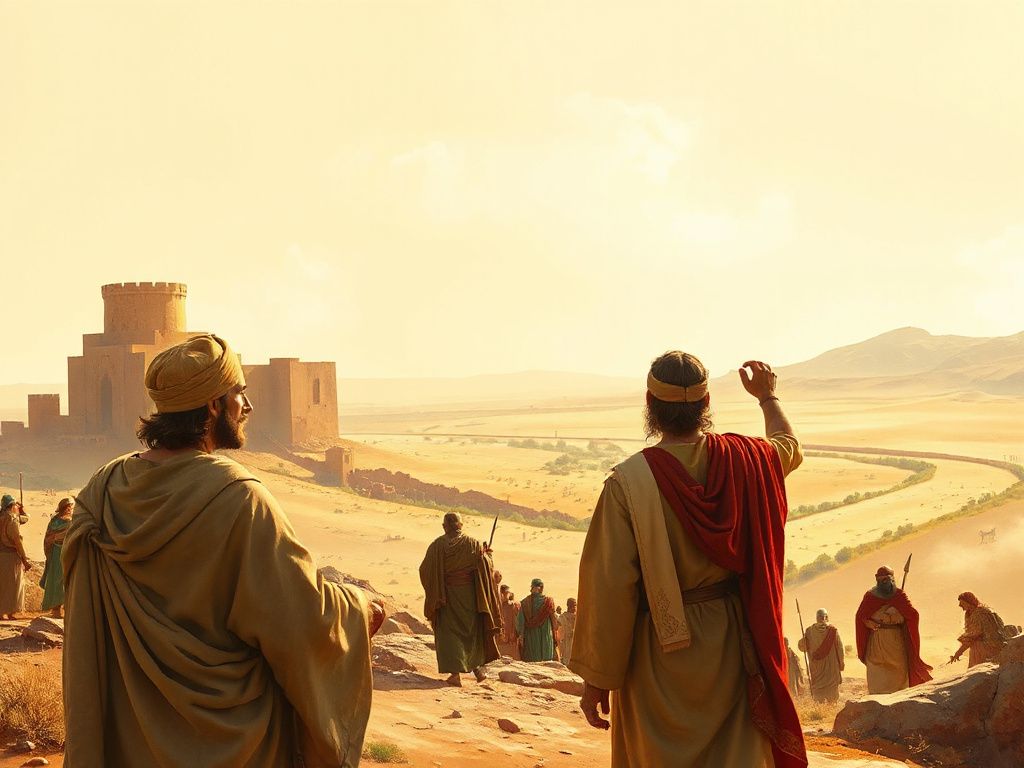
ESTUDIO DEL VERSÍCULO
Josué 6:20 — La caída del muro de Jericó
Josué 6:20 registra el derrumbe del muro de Jericó mientras el pueblo grita y los sacerdotes tocan las trompetas, cumpliendo la palabra pronunciada antes en el capítulo.
Escritura
- 20.Entonces el pueblo gritó, y los sacerdotes tocaron las bocinas; y aconteció que cuando el pueblo hubo oído el sonido de la bocina, gritó con gran vocerío, y el muro se derrumbó. El pueblo subió luego a la ciudad, cada uno derecho hacia adelante, y la tomaron.So the people shouted, and the priests blew the trumpets; and it came to pass, when the people heard the sound of the trumpet, that the people shouted with a great shout, and the wall fell down flat, so that the people went up into the city, every man straight before him, and they took the city.
Qué significa este pasaje
El versículo 20 es el cumplimiento de las instrucciones que Josué recibió al comienzo del capítulo. Anteriormente, se había ordenado al pueblo marchar alrededor de la ciudad una vez al día durante seis días, luego siete veces el séptimo día, y que a un toque largo del cuerno de carnero el pueblo diera un grito, tras lo cual el muro caería por tierra. Josué 6:20 narra exactamente esa secuencia: el pueblo grita, los sacerdotes tocan las trompetas, el pueblo escucha el sonido y prorrumpe en un gran grito, y el muro cae por tierra.
El derrumbe del muro se describe como total e inmediato, de modo que cada soldado pudo subir a la ciudad «cada uno derecho delante de sí». La redacción subraya que no fue necesario forzar una brecha; el obstáculo en sí fue eliminado. Por tanto, el versículo presenta la toma de Jericó como el resultado directo de las acciones combinadas que el capítulo prescribe —la marcha, las trompetas y el grito— y no de un asalto militar convencional.
Como el versículo informa de la victoria en lugar de explicarla teológicamente, su significado depende de cómo el resto de Josué 6 lo enmarca. La promesa anterior en el versículo 2 («He entregado en tu mano a Jericó»), el mandato de gritar en el versículo 16 («Jehová os ha entregado la ciudad») y las advertencias en los versículos 17–19 sobre las cosas consagradas al anatema indican que la caída del muro se presenta como un acto concedido en respuesta a la obediencia, y no como resultado de la fuerza israelita.
Contexto
Josué 6 se abre con Jericó cerrada a cal y canto a causa de Israel (v. 1) e inmediatamente sigue con la promesa de Dios de entregar la ciudad, su rey y sus guerreros en manos de Josué (v. 2). El capítulo prescribe luego el método inusual de tomar la ciudad: una marcha diaria con siete sacerdotes que llevan siete trompetas de cuerno de carnero delante del arca (vv. 3–4, 6–9), silencio del pueblo hasta la señal (v. 10), y el grito en el séptimo circuito del séptimo día (vv. 5, 14–16). Los versículos 17–19 establecen las condiciones: la ciudad y todo lo que hay en ella están consagrados al anatema para Jehová, solo Rajab y su casa han de vivir, y el pueblo debe apartarse de las cosas consagradas al anatema mientras que la plata, el oro y los utensilios de bronce y hierro se reservan para el tesoro de Jehová.
Dentro de ese marco, el versículo 20 es el punto de inflexión donde convergen las acciones prescritas y la promesa. Los versículos que siguen (21–27) explican inmediatamente cómo se aplicó la victoria: la ciudad y sus habitantes fueron consagrados al anatema, Rajab y su familia fueron sacados vivos según el juramento, los objetos metálicos fueron al tesoro y la ciudad fue quemada. Josué 6:27 cierra el capítulo señalando que Jehová estaba con Josué y que su fama se extendió por toda la tierra.
Preguntas frecuentes
¿Por qué cayó el muro al sonido de la trompeta y el grito?
El capítulo mismo no explica el mecanismo; simplemente registra la secuencia según fue ordenada. La caída del muro se presenta como el cumplimiento de la palabra dada en Josué 6:2, 5 y 16, donde Dios promete entregar la ciudad en manos de Israel y prescribe el grito como señal para que el muro caiga por tierra.
¿Conquistó Israel Jericó por la fuerza militar?
El capítulo no describe un asalto convencional. El texto afirma que el pueblo marchó en silencio, tocó las trompetas y gritó, y entonces el muro cayó por tierra de modo que cada hombre pudiera avanzar derecho delante de sí. La toma de la ciudad se presenta como el resultado de estas acciones prescritas y no como consecuencia de una batalla.
¿Qué le ocurrió a Rajab después de la caída del muro?
Los versículos 17 y 22–23 especifican que Rajab la ramera y todos los que estaban con ella en su casa debían vivir porque ella escondió a los mensajeros. Después de la caída del muro, Josué dijo a los dos espías que la sacaran con todo lo suyo como habían jurado, y el capítulo registra que ella y sus parientes fueron sacados y puestos fuera del campamento de Israel.