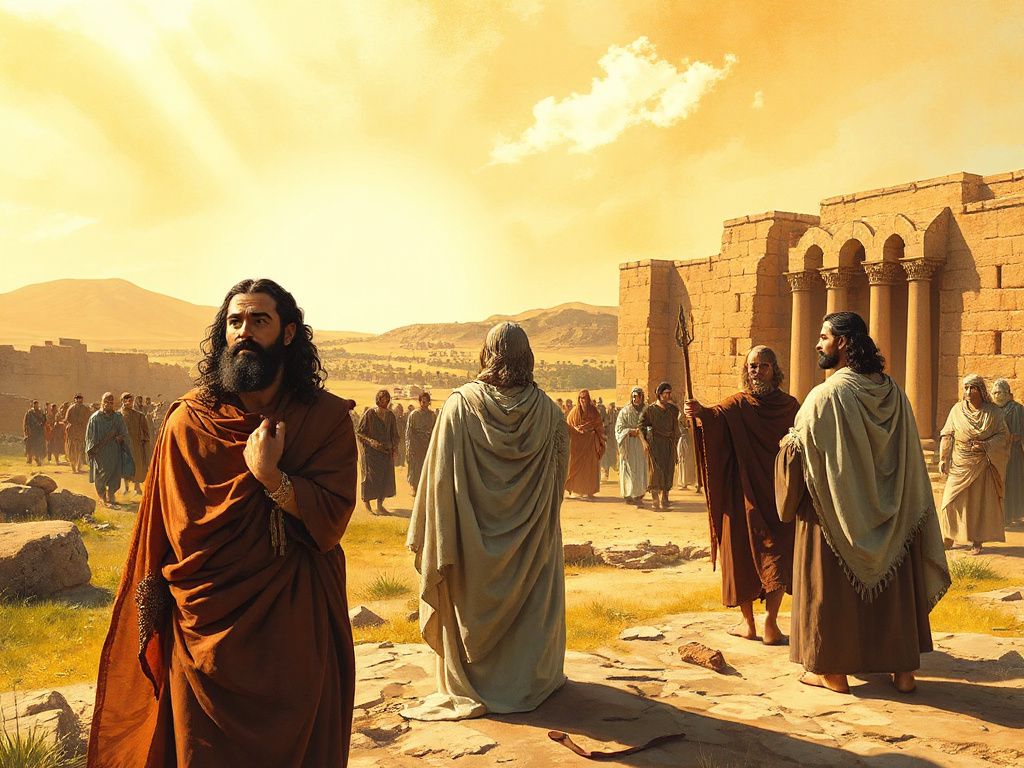
ESTUDIO DEL VERSÍCULO
Jueces 17:6 — Sin rey, cada uno hacía lo que le parecía bien
Jueces 17:6 afirma que la ausencia de un rey en Israel iba acompañada de que cada persona actuara según su propio juicio.
Escritura
- 6.En aquellos días no había rey en Israel; cada uno hacía lo que bien le parecía.In those days there was no king in Israel: every man did that which was right in his own eyes.
Qué significa este pasaje
El versículo identifica la ausencia de un rey en Israel como la condición definitoria de aquellos días. No describe la ausencia de toda autoridad; más bien, presenta una situación en la que ningún rey proporcionaba una norma común para el pueblo.
La frase cada uno hacía lo que le parecía recto ante sus propios ojos enfatiza el juicio individual. Por tanto, el versículo conecta la acción personal con lo que cada persona considera correcto, en lugar de señalar una única norma compartida para la nación.
Dado que el capítulo luego describe la casa de dioses de Mica, un efod, terafines y el nombramiento de un sacerdote, el versículo también enmarca el relato como una descripción de la vida cuando prevalecen los juicios propios del pueblo.
Contexto
Mica había hecho una imagen tallada y una imagen fundida, tenía una casa de dioses, hizo un efod y terafines, y nombró a uno de sus hijos como sacerdote. El relato circundante muestra las prácticas asociadas con la declaración del versículo acerca de hacer lo que era recto ante los propios ojos.
Después del versículo, un levita de Belén de Judá llegó a la casa de Mica y más tarde se convirtió en su sacerdote. Mica entonces dijo que tener un levita como sacerdote le aseguraba que Jehová le haría bien.
Preguntas frecuentes
¿Qué dice Jueces 17:6 que faltaba en Israel?
Dice que no había rey en Israel.
Según Jueces 17:6, ¿cómo actuaba cada uno?
Cada uno hacía lo que le parecía recto ante sus propios ojos.
¿Qué precede inmediatamente a la declaración en Jueces 17:6?
Mica tenía una casa de dioses, hizo un efod y terafines, y convirtió a uno de sus hijos en su sacerdote.