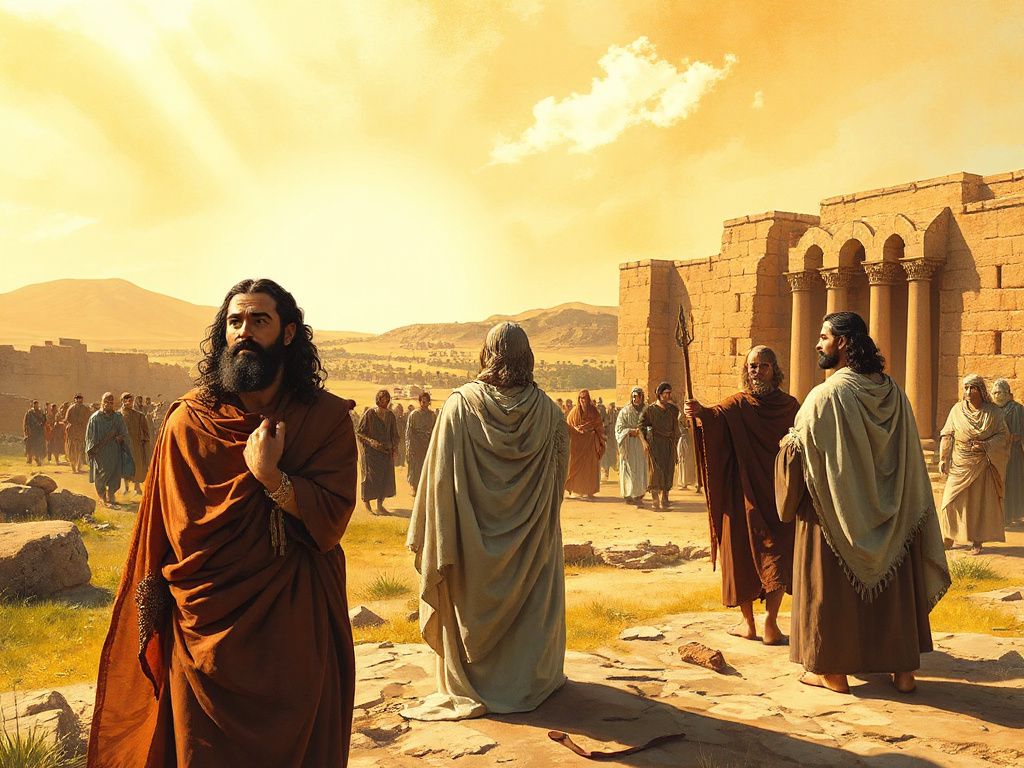
ESTUDIO DEL VERSÍCULO
Jueces 21:25 — El estribillo de cierre de Jueces
El versículo es el estribillo que cierra el libro y explica por qué Israel estaba en tal desorden: sin un rey que hiciera cumplir las normas del pacto, cada persona elegía su propio criterio de lo recto.
Escritura
- 25.En estos días no había rey en Israel; cada uno hacía lo que bien le parecía.In those days there was no king in Israel: every man did that which was right in his own eyes.
Qué significa este pasaje
La cláusula «no había rey en Israel» enuncia un vacío político y pactal. A lo largo de Jueces, Israel cae en desorden cada vez que carece de liderazgo reconocido; aquí la ausencia se nombra explícitamente, de modo que el desorden se presenta como consecuencia del trono ausente, no como un simple accidente desafortunado.
La segunda cláusula, «cada uno hacía lo que bien le parecía», define la cultura resultante. Cuando no hay ninguna autoridad por encima del individuo que establezca el estándar, lo «recto» se reduce a lo que cada uno aprueba para sí mismo. El versículo no aprueba este orden; lo diagnostica como el síntoma producido por el vacío nombrado en la primera cláusula.
Juntas, las dos cláusulas forman una sola afirmación: sin rey, por tanto, sin norma compartida, por tanto, cada uno se convierte en su propio juez. Por eso el estribillo funciona como cierre del libro: da razón de cada episodio de Jueces, incluido el conflicto fratricida y los remedios improvisados del capítulo 21.
Contexto
El versículo sigue a la resolución del capítulo 21, en el que las tribus restauran a Benjamín mediante un plan basado en juramentos: Jabes de Galaad es atacada por no haberse unido a la asamblea (vv. 1–14), y los benjamitas que sobreviven toman a sus esposas de las danzarinas de la fiesta de Silo (vv. 19–24). La repetición de «no había rey en Israel» se agudiza con estos hechos, ya que la solución israelita a la casi extinción de la tribu es improvisada, atada a juramentos y termina con «cada uno volviendo a su heredad» (v. 24), sin autoridad unificadora alguna.
Leído hacia atrás, el estribillo enmarca todo el libro. La nota inicial en Jueces 17:6 emplea la misma redacción para un episodio localizado, y su repetición aquí lo amplía a toda la nación. El capítulo en su conjunto muestra tanto el colapso religioso como el civil que deja tras de sí la ausencia del rey.
Preguntas frecuentes
¿Por qué este versículo es idéntico a Jueces 17:6 y 18:7, 19:1?
Jueces 17:6 introduce por primera vez el estribillo como comentario editorial sobre un incidente localizado. Al colocar la misma redacción al final mismo del libro, el autor reutiliza una frase ya establecida para resumir todo el período cubierto en Jueces —cada uno haciendo lo que bien le parecía— y convierte una nota sobre un episodio en un veredicto sobre toda una era.
¿Este versículo condena la conciencia personal?
No. La acusación no es que los individuos formen convicciones, sino que no hay una autoridad superior y compartida que las contenga u ordene. «Recto a sus propios ojos» se presenta como consecuencia de «no haber rey», no como una aprobación de la autonomía moral interior.
¿Este versículo predice la futura monarquía de Israel?
El versículo en sí solo diagnostica la condición presente. Su impulso hacia adelante proviene de la manera en que el capítulo termina con esta nota y de la expectativa literaria que establece dentro del libro de Jueces. Si el rey implícito es la monarquía histórica de 1 Samuel o una figura mesiánica se deduce del estribillo a partir de textos posteriores, ya que el material proporcionado no contiene ninguna identificación explícita de quién sería ese rey.