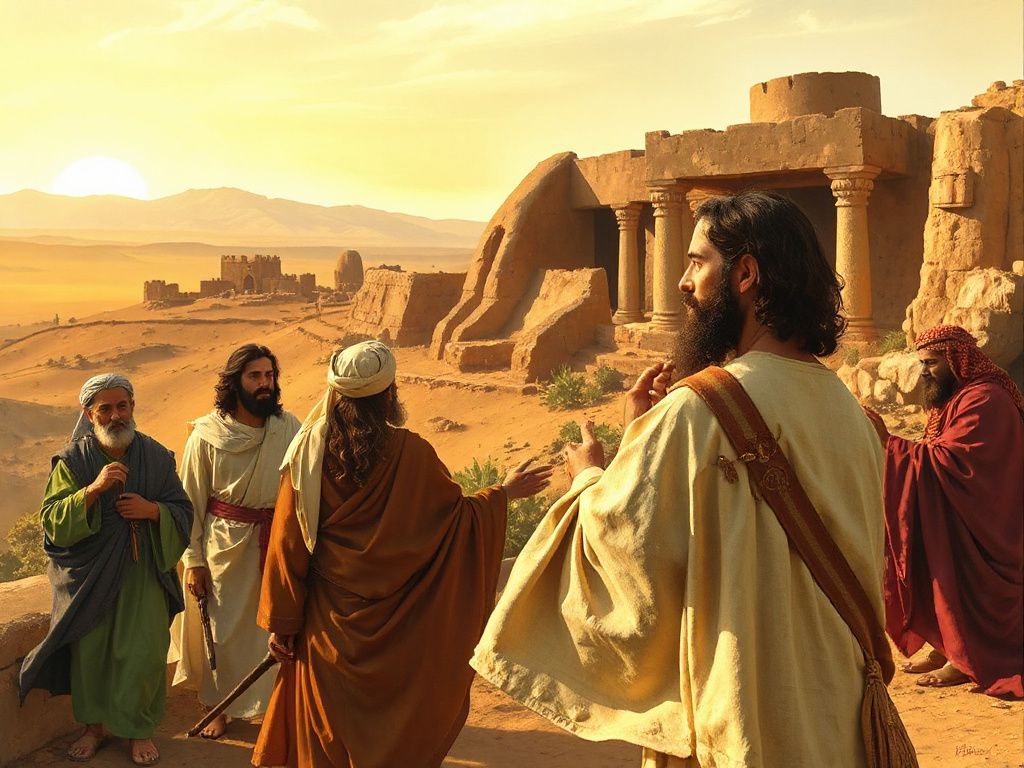
ESTUDIO DEL VERSÍCULO
Mateo 14:13-21 — La alimentación de los cinco mil
Jesús se retira tras conocer la muerte de Juan el Bautista, es seguido por una multitud a la que sana, y alimenta milagrosamente a cinco mil hombres además de mujeres y niños con cinco panes y dos peces, sobrando doce cestas de restos.
Escritura
- 13.Oyéndolo Jesús, se apartó de allí en una barca a un lugar desierto y apartado; y cuando la gente lo oyó, le siguió a pie desde las ciudades.Now when Jesus heard it, he withdrew from thence in a boat, to a desert place apart: and when the multitudes heard thereof, they followed him on foot from the cities.
- 14.Y saliendo Jesús, vio una gran multitud, y tuvo compasión de ellos, y sanó a los que de ellos estaban enfermos.And he came forth, and saw a great multitude, and he had compassion on them, and healed their sick.
- 15.Cuando anochecía, se acercaron a él sus discípulos, diciendo: El lugar es desierto, y la hora ya pasada; despide a la multitud, para que vayan por las aldeas y compren de comer.And when even was come, the disciples came to him, saying, The place is desert, and the time is already past; send the multitudes away, that they may go into the villages, and buy themselves food.
- 16.Jesús les dijo: No tienen necesidad de irse; dadles vosotros de comer.But Jesus said unto them, They have no need to go away; give ye them to eat.
- 17.Y ellos dijeron: No tenemos aquí sino cinco panes y dos peces.And they say unto him, We have here but five loaves, and two fishes.
- 18.El les dijo: Traédmelos acá.And he said, Bring them hither to me.
- 19.Entonces mandóa la gente recostarse sobre la hierba; y tomando los cinco panes y los dos peces, y levantando los ojos al cielo, bendijo, y partió y dio los panes a los discípulos, y los discípulos a la multitud.And he commanded the multitudes to sit down on the grass; and he took the five loaves, and the two fishes, and looking up to heaven, he blessed, and brake and gave the loaves to the disciples, and the disciples to the multitudes.
- 20.Y comieron todos, y se saciaron; y recogieron lo que sobró de los pedazos, doce cestas llenas.And they all ate, and were filled: and they took up that which remained over of the broken pieces, twelve baskets full.
- 21.Y los que comieron fueron como cinco mil hombres, sin contar las mujeres y los niños.And they that did eat were about five thousand men, besides women and children.
Qué significa este pasaje
El pasaje se abre con Jesús retirándose en barca a un lugar desierto después de enterarse de la muerte de Juan el Bautista (v. 13). Sin embargo, las multitudes lo siguen a pie desde las ciudades circundantes. Cuando sale y ve la gran multitud, el texto dice: «tuvo compasión de ellos, y sanó a sus enfermos» (v. 14). El verbo que expresa esta compasión enmarca todo el episodio: la respuesta de Jesús a las multitudes no es el retiro sino la misericordia, y la alimentación que seguirá brota de ese acto inicial de sanación.
Al llegar la tarde, los discípulos plantean un problema práctico: el lugar es desierto, la hora ha pasado y la gente necesita comida. La respuesta de Jesús invierte su suposición: «No tienen necesidad de irse; dadles vosotros de comer» (v. 16). Los discípulos solo pueden informar de lo que tienen: «cinco panes y dos peces» (v. 17). Jesús les dice que le traigan lo que tienen, hace que las multitudes se sienten en la hierba, toma los panes y los peces, alza los ojos al cielo, los bendice, los parte y los da a los discípulos, quienes a su vez distribuyen a las multitudes (vv. 18-19). La estructura —tomar, bendecir, partir, dar— es el mismo patrón que Mateo utiliza para la Última Cena en 26:26.
El resultado es abundancia, no escasez: «y todos comieron y se saciaron; y recogieron lo que sobró de los pedazos, doce cestas llenas» (v. 20). El número de los que comieron —«unos cinco mil hombres, sin contar las mujeres y los niños» (v. 21)— importa porque muestra que el milagro se mide por la multitud, no por la comida. Las doce cestas de restos señalan una provisión mucho mayor que la necesidad, y el conteo cuidadoso de las personas subraya que la compasión de Jesús se extiende a una multitud específica y enumerable, no a un grupo abstracto.
Contexto
Mateo 14:13-21 se sitúa inmediatamente después del relato de la decapitación de Juan el Bautista por orden de Herodes (14:10-12). Los discípulos sepultan a Juan y se lo comunican a Jesús, y el retiro de Jesús a un lugar desierto es una respuesta directa a esa noticia. La multitud, ya establecida anteriormente en Mateo como seguidora de Jesús de ciudad en ciudad, lo sigue a pie y llega antes de que pueda estar solo.
El capítulo que sigue a la alimentación vuelve al movimiento sobre el agua: Jesús envía a los discípulos adelante en la barca, sube al monte a orar, camina sobre el mar hacia ellos y recibe a Pedro, que brevemente camina sobre el agua antes de hundirse (14:22-33). La multitud que encuentran al otro lado en Genesaret vuelve a agolparse sobre él para ser sanada (14:34-36), de modo que la compasión mostrada en 14:14 y la abundancia mostrada en 14:20 no son hechos aislados sino el patrón que se repite a lo largo del resto del capítulo 14.
Preguntas frecuentes
¿Por qué Jesús se retira tras conocer la muerte de Juan el Bautista?
Mateo sitúa el retiro inmediatamente después de que los discípulos informan a Jesús de la sepultura de Juan (14:12-13). La retirada en barca a un lugar desierto se presenta como su respuesta a esa noticia, aunque Mateo no explica su razonamiento interno. La multitud lo sigue de todos modos, y Jesús los recibe con compasión en lugar de retirarse nuevamente.
¿Qué significa que Jesús diga «dadles vosotros de comer»?
En el versículo 16 Jesús invierte el plan de los discípulos de despedir a la multitud para que comprara comida. Al decirles que alimenten ellos mismos a la multitud, pone la responsabilidad sobre los discípulos dejando claro que la provisión vendrá por medio de él —como muestran los versículos siguientes cuando toma sus cinco panes y dos peces, los bendice y distribuye a través de los discípulos a las multitudes.
¿Por qué se mencionan a las mujeres y los niños por separado de los cinco mil hombres?
Mateo especifica «unos cinco mil hombres, sin contar las mujeres y los niños» (v. 21). Contar a los hombres por separado era la forma habitual de registrar un grupo, y la frase añadida deja claro que el número total de alimentados era considerablemente mayor que cinco mil. La enumeración cuidadosa subraya que el milagro sirvió a una multitud real y numerosa, no a un puñado simbólico.