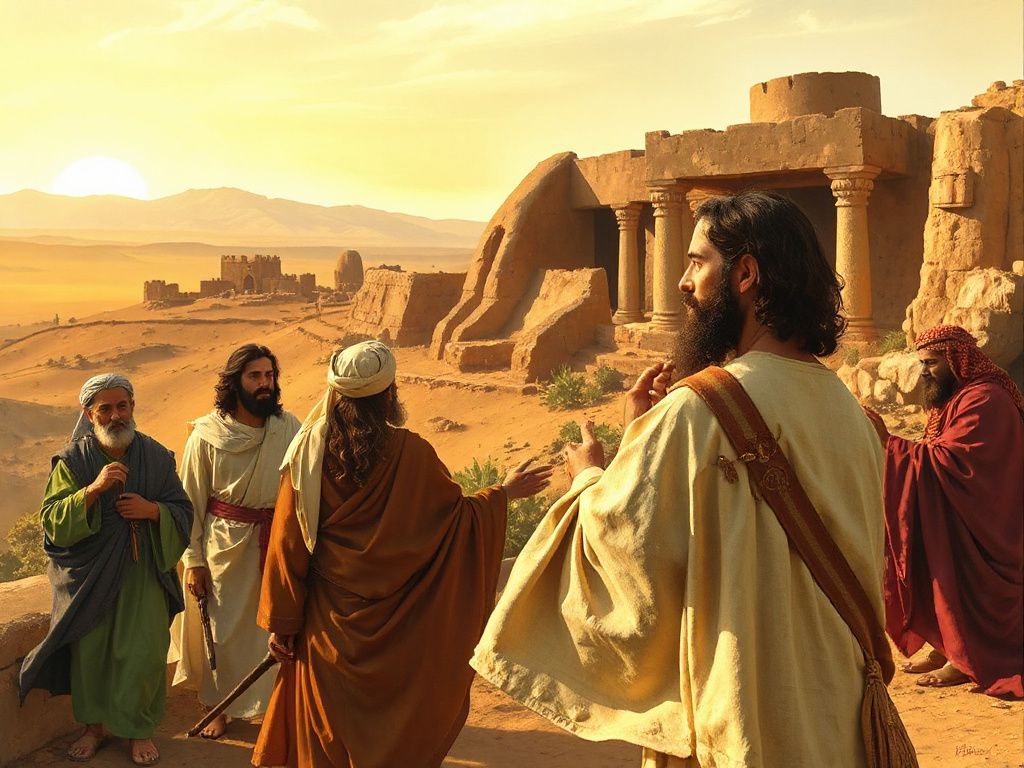
ESTUDIO DEL VERSÍCULO
Mateo 6:25-34 — No os afanéis por el mañana
En Mateo 6:25-34 Jesús prohíbe la ansiedad por la comida, la bebida y el vestido, señala a las aves del cielo y los lirios del campo como evidencia del cuidado del Padre, y ordena a sus oyentes buscar primeramente el reino y la justicia de Dios.
Escritura
- 25.Por tanto os digo: No os afanéis por vuestra vida, qué habéis de comer o qué habéis de beber; ni por vuestro cuerpo, qué habéis de vestir. ¿No es la vida más que el alimento, y el cuerpo más que el vestido?Therefore I say unto you, be not anxious for your life, what ye shall eat, or what ye shall drink; nor yet for your body, what ye shall put on. Is not the life more than the food, and the body than the raiment?
- 26.Mirad las aves del cielo, que no siembran, ni siegan, ni recogen en graneros; y vuestro Padre celestial las alimenta. ¿No valéis vosotros mucho más que ellas?Behold the birds of the heaven, that they sow not, neither do they reap, nor gather into barns; and your heavenly Father feedeth them. Are not ye of much more value then they?
- 27.¿Y quién de vosotros podrá, por mucho que se afane, añadir a su estatura un codo?And which of you by being anxious can add one cubit unto the measure of his life?
- 28.Y por el vestido, ¿por qué os afanáis? Considerad los lirios del campo, cómo crecen: no trabajan ni hilan;And why are ye anxious concerning raiment? Consider the lilies of the field, how they grow; they toil not, neither do they spin:
- 29.pero os digo, que ni aun Salomón con toda su gloria se vistió así como uno de ellos.yet I say unto you, that even Solomon in all his glory was not arrayed like one of these.
- 30.Y si la hierba del campo que hoy es, y mañana se echa en el horno, Dios la viste así, ¿no hará mucho más a vosotros, hombres de poca fe?But if God doth so clothe the grass of the field, which to-day is, and to-morrow is cast into the oven, shall he not much more clothe you, O ye of little faith?
- 31.No os afanéis, pues, diciendo: ¿Qué comeremos, o qué beberemos, o qué vestiremos?Be not therefore anxious, saying, What shall we eat? or, What shall we drink? or, Wherewithal shall we be clothed?
- 32.Porque los gentiles buscan todas estas cosas; pero vuestro Padre celestial sabe que tenéis necesidad de todas estas cosas.For after all these things do the Gentiles seek; for your heavenly Father knoweth that ye have need of all these things.
- 33.Mas buscad primeramente el reino de Dios y su justicia, y todas estas cosas os serán añadidas.But seek ye first his kingdom, and his righteousness; and all these things shall be added unto you.
- 34.Así que, no os afanéis por el día de mañana, porque el día de mañana traerá su afán. Basta a cada día su propio mal.Be not therefore anxious for the morrow: for the morrow will be anxious for itself. Sufficient unto the day is the evil thereof.
Qué significa este pasaje
El pasaje se abre con el conector inferencial 'Por tanto' (griego Διά, Strong's G1223), que vincula el mandato contra la ansiedad directamente con la advertencia precedente de que nadie puede servir a dos señores (v. 24). Dado que la devoción a las riquezas y la devoción a Dios son mutuamente excluyentes, la ansiedad por las necesidades se muestra como un síntoma de lealtad dividida. Jesús plantea la cuestión no como un asunto de provisión sino de confianza: si Dios ha dado el don mayor —la vida misma y el cuerpo—, los dones menores de comida y vestido seguirán.
La ilustración avanza en dos pasos. Primero, las aves del cielo (v. 26) no siembran ni siegan ni almacenan, y sin embargo el Padre las alimenta; el argumento va de lo menor a lo mayor (a fortiori), no de la biología a la teología. Segundo, los lirios del campo (vv. 28-30) superan en gloria a Salomón, y aun la hierba pasajera recibe vestidura de Dios —cuánto más su pueblo del pacto. El versículo 27 inserta un recordatorio de que la ansiedad misma no puede añadir un solo codo a la duración de la vida, haciendo explícita la futilidad de la preocupación.
Los versículos 31-34 dan el mandato positivo. La ansiedad prohibida se caracteriza como la búsqueda propiamente gentil (ἐθνικός): procurar estas necesidades como si no existiera un Padre celestial. La alternativa es un orden de prioridades: 'buscad primeramente su reino y su justicia', y las necesidades 'serán añadidas'. El proverbio final, 'Bástale al día su propio mal', no niega el sufrimiento sino que prohíbe multiplicar las penas presentes cargando hoy con la carga del mañana.
Contexto
Mateo 6:25-34 se sitúa en medio del Sermón del Monte y sigue directamente al bloque sobre los tesoros (vv. 19-21), el ojo sencillo (vv. 22-23) y la imposibilidad de servir a dos señores (v. 24). La nota del capítulo identifica Mateo 6 con la oración, el ayuno y la limosna —los tres actos de piedad que Jesús reinterpreta en los versículos circundantes (vv. 1-18). Los versículos 25-34 funcionan, por tanto, como una bisagra: tras haber criticado la actuación religiosa visible y ansiosa de los hipócritas, Jesús aborda ahora la ansiedad subyacente por la provisión diaria que muestran los gentiles. La oración que Jesús acaba de enseñar en los vv. 9-13 —'Danos hoy nuestro pan de cada día'— es en sí misma un modelo que pide la provisión diaria sin acumulación ansiosa, y el presente pasaje explica la postura que hay detrás de esa petición.
Palabras clave del original
- G3309 μεριμνάω (merimnaō), Strong's G3309, definido como 'estar ansioso por'. El versículo repite este verbo en imperativo presente con μή, prohibiendo una mentalidad continua más que un solo acto de preocupación —la cuestión es la disposición arraigada, no la preocupación ocasional.
- G1223 διά (dia), Strong's G1223, 'por, a causa de'. El 'Por tanto' inicial (Διὰ τοῦτο) fundamenta explícitamente la prohibición de la ansiedad en el dicho inmediatamente anterior sobre los dos señores (v. 24), mostrando que la ansiedad por las necesidades es el efecto práctico de una alianza dividida.
- G5590 ψυχή (psychē), Strong's G5590, 'aliento, vida, alma'. En el v. 25 la 'vida' (ψυχῇ) se distingue del cuerpo y se trata como el don mayor de Dios. El argumento a fortiori —la vida es más que la comida— depende de este ordenamiento supuesto de los dones.
Preguntas frecuentes
¿Mateo 6:25 prohíbe toda preocupación por la comida y el vestido?
No. El versículo prohíbe la preocupación ansiosa y absorbente que desplaza la confianza en el Padre. El propio Jesús comió, tuvo hambre y reconoció que sus discípulos tenían necesidades (cf. la oración modelo 'Danos hoy nuestro pan de cada día' en 6:11, que pide provisión sin acumulación ansiosa).
¿Qué significa 'buscad primeramente su reino y su justicia' (v. 33)?
Dentro del contexto inmediato de Mateo 6, buscar el reino y la justicia es la contraparte positiva de las secciones anteriores sobre la limosna secreta, la oración secreta y el ayuno secreto (vv. 1-18): una justicia orientada hacia la aprobación de Dios más que al espectáculo humano. La promesa de que 'estas cosas serán añadidas' no convierte las necesidades en la meta, sino que asegura que una vida orientada a Dios recibirá lo que una vida orientada a la preocupación intenta asegurar por su propio esfuerzo.
¿El versículo 34 ('Bástale al día su propio mal') niega el sufrimiento real?
El versículo no niega que exista la adversidad; la misma palabra 'mal' (κακία) usada aquí se reconoce en otras partes del capítulo (vv. 13, 'líbranos del mal'). Lo que prohíbe es la acumulación del problema de un día al pedir prestado el mañana. El versículo trata sobre el momento oportuno del dolor y la ansiedad, no sobre la existencia de la aflicción.