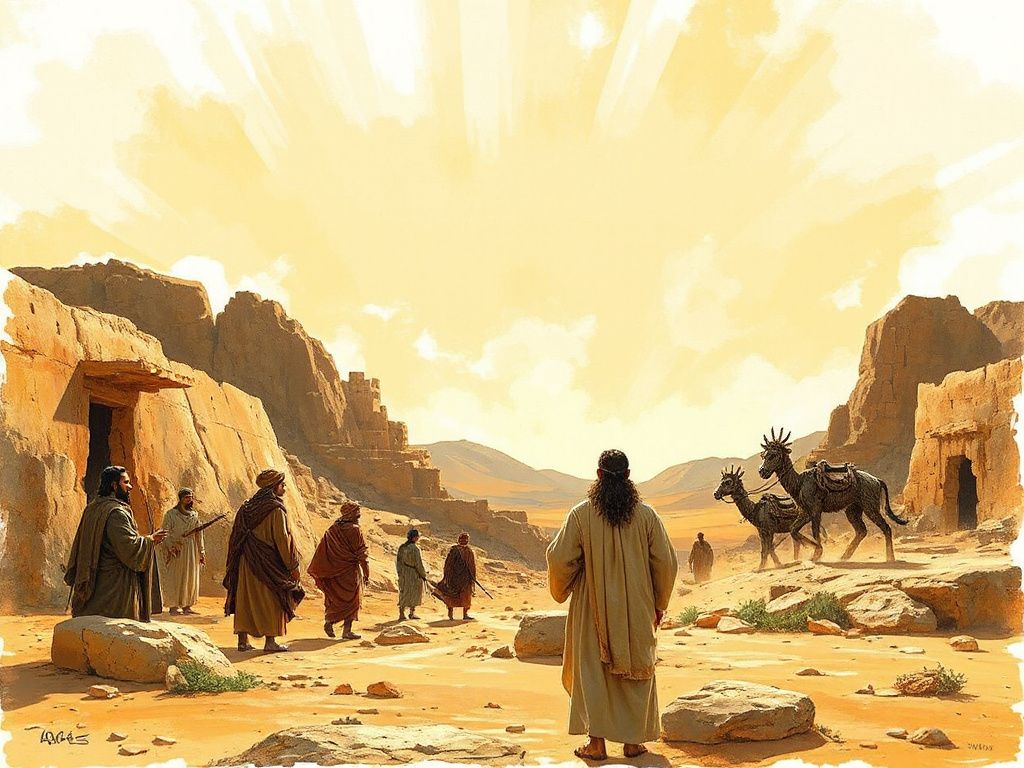
ESTUDIO DEL VERSÍCULO
Abdías 1:10–14 — Acusación de la violencia de Edom contra Jacob
Edom es condenado por la violencia hecha a su hermano Jacob, con seis actos específicos de traición enumerados durante el día de la calamidad de Jerusalén, resultando en vergüenza eterna y destrucción.
Escritura
- 10.Por la injuria a tu hermano Jacob te cubrirá vergüenza, y serás cortado para siempre.For the violence done to thy brother Jacob, shame shall cover thee, and thou shalt be cut off for ever.
- 11.El día que estando tú delante, llevaban extraños cautivo su ejército, y extraños entraban por sus puertas, y echaban suertes sobre Jerusalén, tú también eras como uno de ellos.In the day that thou stoodest on the other side, in the day that strangers carried away his substance, and foreigners entered into his gates, and cast lots upon Jerusalem, even thou wast as one of them.
- 12.Pues no debiste tú haber estado mirando en el día de tu hermano, en el día de su infortunio; no debiste haberte alegrado de los hijos de Judá en el día en que se perdieron, ni debiste haberte jactado en el día de la angustia.But look not thou on the day of thy brother in the day of his disaster, and rejoice not over the children of Judah in the day of their destruction; neither speak proudly in the day of distress.
- 13.No debiste haber entrado por la puerta de mi pueblo en el día de su quebrantamiento; no, no debiste haber mirado su mal en el día de su quebranto, ni haber echado mano a sus bienes en el día de su calamidad.Enter not into the gate of my people in the day of their calamity; yea, look not thou on their affliction in the day of their calamity, neither lay ye hands on their substance in the day of their calamity.
- 14.Tampoco debiste haberte parado en las encrucijadas para matar a los que de ellos escapasen; ni debiste haber entregado a los que quedaban en el día de angustia.And stand thou not in the crossway, to cut off those of his that escape; and deliver not up those of his that remain in the day of distress.
Qué significa este pasaje
Los versículos 10–11 enmarcan la acusación: la violencia contra Jacob (v. 10) y la presencia pasiva de Edom en las puertas de Jerusalén cuando los extranjeros se llevaron sus bienes y echaron suertes sobre la ciudad (v. 11) son acusaciones gemelas. El hebreo 'violencia' (ḥamas) y la frase 'estuviste al lado de otro' establecen tanto la complicidad activa como la omisión del deber fraternal. El resultado es vergüenza y ser cortado para siempre.
Los versículos 12–13 pasan de la acusación a la prohibición, enumerando tres mandatos en el día de la desgracia de Judá: no mires, no te alegres, no abras la boca en regodeo; luego no entres por la puerta, no mires la aflicción, no extiendas las manos sobre sus bienes. La repetición de 'el día de su/tu calamidad' (yom 'edo, yom 'aram) crea una estructura rítmica implacable que vincula el pecado de Edom a un momento específico de oportunidad.
El versículo 14 completa la acusación con dos prohibiciones finales: no te quedes en la encrucijada para cortar a los fugitivos, y no entregues a los sobrevivientes. La nota curatorial del capítulo identifica seis acusaciones específicas: permanecer al margen, apoderarse de los bienes, cortar a los fugitivos, entregar a los aliados, saquear la ciudad. El pasaje objetivo (vv. 10–14) se enfoca en el primer grupo: la violencia, la presencia en la puerta, el regodeo, el saqueo y el bloqueo de la huida. El pasaje presenta el pecado de Edom como una traición a las obligaciones de parentesco en el preciso momento en que se requería el deber fraternal.
Contexto
El pasaje objetivo (vv. 10–14) se sitúa en el centro estructural de Abdías. Antes de él, los versículos 7–9 establecen la humillación previa de Edom: los aliados engañan, los sabios de Edom son destruidos, y los valientes de Temán son quebrantados. La violencia contra Jacob en el versículo 10 se presenta así como la causa raíz del juicio venidero, no meramente una ofensa entre muchas. Después del pasaje objetivo, los versículos 15–16 anuncian el Día del Señor contra todas las naciones —el principio de la justicia recíproca ('como tú hiciste, te será hecho')— seguido de los versículos 17–21, que describen la liberación del monte Sion y la posesión de los territorios de Edom por la casa de Jacob.
El capítulo avanza desde el orgullo de Edom (vv. 1–4) atravesando su humillación (vv. 5–9) hasta las acusaciones específicas (vv. 10–14) y finalmente hacia la justicia divina universal y la restauración (vv. 15–21). Dentro de esta estructura, los versículos 10–14 funcionan como la evidencia pivotal: lo que Edom hizo a Jacob es el capítulo concreto que justifica el veredicto. La frase 'tu hermano Jacob' en el versículo 10 conecta el pasaje con el tema bíblico más amplio de la relación Jacob-Esaú, estableciendo el pecado como una violación del parentesco, no meramente un acto político.
Preguntas frecuentes
¿Por qué Edom es llamado 'hermano' de Jacob en este pasaje?
Según el texto del capítulo, Edom es hermano de Jacob por el origen bíblico de los dos pueblos como descendientes de Esaú y Jacob. El pasaje usa 'tu hermano Jacob' para enmarcar la violencia de Edom como una violación de la obligación de parentesco, no meramente un acto político o militar. El capítulo señala que las seis acusaciones del pasaje objetivo se centran en el fracaso del deber fraternal en el momento de la calamidad de Jerusalén.
¿Cuáles son las seis acusaciones específicas contra Edom mencionadas en la nota curatorial?
La nota curatorial establece: permanecer al margen, apoderarse de los bienes, cortar a los fugitivos, entregar a los aliados, y saquear la ciudad. El pasaje mismo (vv. 12–14) enfatiza el primer grupo de prohibiciones: el día de mirar, el día de alegrarse, el día de abrir la boca con soberbia, entrar por la puerta, extender las manos sobre los bienes, quedarse en la encrucijada y entregar a los sobrevivientes. La estructura de prohibiciones repetidas contra el regodeo, el saqueo y el bloqueo de la huida vincula el pecado a un momento específico de oportunidad.
¿Cuál es el resultado de la violencia de Edom según el versículo 10?
El versículo 10 declara: 'la vergüenza te cubrirá, y serás cortado para siempre'. El capítulo presenta esto como la consecuencia de la violencia hecha al hermano Jacob. La acusación subsiguiente (vv. 11–14) detalla los actos específicos que constituyen esta violencia, y el versículo 15 extiende el principio de la justicia recíproca a todas las naciones: 'como tú hiciste, te será hecho'.