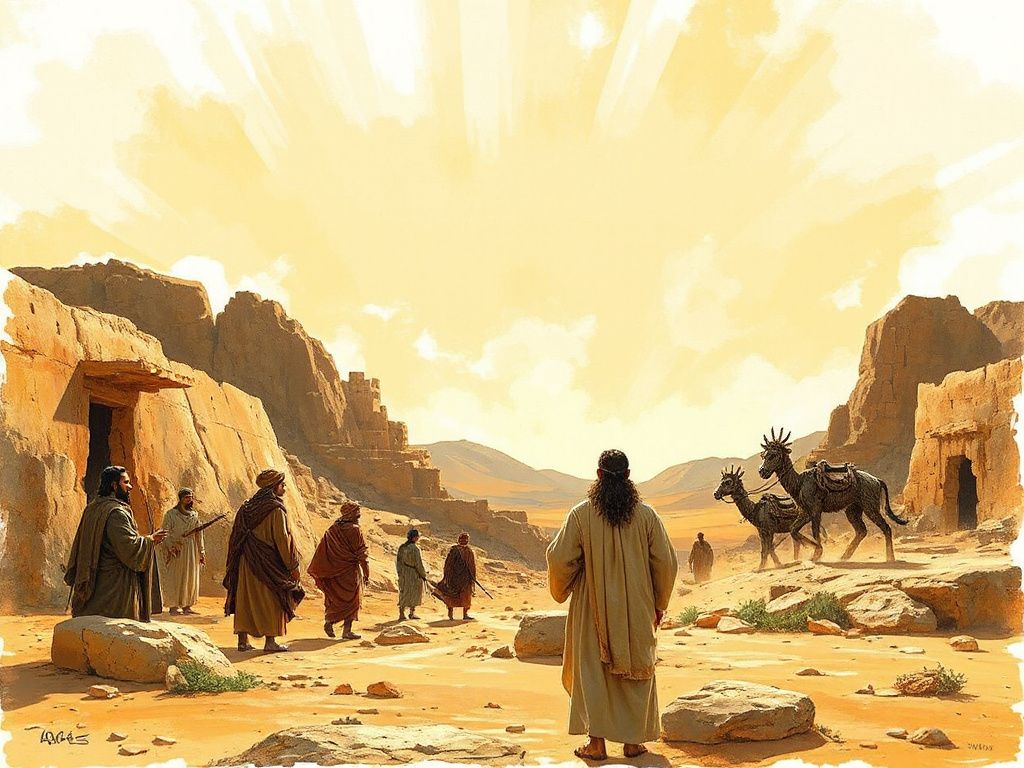
ESTUDIO DEL VERSÍCULO
Abdías 1:16 — La copa de la inversión
Abdías 1:16 anuncia que las naciones beberán la copa del juicio sin cesar en el santo monte de Dios, invirtiendo los papeles de modo que los que festejaron serán consumidos.
Escritura
- 16.De la manera que vosotros bebisteis en mi santo monte, beberán continuamente todas las naciones; beberán, y engullirán, y serán como si no hubieran sido.For as ye have drunk upon my holy mountain, so shall all the nations drink continually; yea, they shall drink, and swallow down, and shall be as though they had not been.
Qué significa este pasaje
El versículo 16 comienza con el conector explicativo 'porque' (hebreo ki), que vincula el juicio universal al principio recién establecido en el versículo 15: 'como tú has hecho, se te hará a ti; tu proceder volverá sobre tu propia cabeza.' El versículo no introduce un tema nuevo; aplica la ley del talión (la inversión de medida por medida) ya pronunciada a las naciones en conjunto. La imagen inaugural — 'como habéis bebido en mi santo monte' — recuerda el banquete y el regocijo que Edom (y presumiblemente otros enemigos) hicieron con motivo de la caída de Jerusalén. El 'mi santo monte' del profeta identifica al monte Sion como posesión propia de Dios, de modo que la profanación no fue solo contra Judá sino contra el Señor que habitaba allí.
La cláusula central, 'así beberán todas las naciones sin cesar', traslada la copa de un acto único de burla a un juicio continuo e interminable. El verbo hebreo traducido 'sin cesar' (tamid) señala duración perpetua, y la triple repetición de 'beber, y tragar' intensifica el cuadro: las naciones no sorberán la copa, sino que la engullirán hasta desaparecer. La progresión 'beber — tragar — ser como si nunca hubieran existido' refleja una copa que se consume hasta que no queda nada del que bebe, una imagen de borramiento total más que de castigo parcial.
La frase final 'como si nunca hubieran existido' (ke-lo hayetah) es la inversión culminante: las mismas naciones que se regodearon con la caída de Judá serán borradas de la historia. Combinada con el axioma del versículo 15, el versículo muestra que la justicia divina no es represalia arbitraria sino una inversión medida — el hacedor recibe el hecho. El banquete de Edom sobre Sion se convierte en el beber forzado de todas las naciones sobre Sion, y los celebrantes se convierten en los consumidos.
Contexto
Los versículos 12–14 acusan a Edom por actos específicos durante la caída de Jerusalén: regodearse en la puerta (v. 12), entrar por la puerta para saquear (v. 13), y bloquear los cruces de caminos para cortar la huida de los refugiados (v. 14). El versículo 15 luego generaliza el principio — 'el día de Jehová está cerca sobre todas las naciones' — y el versículo 16 aplica ese principio con la imagen de la copa. El 'santo monte' del versículo 16 es, por tanto, el mismo monte Sion que los versículos circundantes (vv. 17, 21) ubican como el lugar del cual 'subirán libertadores… para juzgar el monte de Esaú.' El 'beber' del versículo 16 no es, pues, un banquete sino lo inverso: un beber forzado de juicio sobre el mismo monte donde Edom había celebrado.
Los versículos 17–21 completan el cuadro: mientras las naciones beben, 'en el monte Sion habrá quienes escapen' (v. 17); la casa de Jacob se vuelve fuego contra la casa de Esaú (v. 18); y al final 'el reino será de Jehová' (v. 21). El versículo 16 se sitúa en la bisagra de esta estructura, al pasar de la acusación (vv. 12–15) a la restauración (vv. 17–21). El 'sin cesar' del versículo 16 es lo que hace definitiva la inversión: el beber de las naciones no tiene fin, precisamente porque la liberación de Sion es el desenlace permanente.
Preguntas frecuentes
¿Qué significa 'habéis bebido en mi santo monte'?
Se refiere al banquete celebratorio y al regodeo de los enemigos por la caída de Jerusalén en el monte Sion — el 'santo monte' de Dios. Abdías lo reprueba como una profanación contra el Señor mismo, no solo contra Judá.
¿Por qué el versículo 16 dice 'todas las naciones' cuando Edom es el blanco principal?
El versículo 15 generaliza el principio a 'todas las naciones', y el versículo 16 aplica esa generalización: la conducta de Edom se trata como representativa de la hostilidad de toda nación hacia Sion, de modo que toda nación que participe en tales actos o los apruebe comparte la misma copa.
¿Cuál es la 'copa' que las naciones beberán?
Dentro del pasaje mismo, la 'copa' es la figura de un beber forzado que consume al que bebe — 'beber, y tragar, y serán como si nunca hubieran existido.' Es la copa de la inversión divina: los que festejaron con burla serán ellos mismos agotados. El versículo describe el efecto (borramiento total) más que especificar el contenido de la copa.