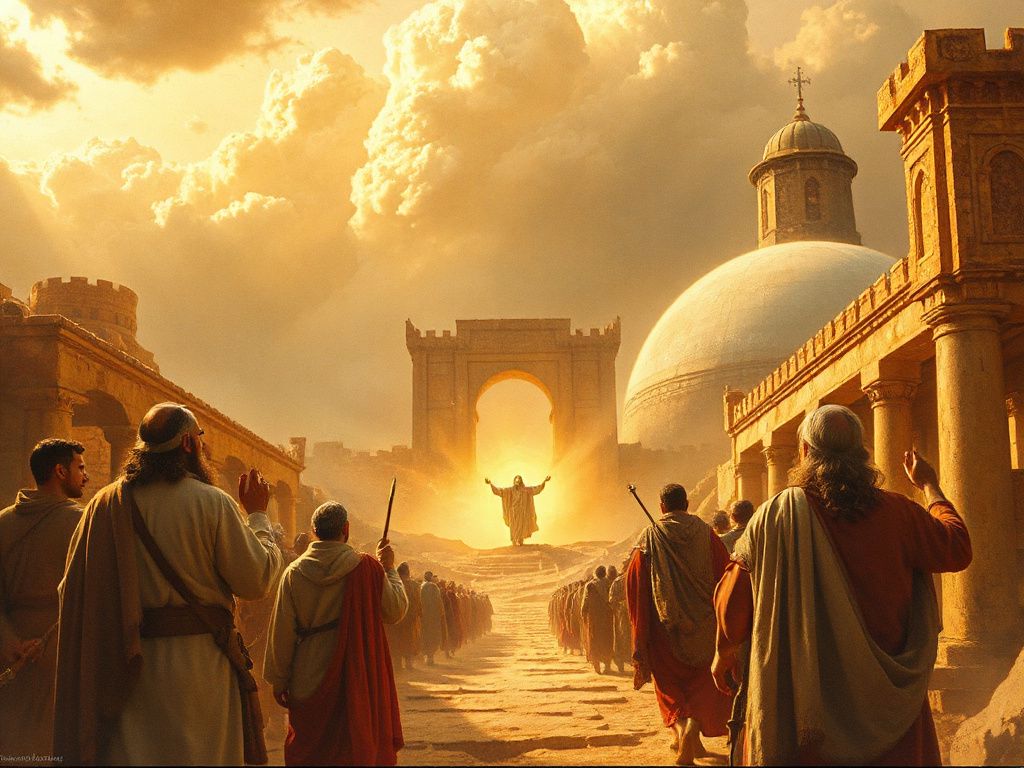
ESTUDIO DEL VERSÍCULO
Apocalipsis 19:11–16 — El Jinete sobre el caballo blanco
El cielo se abre cuando el jinete justo, seguido de los ejércitos celestiales, viene a juzgar a las naciones y establecer su gobierno soberano.
Escritura
- 11.Entonces vi el cielo abierto; y he aquí un caballo blanco, y el que lo montaba se llamaba Fiel y Verdadero, y con justicia juzga y pelea.And I saw the heaven opened; and behold, a white horse, and he that sat thereon called Faithful and True; and in righteousness he doth judge and make war.
- 12.Sus ojos eran como llama de fuego, y había en su cabeza muchas diademas; y tenía un nombre escrito que ninguno conocía sino él mismo.And his eyes are a flame of fire, and upon his head are many diadems; and he hath a name written which no one knoweth but he himself.
- 13.Estaba vestido de una ropa teñida en sangre; y su nombre es: EL VERBO DE DIOS.And he is arrayed in a garment sprinkled with blood: and his name is called The Word of God.
- 14.Y los ejércitos celestiales, vestidos de lino finísimo, blanco y limpio, le seguían en caballos blancos.And the armies which are in heaven followed him upon white horses, clothed in fine linen, white and pure.
- 15.De su boca sale una espada aguda, para herir con ella a las naciones, y él las regirá con vara de hierro; y él pisa el lagar del vino del furor y de la ira del Dios Todopoderoso.And out of his mouth proceedeth a sharp sword, that with it he should smite the nations: and he shall rule them with a rod of iron: and he treadeth the winepress of the fierceness of the wrath of God, the Almighty.
- 16.Y en su vestidura y en su muslo tiene escrito este nombre: REY DE REYES Y SEÑOR DE SEÑORES.And he hath on his garment and on his thigh a name written, KINGS OF KINGS, AND LORD OF LORDS.
Qué significa este pasaje
Juan ve el cielo abierto y a un jinete sobre un caballo blanco, llamado Fiel y Verdadero. Su juicio y su guerra se caracterizan explícitamente por la justicia, de modo que el pasaje presenta su acción como fiel y verdadera, y no como arbitraria o engañosa.
Los ojos de fuego del jinete, sus muchas diademas, su nombre desconocido, su vestidura rociada con sangre y el título la Palabra de Dios lo rodean de santidad, autoridad, misterio y juicio. El nombre no revelado subraya que algunos aspectos de su identidad quedan más allá del conocimiento ordinario, mientras que el nombre escrito identifica su título supremo.
Los ejércitos celestiales lo siguen sobre caballos blancos, vestidos de lino fino, blanco y puro. De su boca sale una espada afilada para herir a las naciones, y las gobierna con vara de hierro mientras pisa el lagar del furor de Dios, el Todopoderoso. El nombre escrito en su vestidura y en su muslo lo declara REY DE REYES Y SEÑOR DE SEÑORES.
Contexto
Apocalipsis 19 comienza con alabanza a Dios por la salvación, la gloria, el poder y sus justos juicios. Han llegado las bodas del Cordero, la esposa se ha preparado ella misma con lino fino, y son llamados bienaventurados los invitados a la cena de las bodas.
Inmediatamente antes de este pasaje, se le dice al que habla que no adore al siervo que revela, sino que adore a Dios, porque el testimonio de Jesús es el espíritu de la profecía. Después de que aparece el jinete, un ángel llama a las aves a la gran cena de Dios, y la bestia, los reyes de la tierra y sus ejércitos se reúnen para hacer guerra contra el jinete y su ejército.
Preguntas frecuentes
¿Qué significa el caballo blanco en este pasaje?
El pasaje mismo presenta al caballo blanco como la montura del jinete llamado Fiel y Verdadero, que juzga y hace guerra con justicia. No ofrece una explicación separada del significado del caballo.
¿Por qué se llama al jinete Fiel y Verdadero?
El título describe el carácter del jinete y la manera en que actúa: juzga y hace guerra con justicia. El pasaje no desarrolla el título más allá de esta descripción.
¿Cuál es el significado de la espada que sale de la boca del jinete?
El pasaje afirma que la espada afilada procede de su boca para herir a las naciones. Representa su juicio hablado como el medio por el cual las naciones son golpeadas, mientras que los versículos siguientes identifican al jinete como el que pisa el lagar del furor de Dios, el Todopoderoso.