BIBLE FILM GUIDE
Amazing Love
Film · 2012 · 80 min
A youth-group weekend camping trip frames a retelling of the prophet Hosea's message of faithful love.
What the story covers
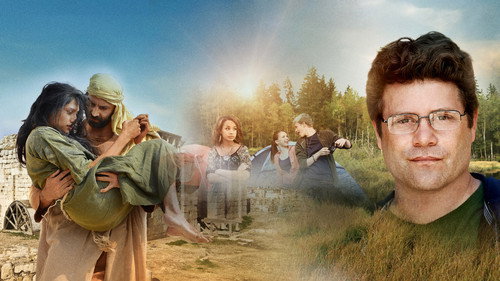
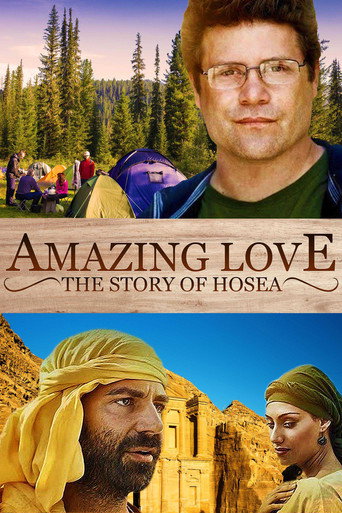
The film follows a church youth group — Steve, Carrie, Cooper, Gameboy, Ashley, and their leaders Stuart and Beth — on a weekend camping trip. Tensions rise when Ashley, an outsider, clashes with Carrie, and Stuart uses the moment to unfold the biblical story of Hosea as a lesson in unwavering commitment and love.
In the Bible, Hosea (Hosea 1–3) is an eighth-century prophet whose marriage and family become a living parable of God's covenant relationship with Israel. The book's oracles in Hosea 1–3 introduce Hosea, his wife Gomer, and the names of their children, which carry symbolic warnings about the nation's unfaithfulness and God's persistent love.
Where it is in the Bible
- Hosea 1:2God's opening word to Hosea commands him to marry a wife described in terms of unfaithfulness, so that his family becomes a sign against a land given to spiritual adultery. The shocking command sets the tone for a book whose personal pain is meant to disclose Israel's unfaithfulness and God's grief.
- Hosea 3:1God then commands Hosea to love again an unfaithful woman 'even as Jehovah loveth the children of Israel.' The parallel is the point: Hosea's costly act of reclaiming his wife pictures God's relentless love for a people who have turned to other loyalties.
How it differs from the Bible
The provided overview does not describe specific scenes from the book of Hosea, so direct comparisons to the film cannot be stated. Viewers can watch for how the film handles Hosea's marriage to Gomer, the symbolic names of their children (Jezreel, Lo-ruhamah, Lo-ammi) in Hosea 1, and Hosea's costly command to reclaim his unfaithful wife in Hosea 3:1–3.
Note that Hosea 1:2 calls Gomer 'a wife of whoredom,' and Hosea 3:1 speaks of 'a woman beloved of her friend, and an adulteress.' These are hard, deliberately provocative images. Adaptations often soften the language for younger audiences; viewers may want to ask how the film translates these descriptions and whether it preserves the shock of the original command.
Discussion questions
- 1
Why does Hosea's marriage matter for a youth group story about cliques and outsiders?
Hosea 1:2 and 3:1 frame the prophet's broken marriage as a picture of God pursuing the unfaithful. Stuart's storytelling invites the group to see conflict with 'outsiders' through the lens of costly, patient love rather than rejection.
- 2
How does the film handle the difficult language about Hosea's wife in Hosea 1:2 and 3:1?
The scripture uses blunt, shocking images ('whoredom,' 'adulteress') to expose the seriousness of unfaithfulness and the depth of God's pursuit. Watch how the film phrases these descriptions and whether it keeps or softens the offense.
- 3
What is the central message Stuart hopes the teens will take from Hosea?
Hosea 3:1 ties Hosea's love for an unfaithful wife directly to God's love for Israel. The text's claim is that covenant love persists beyond betrayal — a theme Stuart frames as 'immovable, impeccable, impervious love' for his campers.
Where to watch
Availability is for Canada and changes over time — check the platform before watching. TMDb ↗
After watching, read the passage itself — you will find details no film has time to show.