
BIBLE FILM GUIDE
Samson and Delilah
Film · 1949 · 134 min
A 1949 film adaptation of the Samson and Delilah story from Judges 13–16, tracing Samson's strength, his relationship with Delilah, and his final stand.
What the story covers
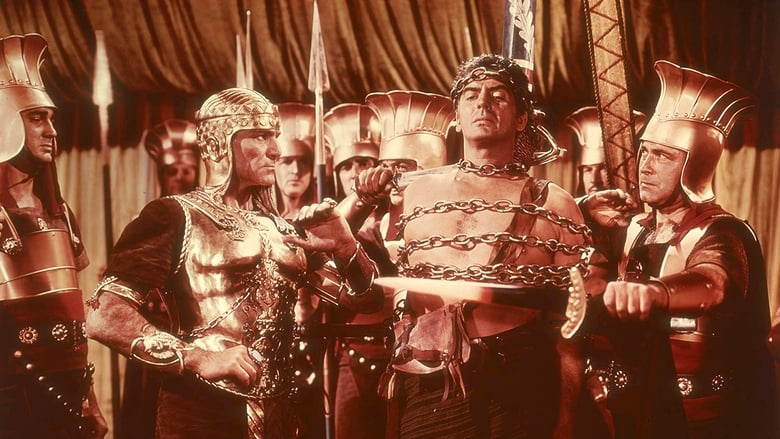
The provided overview describes the film as a dramatisation in which strongman Samson rejects the love of Philistine woman Delilah, who then seeks vengeance with terrible consequences for them both. It traces his wandering youth, the death of his first Philistine bride Semadar at the hands of her relatives, his retaliation with a donkey's jawbone, and his later marriage to Delilah, who is sent to discover the secret of his strength. After she coaxes it from him and his hair is cut, he is enslaved and imprisoned for ten years. When the Philistines bring him out for sport at a temple feast, the now-blind Samson pulls down the pillars of a great Philistine temple, dying in the collapse along with Delilah and the gathered crowd.
The story sits within the book of Judges (the provided passage range covers chapters 13–16). Judges 13 opens with the angelic announcement to Samson's parents that their coming son is to be a Nazirite to God from the womb, with no razor to come upon his head — a vow tied to his calling to begin delivering Israel from the Philistines. Chapters 14–16 then unfold the events the film adapts: Samson's Philistine marriages, his conflicts with the Philistines, the betrayal over the secret of his strength, his capture and blinding, imprisonment, and his final act of strength in which more Philistines die at his death than during his life.
Where it is in the Bible
- Judges 13:5This verse announces Samson's identity before he is born: no razor is to come on his head, because he is to be a Nazirite to God from the womb, and his purpose is to begin saving Israel from the Philistines. It is the key to why his uncut hair matters in the rest of the Judges 13–16 story the film adapts, and frames his life as a God-given calling rather than only a personal romance with Delilah.
How it differs from the Bible
The overview stays close to the broad shape of Judges 13–16: Samson's Nazirite status and uncut hair as the source of his strength, his entanglement with Philistine women, the loss of his hair, capture, blinding, and the final collapse of a Philistine temple that kills him and many Philistines. Because adaptations commonly compress or rearrange details, viewers may want to watch how the film handles the long arc from Samson's secret being probed (first by his Philistine wife's people, then by Delilah) and how the ten-year gap between his capture and his final act is presented.
Watch for specific details in the provided passage: Judges 13:5 frames Samson not merely as a strongman but as a Nazirite unto God from the womb whose calling is to begin saving Israel from the Philistines. The film foregrounds Samson's personal relationships and tragic end; viewers can compare how much of the Nazirite vow (no razor on his head, and the broader Nazirite commitments) and the national-deliverance language from 13:5 surfaces on screen, and how the final temple scene relates to Samson being brought out to entertain the Philistine crowd.
Discussion questions
- 1
Does the film follow the Judges 13–16 account of Samson?
The overview traces the same major events as Judges 13–16: Samson's strength tied to his uncut hair, his Philistine marriages, his capture after the secret is betrayed, his blinding and imprisonment, and the collapse of the Philistine temple in which he dies. Viewers can compare specific scenes against the scripture to see where the film compresses or rearranges detail.
- 2
Why does Samson's hair matter in the film?
According to the overview, his hair is the secret of his supernatural strength, and cutting it is what allows the Philistines to overpower him. Judges 13:5 states the underlying reason: Samson is to be a Nazirite to God from the womb, and no razor is to come on his head — so the hair is a sign of his vow, not just a source of power.
- 3
What is the significance of the temple scene at the end?
The overview describes Samson, now blind and enslaved, being brought out to entertain a Philistine crowd at a feast, where he pulls down the pillars of a great temple, dying in the collapse with Delilah and many others. In the broader Judges narrative this is framed as Samson's final act of strength against the Philistines that completes the calling announced in Judges 13:5, though the film foregrounds it as personal tragedy.
Where to watch
Availability is for Canada and changes over time — check the platform before watching. TMDb ↗
After watching, read the passage itself — you will find details no film has time to show.