
BIBLE FILM GUIDE
The Book of Esther
Film · 2013 · 90 min
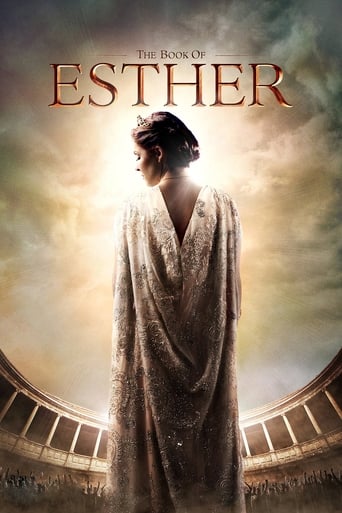
A 2013 film that dramatises the story of Queen Esther, her cousin Mordecai, and the conflict with Haman in the court of King Xerxes.
What the story covers
The film follows Esther after she becomes queen to King Xerxes, and depicts a struggle between her cousin Mordecai and Haman for influence over the young king, as described in the film's overview.
In the Bible this story is told in the book of Esther (chapters 1–10). The key figures are Esther, Mordecai, King Xerxes (Ahasuerus), and Haman. The narrative spans the queen's elevation, a threatened destruction of the Jewish people, a royal intervention, and the eventual honour of Mordecai.
Where it is in the Bible
- Esther 4:14Mordecai's challenge to Esther: deliverance may come from another place, but she may have been raised up 'for such a time as this.'
- Esther 4:16Esther's response: she calls for a three-day fast and resolves to go in to the king unlawfully — 'if I perish, I perish.'
- Esther 6:1On the night before Esther's second approach, the king cannot sleep and has the book of records read aloud, setting up the honour shown to Mordecai.
- Esther 7:3-4Esther's petition identifies the threat: she and her people have been 'sold… to be destroyed, to be slain, and to perish.'
- Esther 8:15-17The reversal: Mordecai goes out in royal apparel, Shushan rejoices, and many from the peoples of the land join the Jews out of fear.
How it differs from the Bible
The Bible does not record direct dialogue between Mordecai and Haman as the film presents their intrigue. Esther 3–5 instead describes Haman's personal hatred of Mordecai after the latter refused to bow, his decree against the Jews, and Esther's unannounced approach to the king; the overview should be read as a dramatic compression of those events. Watch for how the film frames the rivalry and compare it with Esther 3:1–5:14.
Several scriptural details are commonly condensed in film versions of Esther. Pay attention to the specific request Esther makes before the king, the fasting she calls for, the sleepless night that leads the king to read the royal records, and the reversal in which Haman is hanged on the gallows prepared for Mordecai — comparing each scene with the corresponding passage in Esther 4–8.
Discussion questions
- 1
What does Esther 4:14 mean by 'come to the kingdom for such a time as this'?
Mordecai presses Esther to consider that her unique position as queen may be the very means by which God intends to deliver the Jewish people, while warning that refusal could cost her and her family (Esther 4:14).
- 2
Why is Esther's decision to approach the king without being summoned so significant?
Going in to the king unsummoned was a capital offense under Persian law, so Esther frames her choice as an act of costly obedience and trust, calling others to fast with her in Esther 4:16.
- 3
How does the king's sleepless night change the course of the story?
That night the king has the royal chronicles read to him and discovers Mordecai's unrewarded loyalty (Esther 6:1), which leads to Haman's humiliation and the public honouring of Mordecai recorded in Esther 8:15–17.
Where to watch
Availability is for Canada and changes over time — check the platform before watching. TMDb ↗
After watching, read the passage itself — you will find details no film has time to show.