经文研读
2 Chronicles 20:15-17 — 'The Battle Is Not Yours, But God's'
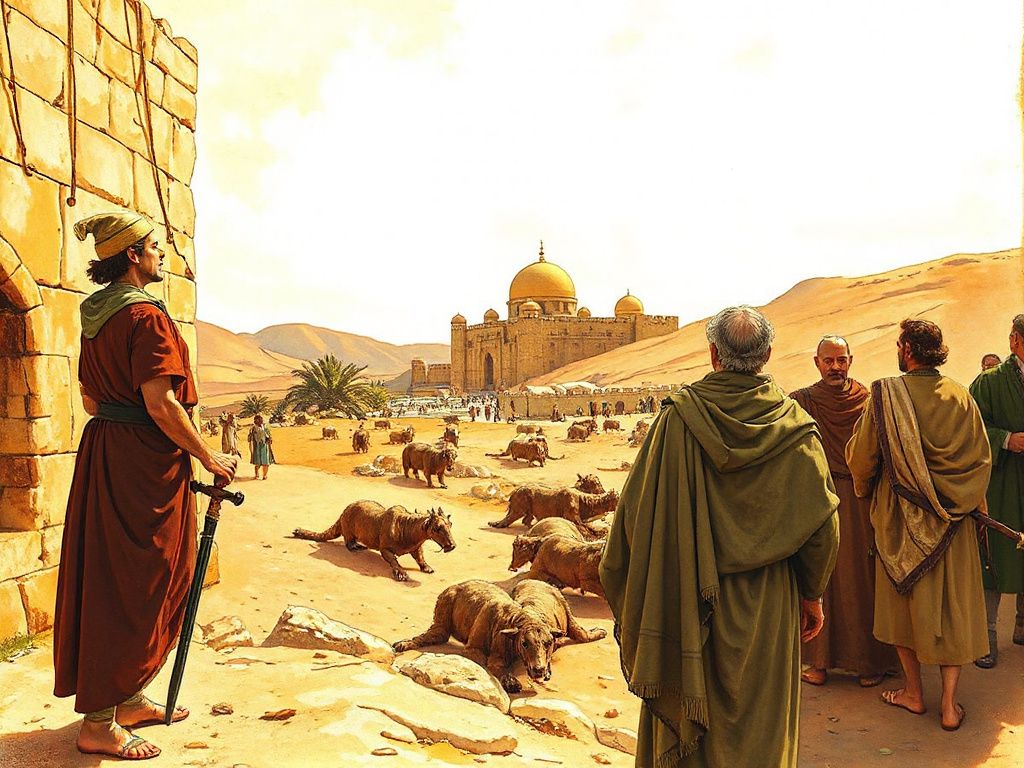
Through the prophet Jahaziel, God tells King Jehoshaphat and Judah not to fear the invading army but to stand still and watch the Lord fight on their behalf.
经文
- 15.他 說 : 猶 大 眾 人 、 耶 路 撒 冷 的 居 民 , 和 約 沙 法 王 , 你 們 請 聽 。 耶 和 華 對 你 們 如 此 說 : 不 要 因 這 大 軍 恐 懼 驚 惶 ; 因 為 勝 敗 不 在 乎 你 們 , 乃 在 乎 神 。and he said, Hearken ye, all Judah, and ye inhabitants of Jerusalem, and thou king Jehoshaphat: Thus saith Jehovah unto you, Fear not ye, neither be dismayed by reason of this great multitude; for the battle is not yours, but God's.
- 16.明 日 你 們 要 下 去 迎 敵 , 他 們 是 從 洗 斯 坡 上 來 , 你 們 必 在 耶 魯 伊 勒 曠 野 前 的 谷 口 遇 見 他 們 。To-morrow go ye down against them: behold, they come up by the ascent of Ziz; and ye shall find them at the end of the valley, before the wilderness of Jeruel.
- 17.猶 大 和 耶 路 撒 冷 人 哪 , 這 次 你 們 不 要 爭 戰 , 要 擺 陣 站 著 , 看 耶 和 華 為 你 們 施 行 拯 救 。 不 要 恐 懼 , 也 不 要 驚 惶 。 明 日 當 出 去 迎 敵 , 因 為 耶 和 華 與 你 們 同 在 。Ye shall not need to fight in this battle: set yourselves, stand ye still, and see the salvation of Jehovah with you, O Judah and Jerusalem; fear not, nor be dismayed: to-morrow go out against them: for Jehovah is with you.
这段经文的意思
Verse 15 addresses three distinct groups in the assembly—'all Judah,' 'inhabitants of Jerusalem,' and 'king Jehoshaphat'—so that no one can later claim the oracle was meant for someone else. The core declaration comes in two parts: 'Fear not … neither be dismayed by reason of this great multitude,' and the theological explanation, 'the battle is not yours, but God's.' The phrase relocates ownership of the conflict. The coalition facing Judah is numerically overwhelming, so the instruction makes sense only if a different actor is doing the fighting. The battle ceases to be a military problem and becomes a matter of how God's people position themselves before Him.
Verse 16 is concrete and tactical. God does not ask Judah to do nothing yet; He tells them to 'go down' tomorrow and specifies where to find the enemy—at 'the ascent of Ziz' and 'at the end of the valley, before the wilderness of Jeruel.' The specificity of geography is striking. By naming the route and the meeting point, the oracle reframes the encounter: Judah is not stumbling into an unknown battle; they are walking into an appointment God has already arranged. Knowing where the enemy will be is part of the reassurance that goes with the command not to fear.
Verse 17 sharpens the paradox introduced in verse 15. 'Ye shall not need to fight in this battle' does not mean Judah does nothing; it means they are not the ones who win it. Three commands follow: 'set yourselves' (take your positions), 'stand ye still' (hold ground), and 'see the salvation of Jehovah with you.' The Hebrew phrasing repeatedly grounds the community in God's presence: 'with you, O Judah and Jerusalem … for Jehovah is with you.' Fear and dismay are forbidden a second time, and the verse closes by sending Judah out the next morning with the promise of divine accompaniment—salvation belongs to those who stand in the presence of the Lord.
背景
Verses 15-17 are the pivot of 2 Chronicles 20. They are spoken by Jahaziel the Levite, whose long genealogy (son of Zechariah, son of Benaiah, son of Jeiel, son of Mattaniah, of the sons of Asaph) anchors the word in the priestly and musical traditions of Israel's worship. The Spirit of the Lord came upon him 'in the midst of the assembly' (v. 14), which includes the wives and children of Judah (v. 13). This is the answer to Jehoshaphat's earlier prayer in verses 3-12, where he confessed that Judah 'have no might against this great company' and ended with 'our eyes are upon thee.' The oracle is therefore not a general exhortation; it is God's specific reply to a specific prayer, spoken at a specific national fast.
What follows in verses 18-22 shows how the oracle was received. Jehoshaphat bows his face to the ground, the people fall down worshipping, and the Levites rise to praise 'with an exceeding loud voice.' The next morning (v. 20) Jehoshaphat repeats the oracle's logic in his own words: 'believe in Jehovah your God, so shall ye be established; believe his prophets, so shall ye prosper.' When praise is appointed to go out before the army (v. 21), the sequence of events laid out in verses 15-17 begins to be fulfilled: Judah takes its position, the singers lead, and the Lord sets ambushes against the enemy. The writer of Chronicles treats 20:15-17 as the moment when the battle changes ownership—everything before is a human crisis, everything after is the demonstration of 'Jehovah's salvation' that the prophet promised.
常见问题
Who speaks in 2 Chronicles 20:15-17, and to whom?
The speaker is Jahaziel the Levite, of the sons of Asaph, on whom the Spirit of Jehovah came 'in the midst of the assembly' (v. 14). He addresses three groups together—'all Judah,' 'the inhabitants of Jerusalem,' and 'king Jehoshaphat'—so that the entire nation hears the oracle together.
Does 'Ye shall not need to fight' mean Judah does nothing?
No. The verse that follows—'set yourselves, stand ye still, and see the salvation of Jehovah with you'—commands real action: take your positions, hold your ground, and go out in the morning. The point is not passivity but who wins the battle. Judah is told to show up and stand; the victory itself is the Lord's. Verses 20-22 confirm this reading: Jehoshaphat leads the people out, appoints singers before the army, and the Lord sets ambushes against the enemy.
Why does the oracle specify the location of the enemy?
Verse 16 names 'the ascent of Ziz' and 'the end of the valley, before the wilderness of Jeruel.' The specificity is part of the reassurance. God is not asking Judah to walk blindly into an unknown encounter; He is directing them to a place He already knows. The geography functions the same way as 'Fear not'—it removes the unknowns that fuel fear and grounds the people in a promise they can verify.